
Get in Touch with TiAlloy Company


Stainless Steel Foil · Precision Strip · Slit Coil
Stainless Steel Foil Manufacturer & Precision Strip Supplier
TiAlloy supplies precision stainless steel foil and thin strip in coil, slit coil and cut-length form for stamping, chemical etching, shims, springs and precision industrial components.
Common material routes include 301, 304 / 304L , 316L , 321 and 430. Grade, gauge, width, temper, surface, tolerance and edge condition are matched to the required downstream process and purchase specification.
Supply Form
Coil · Slit Coil · Cut Length
Material Routes
301 · 304 / 304L · 316L · 321 · 430
Define the Order
Thickness · Width · Temper · Tolerance · Surface
Typical End Processes
Stamping · Etching · Shims · Springs
Foil or Precision Strip?
Where Foil Ends and Precision Strip Begins
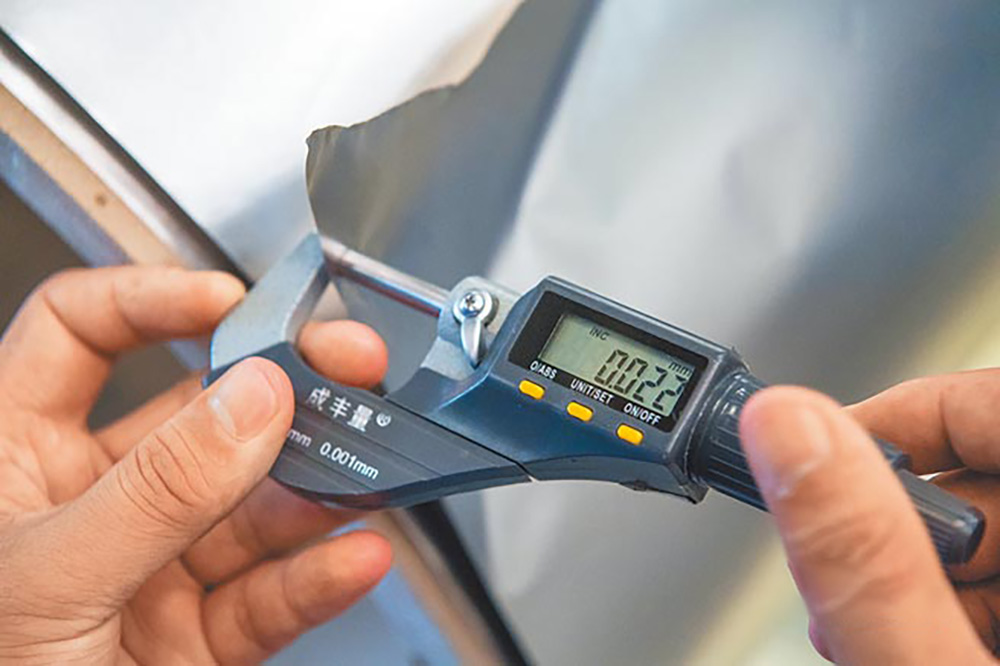
If your drawing says 0.10 mm stainless, don’t worry too much about whether one mill calls it foil and another calls it precision strip. Both terms are used around this thickness.
What matters to the order is the exact gauge, width, temper, tolerance, surface and edge condition. Those numbers travel much better between mills than the word “foil” does.
Think of it as an overlapping thickness range
Precision mills do not all use the same commercial boundary, so these labels overlap rather than meeting at one official line.
0.010 mm
10 μm · 0.00039 in
0.050 mm
50 μm · 0.00197 in
0.100 mm
100 μm · 0.00394 in
0.127 mm
127 μm · 0.00500 in
Ultra-Thin Foil
Stainless Steel Foil
Precision Strip
Thin Sheet / Strip
What should you put on the RFQ?
Start with the actual thickness and width. Then tell us the temper, tolerance, surface and edge condition if they matter to the part. If your existing drawing simply says “stainless steel foil,” send it anyway — we can work through the missing details with you before quotation.
μm
Already know the gauge?
Send the thickness and width first. We can sort out whether
the mill treats it as foil or precision strip afterwards.
Send My Foil Size →
Grade Selection
Stainless Steel Foil Grades by Application
You don’t have to start an inquiry by knowing the perfect grade. Tell us what the part needs to do first — spring back, form easily, handle a corrosive environment, respond to a magnet or work around heat.
That usually gets us to the right stainless steel foil family much faster than comparing six chemistry sheets.
What does your part need most?
Strength
springback & recovery
Formability
bending & stamping
Corrosion
moisture & chemicals
Magnetism
magnetic response
Temperature
heated service
301
More spring and strength
If you’re making spring contacts, clips or parts that need good recovery after forming, 301 is usually one of the first grades worth discussing.
Spring foil · clips · contacts · precision stampingA practical place to start
For general stainless steel foil, shims, etched parts and light forming, 304 gives you a sensible balance without making the specification more complicated than it needs to be.
Shims · etching · formed parts · general componentsWhen the low-carbon route matters
If your drawing already calls for 304L, or welding and the specified material condition make low carbon relevant, tell us that up front rather than treating 304 and 304L as the same order.
Welded assemblies · shims · precision formed partsWhen corrosion is the bigger concern
If the foil will see chlorides, moisture or a more demanding chemical environment, 316L is often the next grade we look at. Send us the actual service condition and we’ll review from there.
Chemical parts · seals · shims · etched components
321
Heat is part of the job
For foil used around elevated temperatures or thermal cycling, 321 may make more sense. Give us the working temperature and fabrication route instead of simply asking for “high-temperature foil.”
Heat shields · thermal parts · heated assemblies
430
Need a magnetic stainless foil?
430 gives you a ferritic, magnetic option for components where magnetic response is useful and the service environment does not require the same corrosion route as 316L.
Magnetic parts · appliance components · formed stripGrade is only the first half of the answer.
Once the grade is narrowed down, temper becomes just as important. A soft 301 foil and a hard-rolled 301 spring strip can behave like completely different materials in the same stamping tool. We’ll deal with that in the next section.
301
Not sure which grade fits?
Send the foil thickness, part use and working environment.
That’s enough for us to start narrowing it down.
Review My Foil Grade →
Stainless Steel Foil
Stainless Steel Foil Tempers and Surface Finishes
Stainless steel foil is supplied by grade, thickness, temper and surface condition. At thin gauges, cold reduction has a strong effect on strength, springback and formability, while alloy chemistry determines corrosion resistance, temperature capability and fabrication behavior.
Austenitic
Ferritic
Duplex
Annealed to Spring Temper
BA / 2B / 2D
Stainless Steel Foil Grades
Common foil and precision strip grades cover general corrosion service, spring applications, elevated-temperature components and chloride-containing environments.
UNS / EN
S20100 / 1.4372
Typical Standard
ASTM A240
Material Character
Nickel-lean austenitic grade with strong work-hardening response
Typical Foil Use
Decorative strip and light formed components
UNS / EN
S30100 / 1.4310
Typical Standard
ASTM A666
Material Character
High work-hardening response with spring temper capability
Typical Foil Use
Springs, clips, diaphragms, reeds and precision stamped parts
UNS / EN
S30400 / 1.4301
Typical Standard
ASTM A240 / A666
Material Character
General-purpose austenitic grade with good forming and corrosion resistance
Typical Foil Use
Shim stock, gaskets, foil wrap and formed components
UNS / EN
S30403 / 1.4307
Typical Standard
ASTM A240 / A666
Material Character
Low-carbon 304 grade for welded thin sections
Typical Foil Use
Welded thin assemblies, liners and formed foil components
UNS / EN
S31600 / S31603 · 1.4401 / 1.4404
Typical Standard
ASTM A240 / A666
Material Character
Molybdenum-bearing austenitic grades with improved chloride resistance
Typical Foil Use
Chemical, marine, medical and precision thin components
UNS / EN
S32100 / 1.4541
Typical Standard
ASTM A240
Material Character
Titanium-stabilized austenitic stainless steel
Typical Foil Use
Heat shields, exhaust components and elevated-temperature foil parts
UNS / EN
S30908 / 1.4833
Typical Standard
ASTM A240
Material Character
Higher chromium and nickel for elevated-temperature oxidation resistance
Typical Foil Use
Furnace, heat shield and high-temperature fabricated components
UNS / EN
S31008 / 1.4845
Typical Standard
ASTM A240
Material Character
High chromium-nickel stainless steel for elevated-temperature service
Typical Foil Use
Furnace baffles, thermal shields and hot-service components
UNS / EN
S43000 / 1.4016
Typical Standard
ASTM A240
Material Character
Ferritic, magnetic stainless steel with low nickel content
Typical Foil Use
Appliance, shielding and general ferritic strip applications
UNS / EN
S32205 / 1.4462
Typical Standard
ASTM A240
Material Character
Duplex stainless steel combining high strength with improved chloride resistance
Typical Foil Use
Special thin components for process and chloride-containing environments
Stainless Steel Foil Temper
Cold reduction changes strength, hardness, elongation and springback. The required temper should therefore be specified together with the alloy grade and final foil thickness.

Foil temper is controlled by the final cold-reduction and heat-treatment condition.
Cold-Rolled Condition
Annealed, Hard and Spring Temper Foil
Annealed foil provides the highest formability, while retained cold work increases strength and stiffness. Quarter-hard, half-hard, full-hard and spring conditions are available where appropriate for the selected stainless steel grade.
| Condition | Material Condition | Typical Use |
|---|---|---|
| Annealed | Soft recrystallized condition | Bending, drawing and formed foil components |
| Quarter Hard | Light retained cold work | Formed parts requiring additional stiffness |
| Half Hard | Moderate retained cold work | Flat or lightly formed components |
| Full Hard | High cold reduction | Shim stock and high-strength thin components |
| Spring Temper | Grade-dependent high-strength condition | Springs, reeds, clips and return components |
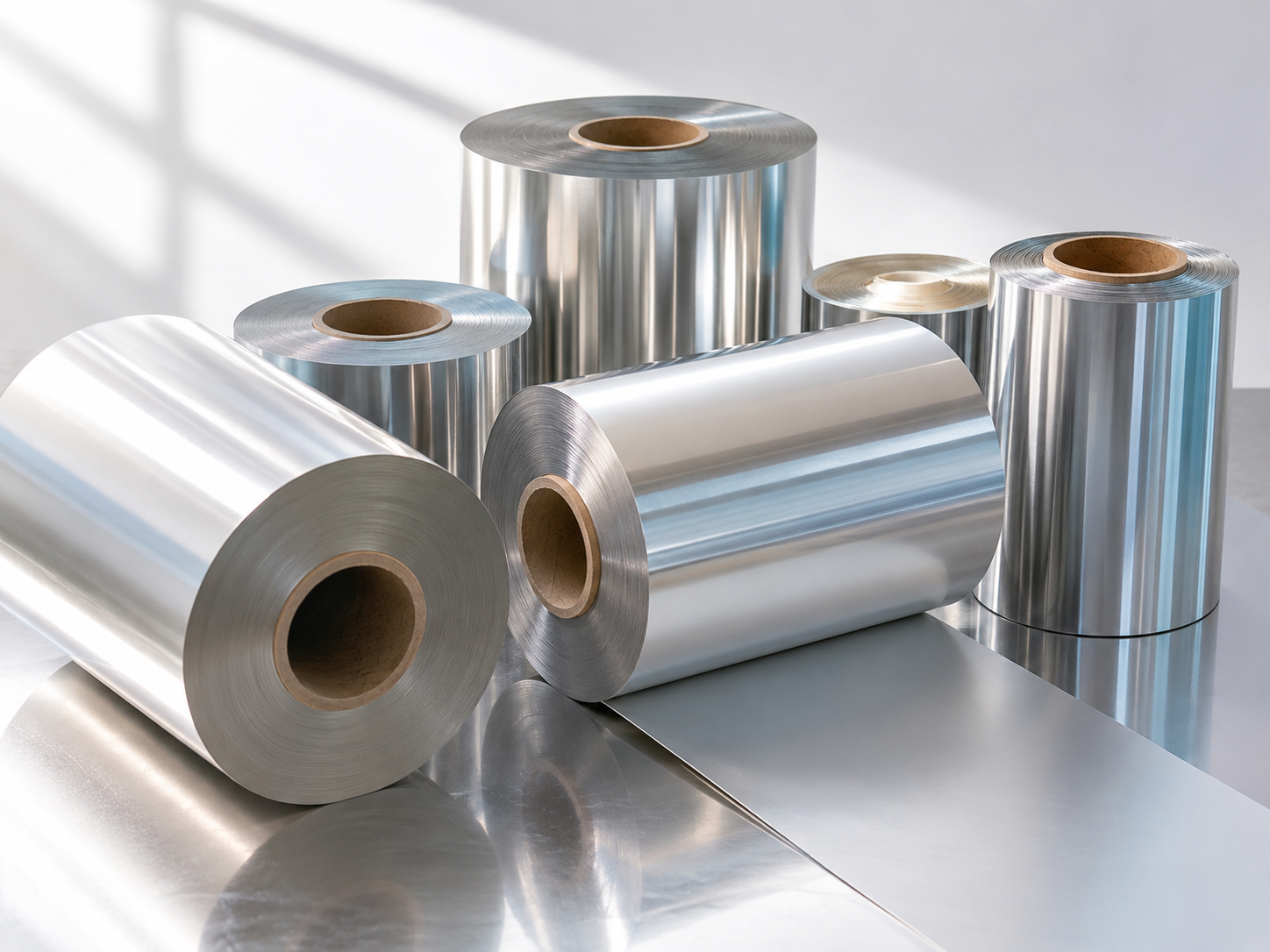
Surface condition can be specified with foil thickness, temper and width.
Surface Condition
BA, 2B and 2D Stainless Steel Foil Finishes
Surface condition affects appearance, reflectivity, forming behavior and downstream finishing. Bright annealed, 2B and 2D finishes are supplied according to the required grade, gauge and production route.
BA / 2R
Bright annealed surface produced under a controlled protective atmosphere, with high reflectivity and a clean appearance.
2B
Cold rolled, annealed and pickled with a light final skin pass; widely used for general engineering and fabricated components.
2D
Cold rolled, annealed and pickled without the final skin pass, producing a more matte surface.
Foil Specification
Order Information
Thickness & Width
Specify decimal thickness, strip width and required dimensional tolerance.
Grade & Temper
Include stainless steel grade and annealed or cold-worked condition.
Surface & Edge
BA, 2B, 2D and required slit or edge condition where applicable.
Coil or Sheet
Confirm coil, strip or cut-sheet form together with quantity and packing requirements.
Precision Foil Supply
Final availability depends on grade, foil thickness, strip width, temper, surface condition and order quantity. Slitting, cut lengths, coil configuration and protective packing can be confirmed with the quotation.
FOIL
Stainless Steel
Request Stainless Steel Foil Pricing
Request a Foil Quote
Send the grade, thickness, width, temper, surface finish and quantity for availability and quotation.
Temper & Mechanical Condition
Same Grade. Very Different Foil.
If you tell us “301 stainless steel foil,” we’re only halfway there. A soft annealed 301 and a full-hard 301 strip can run very differently through the same stamping tool.
So the next question is simple: does the part need to form easily, or does it need to come back with more strength and spring? That answer usually points us toward the right temper.

A useful way to choose
More forming usually means staying toward the softer end. More strength, hardness and springback usually means moving further toward the cold-worked end.
From easy forming to higher spring response
Annealed
Start here when the part needs the most room to bend, draw or form.
1/4H
A little more strength while keeping useful forming capability.
1/2H
Often the middle ground when strength and forming both matter.
3/4H
Now strength and spring response are taking priority over deep forming.
Full Hard
Used when higher cold-worked strength matters more than generous ductility.
Spring / mechanical target
If the drawing simply says “spring temper,” send us the required tensile strength, yield strength, hardness or finished-part spring requirement if you have it. Spring material is not one universal condition that means exactly the same thing for every stainless grade.
Hardness
generally increases →
Strength
generally increases →
Springback
generally becomes more important →
Formability
generally decreases →
What should you send us?
If your drawing already specifies 1/2 hard, full hard or a mechanical property range, send it exactly as written. If it doesn’t, tell us what the part does and how much forming it sees. For stainless steel spring foil and precision strip, that is usually more useful than guessing a temper from the grade name alone.
1/2H
Already have a temper on the drawing?
Send the grade, thickness and required mechanical condition.
If not, tell us how the part needs to form and spring back.
Review My Temper Requirement →
Standards & Specification Route
One Foil Order Can Need More Than One Standard
If your drawing already says ASTM A666, EN 10151 or JIS G 4305, keep it there. If it only says “304 stainless steel foil, 0.05 mm,” that’s still enough to start. We just need to separate what controls the material from what controls the final strip.
ASTM Route
ASTM A240 + A480
A common ASTM route when the order is built around stainless sheet or strip. A240 carries the product specification; A480 supplies the general requirements used alongside it.
ASTM A666
This is usually the more interesting document when your austenitic stainless foil is being ordered in annealed or cold-worked condition and temper is part of the conversation.

The standard gives us the framework. Your grade, temper, dimensions and acceptance criteria finish the order.
EN · ISO · JIS Route
EN 10088-2
Useful when the purchase is based on European technical delivery conditions for corrosion-resistant stainless sheet, plate or strip.
EN 10151
If you’re actually buying stainless spring strip rather than simply thin stainless, this is the route worth checking because mechanical condition matters to the finished part.
ISO 9445 · JIS G 4305
ISO 9445 is useful when dimensions and form need their own tolerance route. JIS G 4305 is the familiar Japanese route for cold-rolled stainless plate, sheet and strip.
Which one should you put on the RFQ?
Don’t choose a standard just because another 304 foil order used it. Start with your drawing and the finished part. If temper is critical, say so. If thickness, width, flatness or camber is what could stop the line, call that out too. We can then match the product standard and tolerance route before the quotation is fixed.
A practical stainless steel foil specification usually comes together in this order:
01
Standard
ASTM, EN, ISO or JIS route.
02
Grade
301, 304, 316L, 321, 430…
03
Condition
Annealed, 1/2H, full hard or target properties.
04
Tolerance
Thickness, width and form requirements.
SPEC
Not sure which standard belongs on the order?
Send the drawing, grade, thickness and temper you already have.
We can sort out the specification route before quoting.
Review My Foil Specification →
Thickness · Width · Precision Tolerance
Thickness, Width & Precision Tolerance
If you ask us for 0.05 mm stainless steel foil, we know the nominal gauge — but we still don’t know how much variation your part can accept. Thickness, width and their tolerances need to be reviewed together before the coil is quoted.
Tell us the number your drawing actually needs.
“Precision foil” is not a tolerance. If the drawing gives a nominal thickness with a plus/minus limit, send it exactly that way. The same applies to slit width. We’ll review whether the requested tolerance works with the grade, temper, width and quantity before we lock it into the quotation.
304L
0.050 mm
120 mm wide
1/2 Hard
Slit Coil
Build the size specification in three layers
Published capability figures will be added only after the grade, temper and production route have been verified.
| Specification Item | What to Put on the RFQ | What We Confirm Before Quote | Why It Matters |
|---|---|---|---|
| 01 — Thickness | |||
| Nominal Thickness | Exact value in mm, μm or decimal inch | Grade, temper and requested thickness are reviewed together | The nominal gauge tells us what you want to buy, but not how much variation the finished part can accept. |
| Thickness Tolerance | Drawing tolerance or required ± value | Confirmed against the requested gauge and production route | A tolerance that is practical at one thickness should not automatically be copied onto every thinner foil order. |
| 02 — Width | |||
| Finished Width | Final slit width or master-coil width | Width is reviewed together with thickness, temper and slit route | The width you actually feed into the press or etching line is normally more useful than simply asking for a “foil coil.” |
| Width Tolerance | Required + / − width limit when critical | Confirmed for the finished slit condition | Tight width control becomes much more important when the strip is locating against guides, tooling or continuous feed. |
| 03 — Tolerance & Acceptance | |||
| Measurement Basis | Standard, drawing or customer inspection requirement | Inspection method and acceptance route agreed before production | This keeps the supplier and customer from measuring the same coil by different rules after it arrives. |
| Final Acceptance | Purchase order / drawing requirement | Final agreed values stated in the quotation and order documents | The acceptance limit should be the number we both agreed before production — not a general tolerance assumed later. |
Why don’t we publish one ± tolerance for everything?
Because a stainless steel foil thickness tolerance that works for one gauge, width and temper may not be realistic for another. Very thin material also puts more attention on rolling control, measurement and coil consistency. Give us the tolerance your part actually needs; we’ll confirm it against the specific order instead of promising one universal number across the whole range.
01
Thickness
Start with the exact nominal gauge.
02
Width
Give us the finished slit or master width.
03
Tolerance
Tell us what variation the part can actually accept.
±
Have a tight stainless steel foil tolerance?
Send the grade, thickness, width, temper and required ± limits.
We’ll review those numbers before quoting the coil.
Send My Size & Tolerance →
Flatness · Camber · Shape Control
Flatness, Camber & Shape Control
Thickness can be perfect and the strip can still give you trouble. If the foil pulls sideways, keeps the curve of the coil or develops waves along the edge, a stamping or etching line will notice it long before the material certificate does.
What are we actually looking for?
These shape issues are different, but they often show up in the same place: your feed path.
Flatness
Does the strip lie the way the process expects?
Camber
Does the strip drift sideways along its length?
Coil Set
Does it keep too much of the coil’s longitudinal curve?
Edge Wave
Are the edges staying flat with the center?
When should you put shape control on the RFQ?
If the foil runs through progressive stamping, tight guides, chemical etching, lamination or another continuous process, tell us how sensitive the line is to strip shape. If your drawing already gives a camber or flatness limit, send that number with the width and thickness. If it doesn’t, tell us what happens to the material after it is uncoiled — that gives us a much better place to start.
Where shape starts to matter
Stamping
Camber can make strip tracking and tool registration harder.
Etching
Consistent flat presentation helps keep handling and process position stable.
Continuous Feed
Coil set and edge wave can show up as feed, guide or tension problems.
⇢
Does your strip need to run straight through tooling?
Send the thickness, width, coil format and any flatness or
camber requirement already shown on the drawing.
Review My Shape Requirement →
Surface Finish & Roughness
The Surface Matters Before the Foil Reaches Your Tool
BA, 2B and 2D are useful starting points, but the finish name doesn’t tell us everything your part will see. If the foil is going into etching, stamping, bonding or another surface-sensitive process, scratches, rolling marks, cleanliness and consistency can matter just as much as the finish designation.
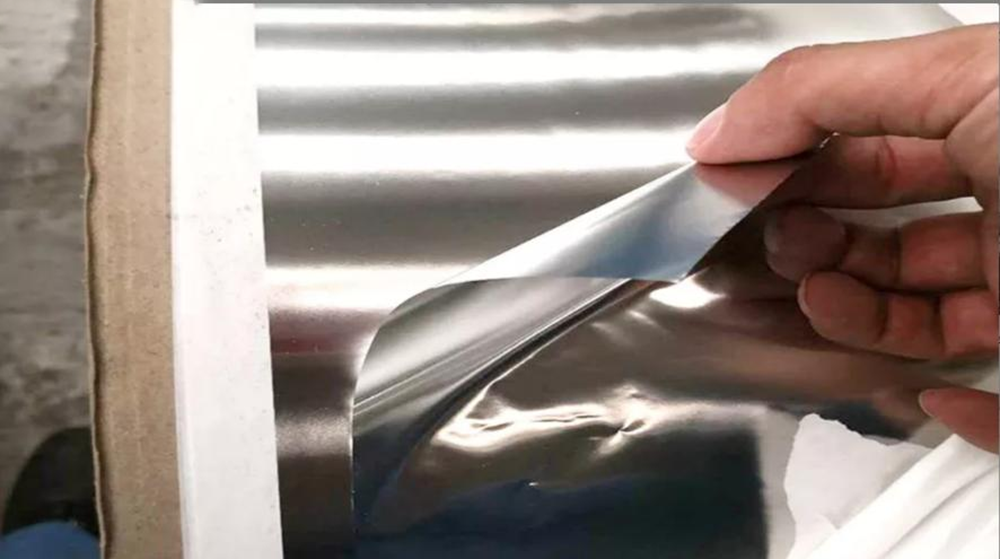
What will the next process notice?
If you’re stamping a hidden shim, the cosmetic requirement may be simple. If you’re chemical etching fine features, bonding a layer or using the foil as a visible surface, the conversation changes quickly.
Tell us what happens after the coil is opened. That helps us understand whether you simply need a standard stainless steel foil finish or whether surface roughness and defect control need to be written into the order.
Four finish names — four different conversations
These are surface routes, not a ranking from “bad” to “good.” The right finish depends on what the foil has to do next.
BA
Bright appearance when a cleaner, more reflective surface is wanted.
2B
Smooth cold-rolled finish commonly discussed for general precision work.
2D
Duller finish when a highly reflective surface is not the target.
As-Rolled
Describe the actual rolled condition — don’t assume the term means one universal finish.
One thing about “as-rolled”
We would rather clarify this term on the quotation than guess. “As-rolled” can describe a process condition, while BA, 2B and 2D are established finish designations. If your drawing calls for as-rolled material, send any roughness, appearance or downstream-process requirement with it.
Beyond the finish name
Ra
Specify surface roughness when the process actually depends on it.
Scratches
Especially important on visible or surface-sensitive components.
Rolling Marks
Direction and severity can matter to the next operation.
Cleanliness
Oil, residue and handling condition may matter before bonding or etching.
Consistency
The surface should stay predictable from one section of the coil to the next.
Do you need to give us an Ra value?
Only if it matters to the part or your drawing already controls it. Don’t add a tight surface roughness requirement just because the material is called precision foil. But if plating, bonding, etching, sealing or appearance depends on the surface, send the Ra limit and any scratch, cleanliness or directional-finish requirement together.
Ra
Does the surface matter to your next process?
Send the finish, grade, thickness and any Ra, scratch or
cleanliness requirement already shown on the drawing.
Review My Surface Requirement →
Precision Slitting · Edge & Burr Control
Precision Slitting, Edge & Burr Control
On precision stainless steel foil, final width is only part of the slitting job. If the burr is too high, sits on the wrong side or changes along the coil, the problem usually shows up later — in guides, stamping tools, winding or the finished part.
Final Slitting · Edge Cross-Section
Knife Clearance
A process setting that influences the cut edge and burr.
Finished foil width
Width tolerance and edge quality need to be reviewed together.
Slit Edge — Enlarged
Burr height
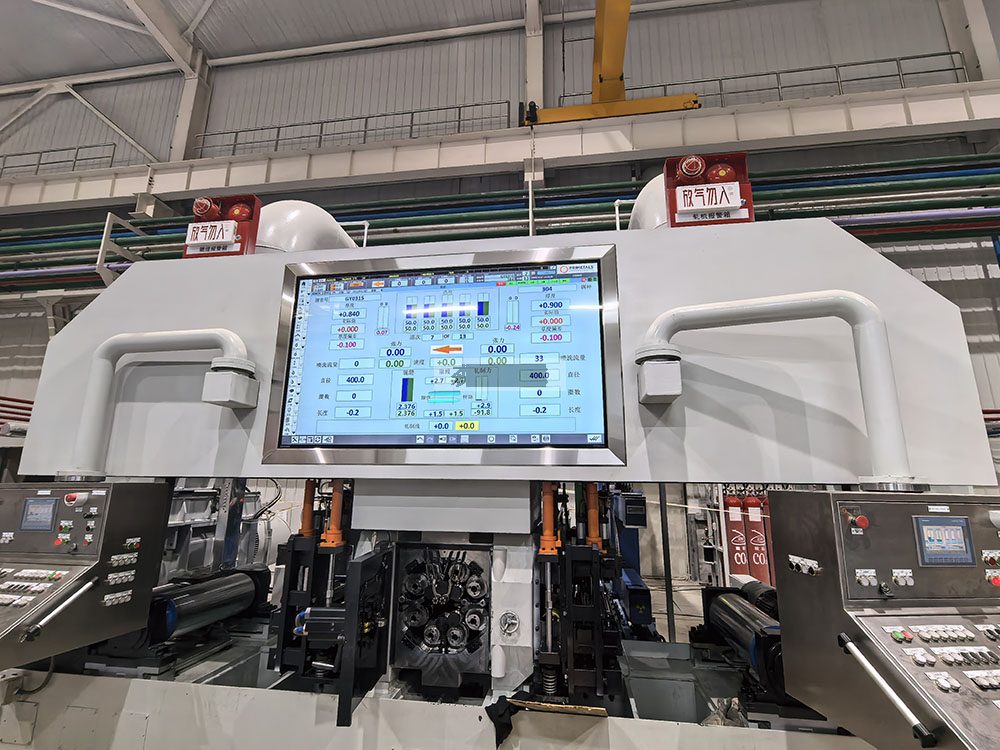
Do you need to specify the slitter clearance?
Usually, no. Tell us the result your part needs instead: finished width, width tolerance, acceptable burr, burr direction if it matters, and the required edge condition. Slitting clearance is part of setting the process to reach that edge result; the useful number on your RFQ is the acceptance requirement.
01
Finished Width
Start with the slit width and width tolerance the line actually needs.
02
Burr Height
If burr is critical, give us the maximum acceptance limit from the drawing.
03
Burr Direction
Tell us which face or edge orientation matters to your tooling or assembly.
04
Edge Consistency
A good first meter is not enough if the coil has to run continuously.
05
Edge Condition
Slit edge as standard; special edge treatment only when technically applicable.
Need a deburred or conditioned edge?
Ask for it, but don’t assume every ultra-thin foil can take the same edge treatment. Deburring, rounding or other conditioned-edge work depends on the material grade, thickness, finished width and edge geometry. For true foil gauges, we confirm feasibility for the specific order before putting a special edge condition on the quotation.
EDGE
Does burr direction or edge condition matter to your tooling?
Send the grade, thickness, finished width, width tolerance and
any burr or edge requirement shown on the drawing.
Review My Slit Edge Requirement →
Cold Rolling · Annealing · Finishing
How Stainless Steel Foil Gets From Master Coil to Finished Strip
You don’t need to tell us how to run every machine. Tell us the final gauge, temper, flatness, surface, slit width and inspection requirement. The precision stainless steel foil processing route is then built around those targets.
One coil, several chances to change the result
Think of this as a typical precision rerolling route rather than a fixed recipe. Some stages may repeat, move or be unnecessary depending on the grade and finished condition.
01
Master Coil
Start with the required grade, specification and incoming condition.
02
Precision Cold Rolling
Rerolling reduces the strip toward the required foil gauge and dimensional target.
03
Annealing
Used when cold-worked material needs ductility restored or an annealed condition is required.
04
Temper Rolling
Controlled final reduction can be used when hardness, strength or spring response is part of the order.
05
Leveling
Strip shape is addressed when flatness, coil set or downstream feeding makes it important.
06
Cleaning
Surface condition and process residue are handled according to the required finish and cleanliness.
07
Final Slitting
The finished width, slit edge, burr requirement and coil configuration come together here.
08
Inspection
Agreed dimensions, condition, surface, shape and documentation are checked before release.
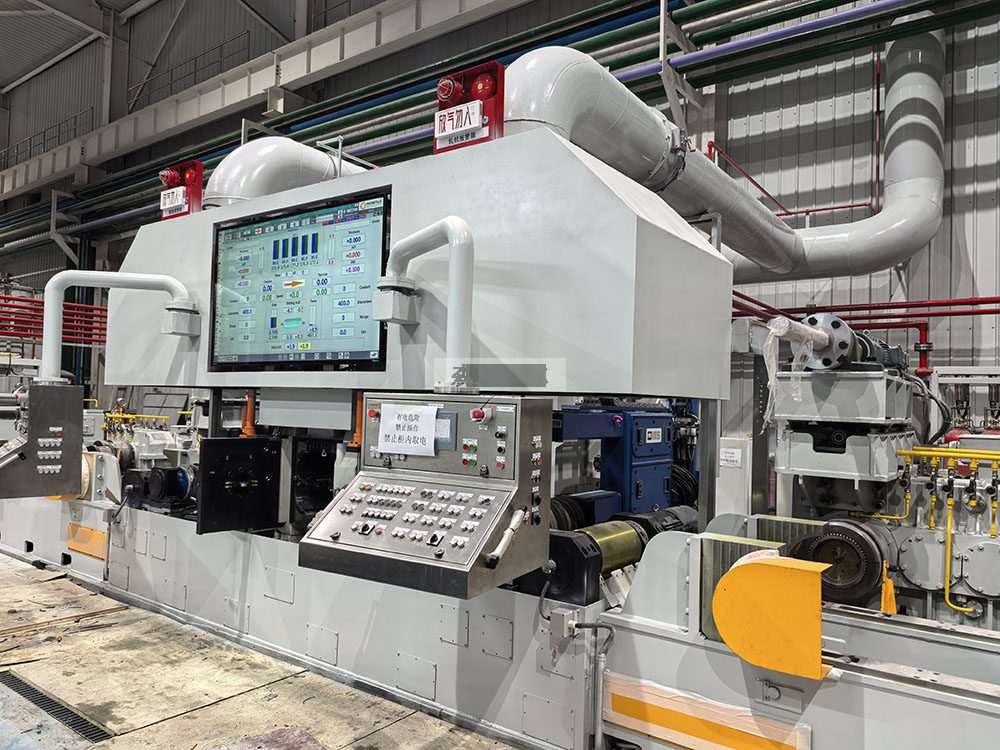


Does every coil follow all eight steps?
No — and that’s important. A foil ordered in the annealed condition does not automatically need a final temper-rolling step. A harder spring condition may rely on controlled cold reduction after annealing, while very thin gauges can require more than one rolling-and-annealing cycle. Leveling, cleaning and finishing also depend on the surface and shape requirements written into the order.
What the route is trying to deliver
Gauge
Required final thickness.
Temper
Required mechanical condition.
Shape
Flatness and feed behavior.
Surface
Finish and cleanliness.
Width
Finished slit dimension.
Release
Inspection against the agreed order.
COIL
Have the final specification but not the processing route?
Send the grade, gauge, temper, surface, width and downstream use.
We can review the required route from the finished part backwards.
Review My Foil Requirement →
Coil Configuration · Winding · Packaging
The Coil Has to Fit Your Machine, Not Just the Shipping Box
Finished width is not the end of a stainless steel foil order. Before the coil reaches your decoiler or feeder, we still need to know how you want it wound, supported and packed — especially when coil ID, OD or weight is limited by your equipment.
Coil Anatomy · Machine Interface
OD
ID
Winding Direction
Core / Coil Support
Tell us if your machine requires a specific bore or support arrangement.
Coil Weight
Maximum lift or machine-loading weight should be stated before coil build is agreed.
What should we know about your decoiler?
You don’t need to send us the machine manual. A few practical limits are usually enough. If your line accepts only a certain bore, maximum outside diameter or coil weight, put those numbers on the RFQ before the final coil is built.
Coil ID
The bore has to match the mandrel, chuck or core arrangement used on your line.
Maximum OD
Useful when the decoiler, guard or feeding equipment has a physical diameter limit.
Coil Weight
Tell us the maximum your equipment or handling system can safely load.
Winding Direction
Important when the strip has a defined face, burr direction, surface requirement or feed orientation.
Interleaf
Specify it when surface protection or separation between wraps is required.
How do you want to receive it?
Coil
Define ID, OD, weight, winding direction and coil build where they matter.
Cut Length
Give us the required finished length and dimensional acceptance requirement.
Sheet
Useful when the material needs to arrive flat rather than feed continuously from a coil.
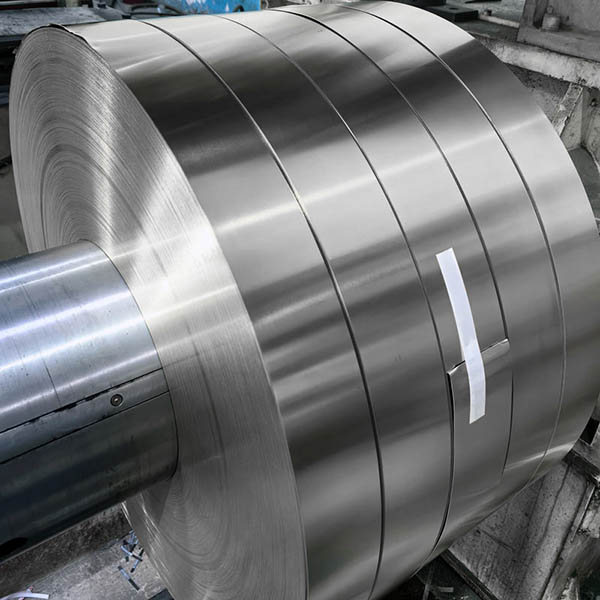
Packing starts with the coil, not with the wooden case
Thin stainless steel can arrive with the chemistry and gauge exactly right and still be a headache if the edge is damaged, the wraps move in transit or the surface rubs against itself. Tell us any special receiving, handling or export-packing requirement before shipment is arranged.
Coil Build
Stable winding and support for the agreed delivery form.
Interleaf
Added when the specified surface needs separation between wraps.
Edge Protection
Prevent handling and transport damage to finished slit edges.
Export Packing
Final packing is matched to the order and shipping requirement.
Don’t know the coil ID yet?
That’s fine. Send us the machine or loading limitation you do know — maximum coil OD, maximum weight, mandrel size, feed direction or simply a photo of the current coil label. We can use that information when reviewing the final stainless steel foil coil configuration rather than guessing how you plan to run it.
ID
Will the foil go straight onto your production line?
Send the required width plus any coil ID, maximum OD, coil weight,
winding direction, interleaf or packing requirement.
Review My Coil Configuration →
Inspection · Quality Control · Traceability
Inspection & Quality Control.
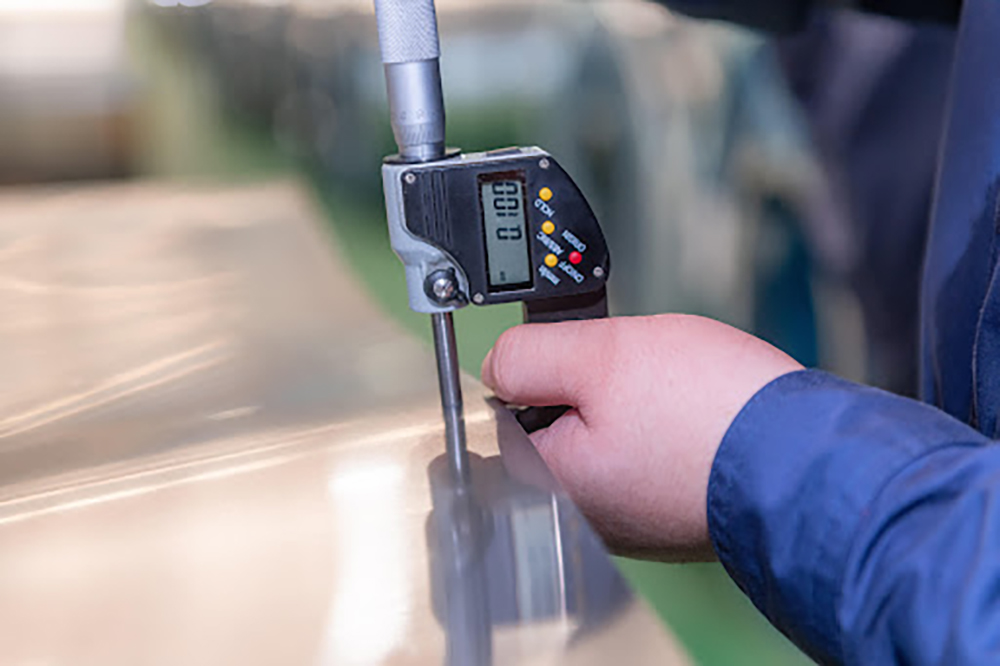
A stainless steel foil inspection does not need every test in the laboratory. It needs the right checks for your order. Thickness and width may be enough for one job; another may also need hardness, surface roughness, camber, burr or traceability recorded before release.
What the inspection evidence should actually show
The drawing and purchase specification decide the acceptance points. The inspection record should make those points easy to check against the coil you receive.

01
Dimension & Shape
Thickness
Checked against the nominal gauge and agreed tolerance.
Width
Finished slit width checked against the purchase requirement.
Flatness
Included when strip shape affects handling or downstream processing.
Camber
Important when continuous strip has to track through guides or tooling.
Burr
Edge condition checked when burr height or direction is controlled.
02
Mechanical & Surface
Hardness
Useful when temper or cold-worked condition is part of acceptance.
Tensile
Tested when required by the applicable specification, drawing or order.
Surface
Finish and agreed surface-quality requirements are checked before release.
Roughness / Ra
Measured when a numerical surface-roughness limit is specified.
03
Identity & Release
Heat / Lot
Material identity is matched to the traceability route agreed for the order.
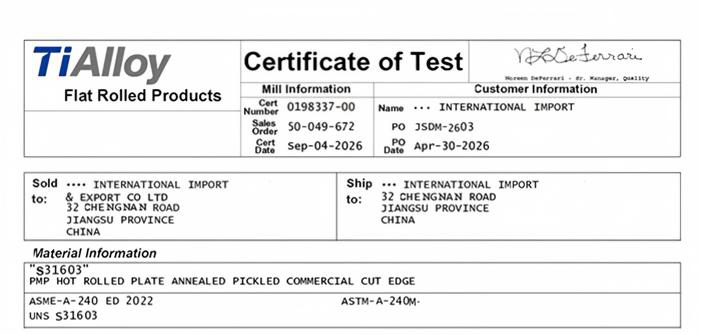
MTC
Required inspection documentation should be named on the purchase order.
PMI
Added when positive material identification is specified for grade verification.
Third Party
Independent inspection or witnessing can be arranged when specified before production.
Do you need every test on every foil order?
Usually not. If thickness and slit width are the only acceptance points that matter, say that. If your spring part depends on hardness, add the mechanical requirement. If etching or bonding depends on the surface, add the finish and Ra limit. If traceability, PMI or third-party inspection is mandatory, put it on the RFQ before quotation so the inspection route is agreed before production starts.
Before release
Measure
Check the specified physical dimensions.
Verify
Check condition, surface and other ordered acceptance points.
Trace
Match material identity to the agreed heat or lot documentation.
Document
Release the inspection evidence required by the purchase order.
QC
Have a customer inspection plan or drawing?
Send it with the foil specification. We can review which dimensional,
mechanical, surface and traceability checks need to be included before quotation.
Review My Inspection Requirements →
Stamping · Etching · Forming
Stainless Steel Foil for Stamping, Etching & Forming
Two customers can buy the same stainless steel grade and need very different foil. A progressive die cares about feed stability and edge condition. An etching line may care more about thickness, surface and cleanliness. The next process tells us what the material really needs to do.
Stainless steel foil
Your Process
Required Foil Condition
01
Progressive Stamping
Stable feeding and repeatable tool registration matter most.
02
Chemical Etching
Gauge consistency and a predictable, clean surface become critical.
03
Forming
The temper has to leave enough formability for the required deformation.
04
Spring Forming
Start with the required strength and spring response of the finished part.
Don’t start with “What is your best foil?”
Start with the part. Tell us whether it will be stamped, etched, bent, drawn or formed into a spring component. Then tell us what usually goes wrong if the material is not right — feeding, cracking, springback, scratches, burr, registration or thickness variation. From there, the useful stainless steel foil specification becomes much easier to build.
Work backwards from the process
Temper
How soft, strong or spring-responsive should the strip be?
Tolerance
What dimensional variation can the process actually accept?
Flatness
Does the strip need to track or present flat through tooling?
Surface
Will etching, bonding, appearance or tooling contact make it critical?
Edge & Burr
Will the slit edge affect feeding, forming, stacking or assembly?
NEXT
Already know what happens after the coil is delivered?
Send the drawing and tell us whether the foil will be stamped,
etched, formed or used for a spring part. We can review the
material condition from the downstream process backwards.
Review My Application →
Applications & Supply Profiles
From Stainless Steel Foil to the Part You Actually Need
A spring, shim, heat shield and etched electronic part may all start with thin stainless steel, but they should not all start with the same purchase specification. Choose the application below and the material questions change with it.
Spring · Clip · Contact · Precision Stamping
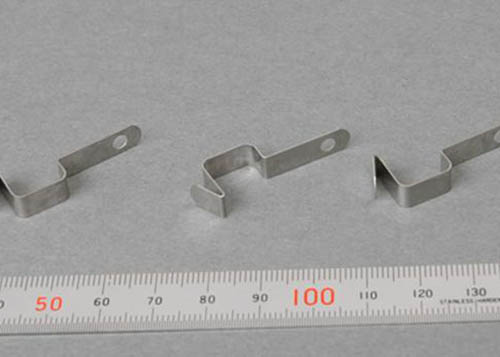
Springs & Precision Stampings
If the finished part has to flex, return or run through a progressive die, we start with the mechanical condition and feed behavior — not simply with “stainless steel foil.”
Material Route
301 and 304 are common starting points; the drawing,
strength target and forming requirement decide the final grade.
Supply Form
Precision slit coil is the natural route for continuous
stamping; cut pieces can be reviewed for individual parts.
Put on RFQ
Thickness · width · temper or mechanical target · flatness /
camber · edge and burr requirement · coil configuration.
Practical Order
301 / 304 stainless steel foil or precision strip · specified thickness and width · required mechanical condition · slit coil · drawing-controlled edge where needed.
Shim · Spacer · Washer · Thin Gasket
Shims & Gaskets
Here the important question is often simpler: how accurately does the finished part need to hold spacing or sealing geometry? That puts thickness, tolerance and flatness near the top of the RFQ.
Material Route
304 / 304L and 316L are common routes, with grade selected
around corrosion exposure, forming and drawing requirements.
Supply Form
Coil, slit coil, cut length or sheet depending on whether
the buyer stamps the parts continuously or cuts them individually.
Put on RFQ
Nominal thickness · thickness tolerance · finished width /
sheet size · temper · surface · flatness · edge requirement.
Practical Order
Stainless steel shim foil · specified grade · exact gauge and tolerance · coil or cut sheet · finish and edge condition matched to the way the finished shim or gasket is produced.


Heat Shield · Formed Foil · Honeycomb Structure
Heat Shields & Honeycomb Structures
Thin does not automatically mean the same material route here. Tell us the operating temperature, environment and how the foil will be formed or joined. Those details matter more than choosing a grade from an application list.
Material Route
Stainless grade is selected against temperature,
corrosion exposure, forming and joining requirements.
Supply Form
Coil, precision strip or cut sheet according to the
subsequent forming, corrugating or fabrication route.
Put on RFQ
Grade or service condition · gauge · width · temper /
formability · surface · shape requirement · downstream process.
Practical Order
Thin stainless steel coil or foil for thermal / honeycomb fabrication · specified service environment · required forming condition · finished width · applicable inspection requirement.
Electronics · Shielding · Contacts · Battery Components
Electronics & Battery-Related Components
Electronic parts usually make small inconsistencies very visible. Tell us whether the foil is stamped, etched, bonded, used as a contact or simply used as a thin structural layer. That changes what matters in the material specification.
Material Route
301, 304, 316L or ferritic stainless may be considered
depending on strength, corrosion resistance, magnetism and
the electrical or mechanical function of the part.
Supply Form
Precision slit coil or cut sheet depending on continuous
stamping, etching, assembly and prototype requirements.
Put on RFQ
Thickness tolerance · temper · surface · cleanliness ·
flatness · slit edge · coil winding and downstream process.
Practical Order
Precision stainless steel foil for electronic or battery-related hardware · drawing-selected grade · controlled gauge and surface · slit coil or sheet · application-specific inspection.
Fuel Cell · Diaphragm · Precision Industrial Component
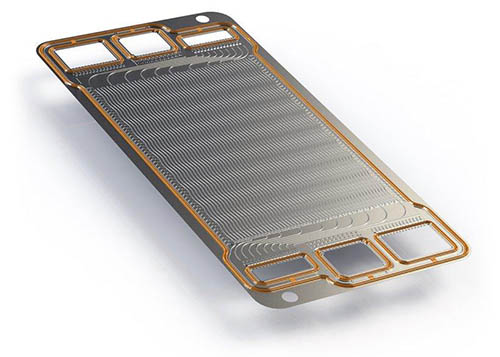
Fuel Cell & Precision Industrial Components
For a thin formed fuel-cell or industrial component, the service environment and downstream process should come before a generic grade recommendation. Corrosion resistance, forming, surface and dimensional control may all matter at the same time.
Material Route
Austenitic or other corrosion-resistant stainless grades
are reviewed against the drawing, environment and required
forming or etching route.
Supply Form
Precision coil, slit strip or cut sheet according to the
finished component and manufacturing process.
Put on RFQ
Grade / service condition · thickness and tolerance ·
width · temper · surface · flatness · inspection and traceability.
Practical Order
Precision stainless steel foil or strip · drawing-defined service condition · required dimensional and surface controls · finished delivery form · specified inspection documentation.
Application range
Springs
Shims
Gaskets
Heat Shields
Electronics
Battery
Fuel Cell
Honeycomb
Precision Parts
Which stainless steel foil should you choose for your application?
There isn’t one universal answer. Start with the part and the next manufacturing step. A spring pushes the conversation toward temper and mechanical response; a shim toward thickness control; an etched electronic part toward gauge and surface consistency; and a thermal or fuel-cell component toward service environment as well as forming. Send those requirements first, and the useful material specification becomes much easier to define.
PART
Have a finished part drawing?
Send the application, grade if already selected, thickness,
width, temper and downstream process. We can review the foil
specification around the part you actually need to make.
Review My Application →
Stainless Steel Foil Engineering Tools
Foil Gauge Converter
Accurately convert stainless steel foil thickness between gauges, millimeters, and inches for precise specification.
Foil RFQ Builder
Configure your stainless steel foil requirements and generate a standardized Request for Quote instantly.
Foil Grade Selector
Compare mechanical properties and chemical compositions to select the optimal stainless steel foil grade.
Foil Coil Calculator
Calculate foil coil weight, length, and outside diameter to optimize your shipping and production planning.
Stainless Steel Foil FAQ — Samples, MOQ, Certificates and Delivery
Yes. State the gauge ranges you want to use and a swatch set comes to us – all we need to get material for you to cut, formed or wrapped in so that you don’t have to over invest in the initial order.