
Get in Touch with TiAlloy Company

Stainless Steel Flat Products
Stainless Steel Plate & Sheet Supplier
TiAlloy supplies stainless steel plate, sheet, coil and strip for industrial fabrication, equipment manufacturing and project procurement. Quotations are reviewed against grade / UNS, product specification, thickness and dimensions, delivery condition, surface finish, processing, inspection and destination.
Plate
Sheet
Coil
Strip
Request Plate Size & Price
Send grade, thickness, width, length and quantity
for quotation review.
Plate / Sheet Supply
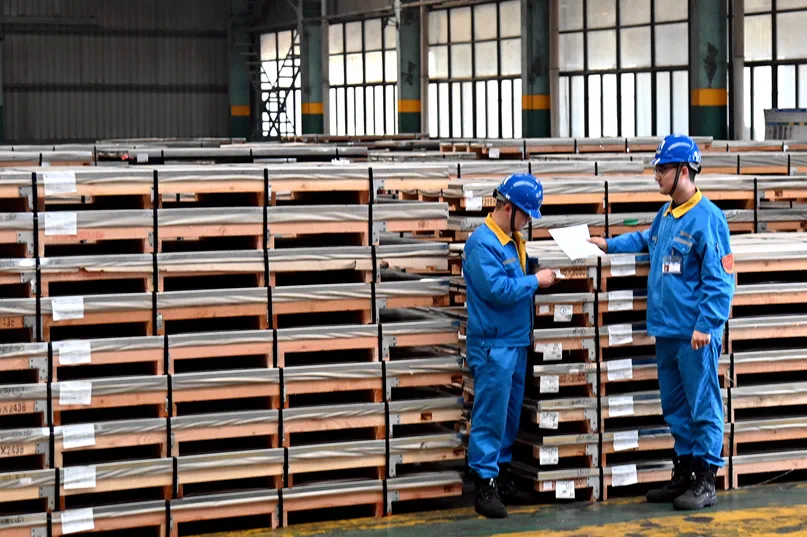
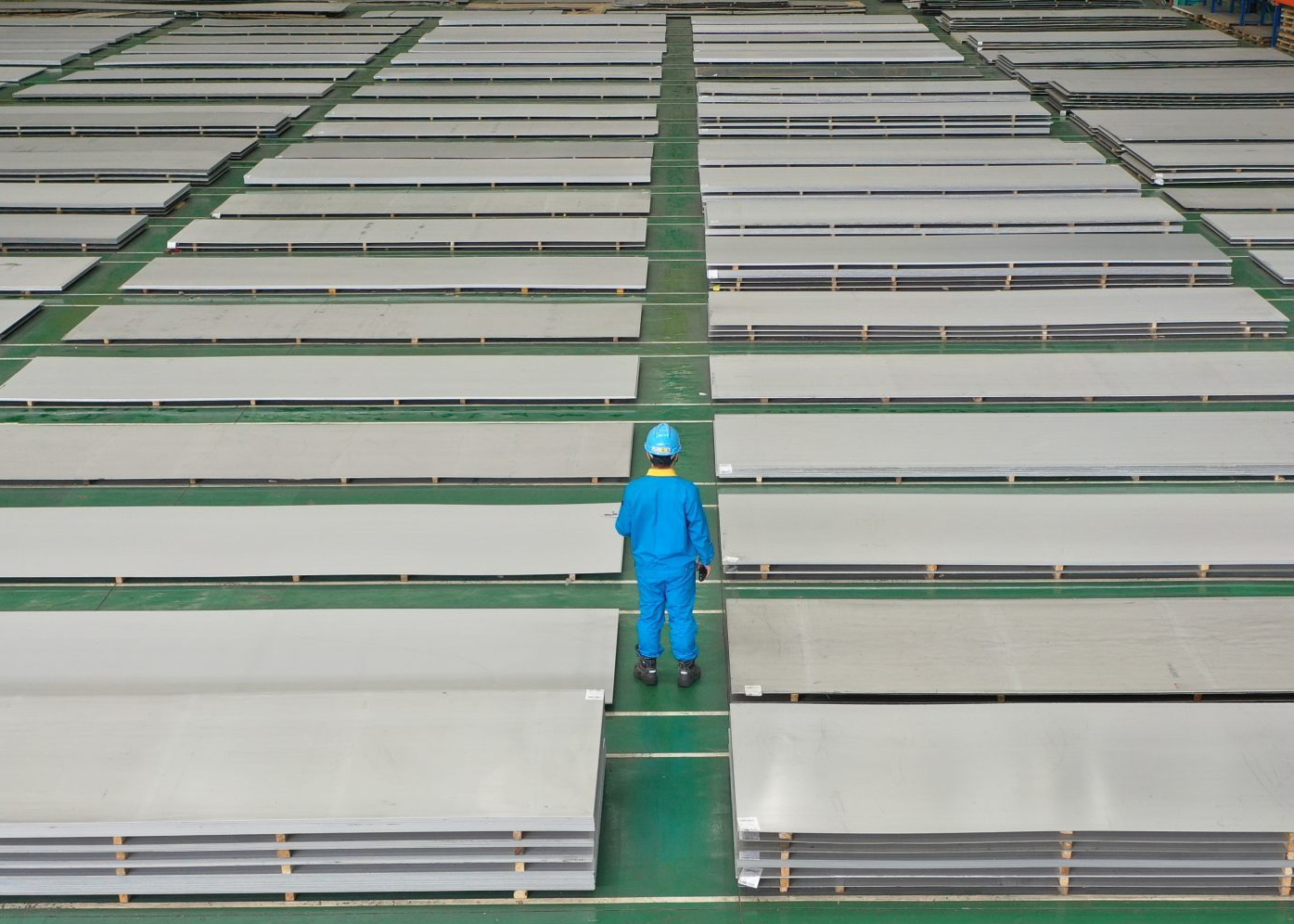
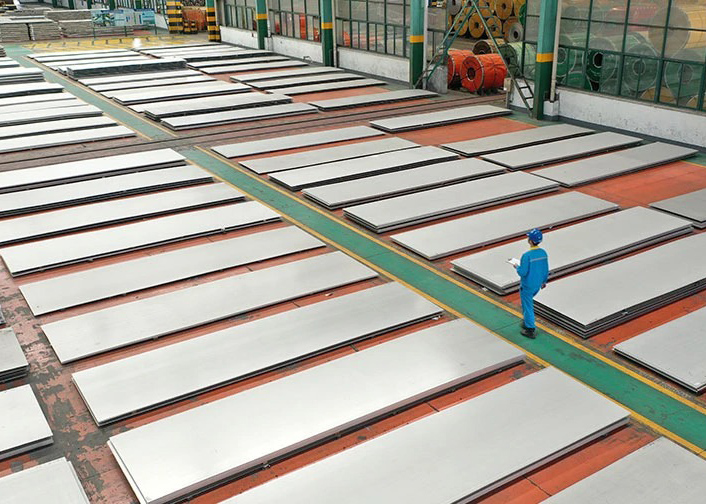
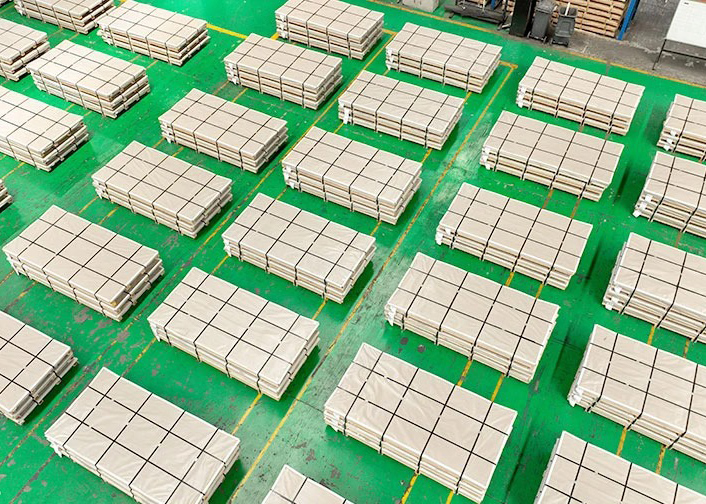
Product Forms
Plate · Sheet · Coil · Strip
Core Product Specification
ASTM A240 / A240M
Order Definition
Grade · Thickness · Width · Length
Supply Review
Finish · Processing · Inspection · Documents
Plate RFQ path
Grade / UNS
Product Specification
Thickness × Width × Length
Condition / Finish
Processing
Inspection
Destination
Stainless Steel Flat Products
Stainless Steel Plate, Sheet, Coil & Strip
TiAlloy supplies stainless steel plate, stainless steel sheet, stainless steel coil and stainless steel strip for industrial fabrication, equipment manufacturing, OEM production and project procurement.
Stainless Steel Plate Supplier
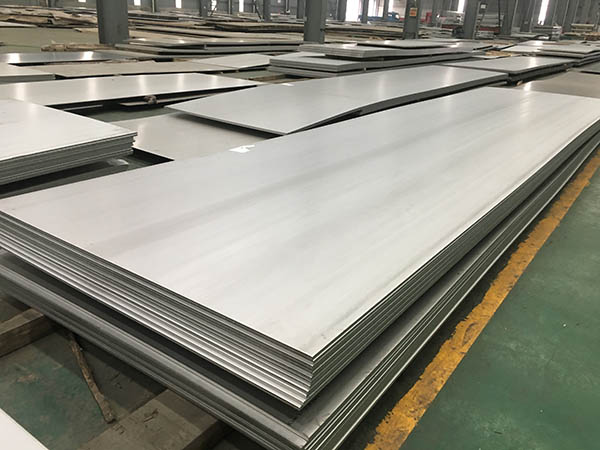
Stainless Steel Plate
Stainless steel plate is supplied as individual cut-length flat product for tanks, pressure equipment, process equipment, structural components, machined blanks and fabricated assemblies.
Buyers sourcing stainless steel plate, stainless steel plate stock or ASTM A240 / A240M stainless steel plate should define grade, specification, thickness, width, length and quantity before price and availability are compared.
Plate RFQ Definition
Grade / UNS + Specification + Thickness × Width × Length +
Quantity + Condition / Surface
Supply Form
Full plate · cut-to-size plate · plate blank
Specification Route
ASTM A240 / A240M and other applicable project specifications
Processing
Cutting · leveling · edge preparation · agreed machining
Dimensional Review
Thickness · width · length · flatness · tolerance
Surface / Condition
Delivery condition and required plate surface specified with RFQ
Inspection / Documents
MTC and additional inspection requirements confirmed against the order
Stainless Steel Sheet Supplier
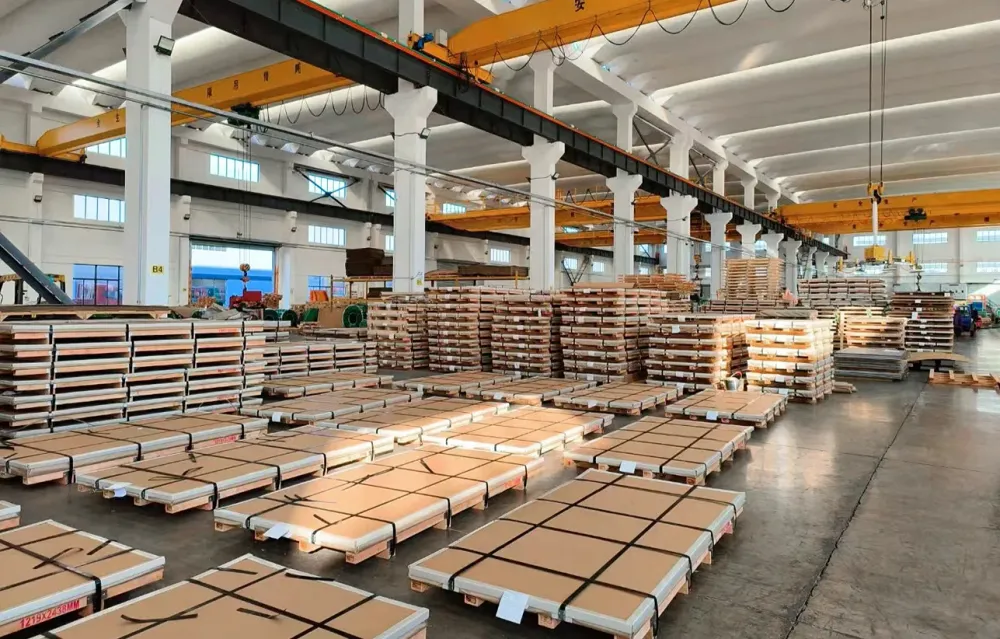
Stainless Steel Sheet
Stainless steel sheet is supplied in flat cut lengths for panels, enclosures, formed components, food equipment, architectural fabrication and laser-cut parts.
Stainless steel sheet supplier enquiries commonly specify grade, sheet thickness, width, length, surface finish and quantity. ASTM A240 / A240M is a common specification route for applicable stainless steel sheet grades.
Sheet RFQ Definition
Grade / UNS + Specification + Thickness × Width × Length +
Finish + Quantity
Supply Form
Flat sheet · cut sheet · sheet blank
Specification Route
ASTM A240 / A240M where applicable to the ordered grade
Surface Finish
2B · No.1 · BA · polished or other agreed finish where applicable
Processing
Cut-to-size · laser blank · leveling · protective film when specified
Dimensional Review
Thickness · width · length · flatness · gauge tolerance
Buyer Requirement
Appearance, edge, surface protection and fabrication route
Stainless Steel Coil Supplier
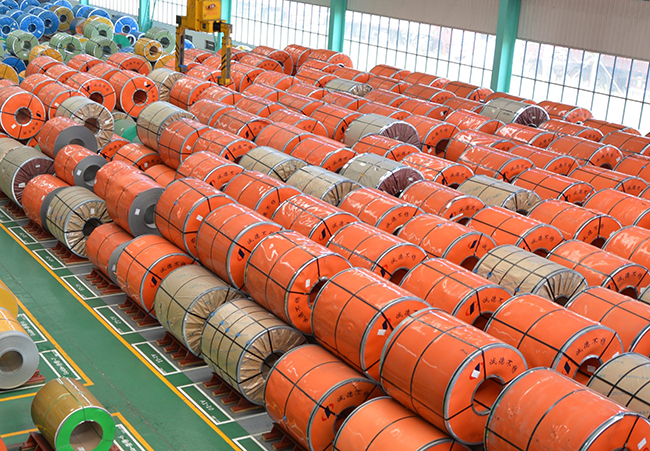
Stainless Steel Coil
Stainless steel coil is continuous flat-rolled material supplied for slitting, leveling, cut-to-length processing, stamping, forming and repetitive production.
A stainless steel coil supplier enquiry should identify stainless grade, specification, coil thickness, finished width, surface condition, quantity and coil handling requirements.
Coil RFQ Definition
Grade / UNS + Specification + Thickness × Width +
Quantity + Coil ID / Coil Weight
Supply Form
Master coil · slit coil · processing feed coil
Downstream Route
Slitting · leveling · cut-to-length · stamping · forming
Coil Definition
Thickness · width · ID · OD where required · coil weight
Edge Condition
Mill edge · slit edge or agreed finished edge requirement
Surface Requirement
Finish and surface protection defined for downstream processing
Commercial Review
Target coil weight · packaging · destination · processing route
Stainless Steel Strip Supplier
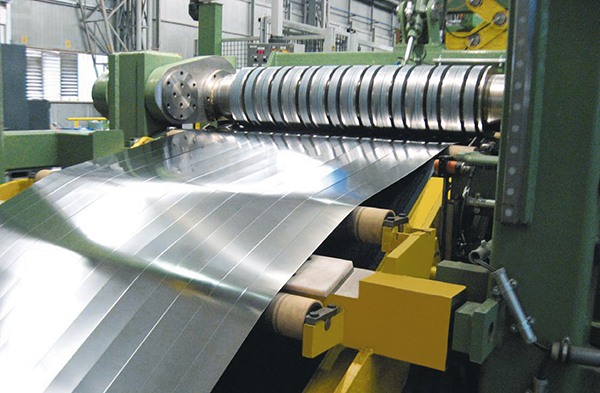
Stainless Steel Strip
Stainless steel strip is narrow flat-rolled material commonly supplied through a slit-coil route for stamping, springs, clips, formed parts and continuous manufacturing.
Stainless steel strip supplier and slit stainless steel coil enquiries should define thickness, finished strip width, grade, specification, quantity, edge condition and required surface.
Strip RFQ Definition
Grade / UNS + Specification + Thickness × Finished Width +
Quantity + Edge / Surface Requirement
Supply Form
Slit strip coil · narrow coil · agreed cut strip
Specification Route
ASTM A240 / A240M where applicable to the selected material
Width Control
Finished strip width and width tolerance defined by the order
Edge Requirement
Slit edge or other agreed edge condition
Processing Use
Stamping · forming · springs · clips · precision components
Buyer Review
Coil requirement · surface · tolerance · packaging · destination
Stainless Steel Plate
Cut-length flat product for fabrication, equipment,
structural parts and machined blanks.
Stainless Steel Sheet
Flat sheet for panels, formed components,
fabrication and laser-cut parts.
Stainless Steel Coil
Continuous flat-rolled material for slitting,
stamping and cut-to-length processing.
Stainless Steel Strip
Narrow flat-rolled product for stamping,
forming and precision production.
Need stainless steel plate, sheet, coil or strip pricing?
Send the grade / UNS, applicable specification, product form,
dimensions, quantity, condition or surface finish, processing
requirement and destination. TiAlloy confirms the available
supply route against the actual RFQ.
Request Size & Price
Stainless Steel Plate Grades
Stainless Steel Plate Grade Classification
Stainless steel plate is grouped into austenitic, duplex, ferritic, martensitic and precipitation-hardening families. Choose the grade together with the required specification, dimensions and delivery condition.
Austenitic Stainless Steels
Austenitic grades cover many common stainless plate enquiries. 304/304L and 316/316L are widely specified, while stabilized, heat-resistant and higher-alloy grades serve more demanding corrosion or temperature requirements.
304 / 304L
/
316 / 316L
/
321
/
347
/
309S
/
310S
/
904L
/
254 SMO
Frequent plate enquiries include 304, 304L, 316L, 321,
310S, 904L and 254 SMO.
Higher Strength / Duplex Structure
Duplex & Super Duplex
2304
—
2205
—
2507
—
S32760
Used where higher strength and improved chloride resistance
are needed. 2205 and 2507 are the main plate enquiry grades.
Chromium Stainless Family
Ferritic
409
—
430
—
439
—
444
Selected by corrosion level, forming needs, service temperature
and project cost.
Hardenable Stainless Family
Martensitic
410
—
420
—
440 Series
Used where heat-treatment response, hardness, wear resistance
or higher strength is required.
Heat-Treatable High-Strength Family
Precipitation Hardening
17-4PH / 630
—
15-5PH
—
17-7PH
Grade and heat-treatment condition should be ordered together
because the final mechanical properties depend on condition.
Choosing a stainless steel plate grade
Compare grades against corrosion environment, required strength,
temperature, fabrication route and the governing specification.
One grade list does not mean one product standard.
ASTM A240/A240M covers many stainless plate grades, but not every
family follows the same product specification. Confirm the grade,
plate form and governing standard together at RFQ stage.
Tell us the grade and plate requirement.
Grade / UNS
Plate Specification
Dimensions
Condition / Finish
Quantity
Inspection
Request Plate Size & Price
Standards & Product Specifications
Stainless Steel Plate Standards & Product Specifications
A plate enquiry needs more than the grade name. Tell us the product specification, size, condition and project requirements so we can check the correct supply route.
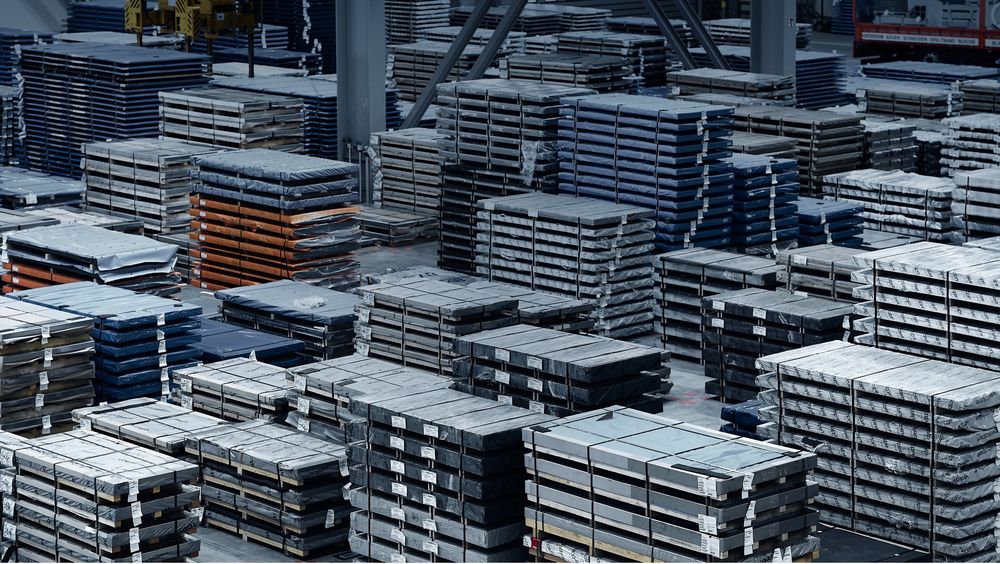
Read the specification route
01 — Product Specification
Grade, chemistry, properties and product form
02 — General Requirements
Testing, marking, delivery and common requirements
03 — Dimensional Standard
Thickness, width, length and flatness tolerances
04 — Project / Code
Drawing, PO and project-code requirements
Standard
Role
Product Scope
What the Buyer Should Confirm
ASTM A240/A240M
Core Plate Specification
Product specification
Stainless steel plate, sheet and strip for pressure-vessel
and general applications.
Grade / UNS, dimensions, condition, finish, quantity and edition.
ASTM A480/A480M
General Requirements
Supporting specification
General requirements used with stainless flat-rolled
product specifications such as A240.
Confirm tolerances, finish, testing and marking requirements.
ASTM A666/A666M
Austenitic Route
Austenitic product specification
Austenitic stainless sheet, strip, plate and flat bar in
annealed or specified cold-worked conditions.
Confirm the grade and required mechanical-property condition.
ASTM A693
PH Stainless Route
PH product specification
Precipitation-hardening stainless plate, sheet and strip.
Specify both the grade and required heat-treatment condition.
ASME SA-240/SA-240M
Code Material Route
ASME project route
Stainless plate, sheet and strip for applicable ASME
pressure-equipment and code projects.
State SA-240 and the applicable project-code requirements on the PO.
EN 10088-2
European Route
Technical delivery specification
European technical delivery conditions for stainless
sheet, plate and strip.
State EN grade / material number, condition and dimensions.
ISO 18286
Quarto Plate Tolerances
Dimensional tolerance route
Dimensional and shape tolerances for hot-rolled
stainless quarto plate.
Use when the ordered plate falls within the applicable quarto route.
ISO 9444-2 / 9445-2
Coil-Derived Plate / Sheet
Hot / cold rolled tolerance routes
Dimensional tolerances for applicable hot-rolled or
cold-rolled wide strip and coil-derived sheet / plate.
Confirm whether the product is quarto plate or coil-derived.
Standard limits are not the same as our available production range.
A standard may cover a wide range of thicknesses and widths,
but that does not mean every size is available for every grade.
We confirm the actual supply route from grade, dimensions,
quantity and required documents.
What should I send for an ASTM A240 plate quote?
Send the grade / UNS, ASTM or ASME specification,
thickness × width × length, quantity, condition, surface finish,
tolerance, inspection requirements and destination. We will check
whether ASTM A480 or another dimensional standard also applies.
Confirm the specification before comparing plate prices.
Grade / UNS
Product Specification
Thickness × Width × Length
Tolerance
Condition / Finish
Testing / Documents
Request Plate Specification & Price
Stainless Steel Plate Sizes
Stainless Steel Plate Sizes & Thickness Range
Stainless steel plate and sheet are supplied in different rolling routes according to thickness, grade, surface condition and finished size. Common commercial dimensions can simplify procurement, while large or heavy plate sizes require a grade-specific mill-route review.
Common Thickness Groups
0.3–3.0 mm
Cold-Rolled Stainless Steel
Common thin sheet / plate route for 2B, BA and
other cold-rolled surface requirements.
3.0–12 mm
Hot-Rolled Stainless Steel Plate
Common No.1 hot-rolled, annealed and pickled
plate route for industrial fabrication.
12–100 mm
Medium / Heavy Plate
Heavy hot-rolled or quarto plate route reviewed
by grade, plate width and piece weight.
Actual Millimetre Formats
These dimensions are common enquiry formats. They do not mean every thickness and grade is held in stock.
1000 × 2000 mm
metric sheet format
1219 × 2438 mm
4 × 8 ft format
1500 × 3000 mm
industrial flat plate
1500 × 6000 mm
long hot-rolled plate
2000 × 6000 mm
wide project plate
2500 × 6000 mm
large plate enquiry

0.3–3.0 mm Cold Rolled
Common enquiry sizes include 1000 × 2000 mm, 1219 × 2438 mm and 1500 × 3000 mm, depending on grade, finish and coil availability.
3.0 mm and Above Hot Rolled
Typical project formats include 1500 × 3000 mm, 1500 × 6000 mm and 2000 × 6000 mm for applicable grades and thicknesses.
Heavy & Quarto Plate
Large sizes such as 2000 × 6000 mm or 2500 × 6000 mm require confirmation against grade, thickness, rolling route and piece-weight limits.
Example Plate Enquiries
examples only — not guaranteed stock
304L Cold Rolled
1.5 × 1219 × 2438 mm
316L Hot Rolled
6 × 1500 × 6000 mm
2205 Duplex
12 × 2000 × 6000 mm
2507 Super Duplex
25 × 2000 × 6000 mm
3.0 mm is a practical procurement boundary, not an absolute metallurgical rule.
Cold-rolled stainless products can extend above 3.0 mm in some
grades and mill routes, while hot-rolled plate commonly begins
around 3.0 mm. TiAlloy therefore confirms the actual rolling route
from grade, thickness, surface finish, finished size and required
specification rather than assigning the route from thickness alone.
Send the actual stainless steel plate size required.
1.5 × 1219 × 2438 mm
6 × 1500 × 6000 mm
12 × 2000 × 6000 mm
25 × 2000 × 6000 mm
Request Plate Size & Price
ASTM A480M Dimensional Tolerances
Stainless Steel Plate Thickness, Size & Flatness Tolerances
Stainless steel dimensional tolerances change with rolling route, nominal thickness and plate width. The reference values below show selected ASTM A480M tolerance data in millimetres for cold-rolled, hot-rolled coil-processed and quarto plate products.
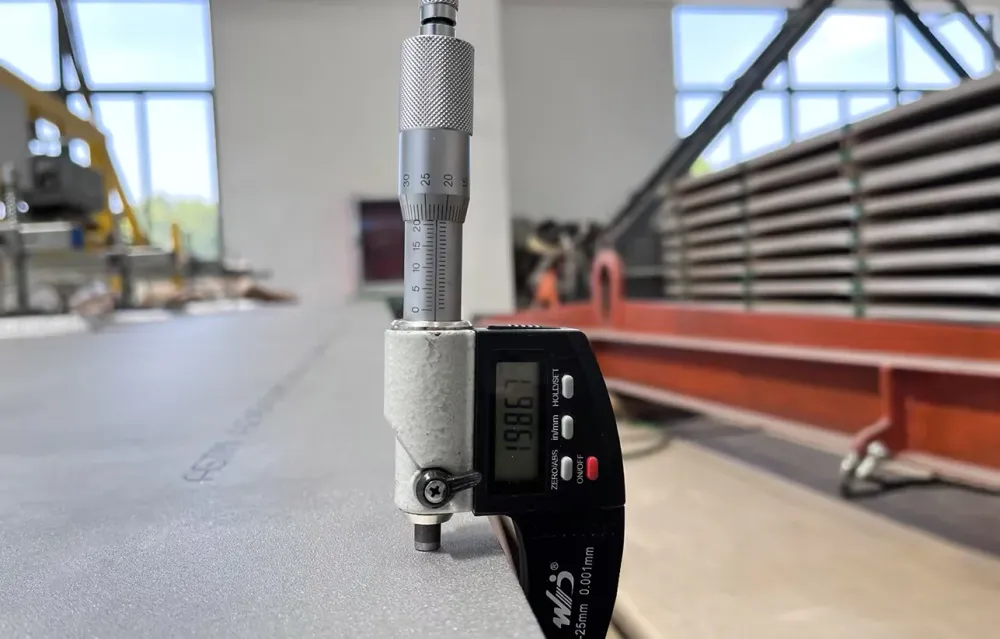
Actual ASTM A480M tolerance references
Reference values use the SI dimensional tables in ASTM
A480/A480M-25B. The governing edition, product route and
purchase-order requirements must still be confirmed for each order.
Cold-Rolled Thickness Tolerance
permitted variation over / under · mm
Nominal
Width ≤1000
1000–1300
1300–2100
1.0 mm
±0.055 mm
±0.060 mm
±0.070 mm
1.5 mm
±0.080 mm
±0.080 mm
±0.100 mm
2.0 mm
±0.100 mm
±0.100 mm
±0.110 mm
2.5 mm
±0.100 mm
±0.110 mm
±0.130 mm
3.0 mm
±0.130 mm
±0.130 mm
±0.150 mm
Hot-Rolled Thickness Tolerance
permitted variation · mm
Nominal
Width ≤1500
Width >1500
3.0 mm
±0.25 mm
±0.33 mm
5.0 mm
+0.47 / −0.25
+0.51 / −0.25
6.0 mm
+0.51 / −0.25
+0.51 / −0.25
8.0 mm
+0.75 / −0.25
+0.75 / −0.25
A480M · Hot-Rolled Plate Mill Plate / Quarto Plate
Quarto Plate Thickness Tolerance
Values below show selected common plate thicknesses. For plate up to 250 mm thick, A480M permits −0.30 mm under nominal thickness; the permitted over-thickness changes with nominal thickness and width.
Nominal
5 mm
width <2100 mm
+1.35 / −0.30 mm
width 2100–<3000 mm
+1.75 / −0.30 mm
Nominal
10 mm
width <2100 mm
+1.15 / −0.30 mm
width 2100–<3000 mm
+1.30 / −0.30 mm
Nominal
20 mm
width <2100 mm
+1.40 / −0.30 mm
width 2100–<3000 mm
+1.55 / −0.30 mm
Nominal
50 mm
width <2100 mm
+1.80 / −0.30 mm
width 2100–<3000 mm
+1.90 / −0.30 mm
Nominal
75 mm
width <2100 mm
+3.20 / −0.30 mm
width 2100–<3000 mm
+3.80 / −0.30 mm
Nominal
100 mm
width <2100 mm
+3.75 / −0.30 mm
width 2100–<3000 mm
+4.00 / −0.30 mm
Sheared Width Tolerance
Width <2000 mm
+15 / −0 mm
2000–<3000 mm
+20 / −0 mm
Width ≥3000 mm
+25 / −0 mm
Sheared Length Tolerance
Length <4000 mm
+20 / −0 mm
4000–<6000 mm
+30 / −0 mm
6000–<8000 mm
+40 / −0 mm
Cut Width / Length Tolerance
Thickness ≤25 mm
±3.2 mm
25–50 mm
+4.8 / −3.2 mm
50–75 mm
+6.4 / −3.2 mm
75–100 mm
+7.9 / −3.2 mm
A480M Quarto Plate
Flatness · max deviation over 914 mm
5 mm plate
10 mm
maximum deviation
10 mm plate
9.5 mm
maximum deviation
15–25 mm plate
7.9 mm
maximum deviation
50 mm and thicker
6.4 mm
maximum deviation
Standard tolerance is not the same as precision-cut capability.
These are selected ASTM A480M standard allowances, not a claim
that every TiAlloy order will be supplied at the maximum permitted
variation. Tighter thickness, width, length, flatness or machining
tolerances can only be quoted after the grade, actual dimensions,
cutting method and inspection requirement are reviewed. For quarto
plate with specified minimum yield strength of 240 MPa or higher,
the applicable A480M flatness allowance can increase to 1.5 times
the basic value.
Need a plate tolerance tighter than ASTM A480M?
Grade / UNS
Actual Size
Thickness Tolerance
Flatness
Cut Tolerance
Inspection Method
Request Tolerance Review
Delivery Condition & Surface Finish
Stainless Steel Plate Surface Finishes & Delivery Condition
Tell us the grade, thickness, plate size and finish you need. If appearance or roughness matters, also include the target Ra, polishing direction and protective-film requirement. This helps us check the right material and finishing route before quotation.
Hot Rolled
No.1
Annealed & Pickled
Common industrial hot-rolled plate finish
Cold Rolled
2D
Matt Finish
Matt cold-rolled, annealed and pickled surface
Cold Rolled
2B
Smooth Mill Finish
Common smooth finish for sheet and thin plate
Bright Annealed
BA
Bright Surface
Bright surface from controlled-atmosphere annealing
Mechanical Finish
No.4
General Polished
Directional polished finish for visible surfaces
Decorative / Project
HL
Hairline
Long directional brushed appearance
High Gloss
No.8
Mirror Finish
High-gloss polished and buffed surface
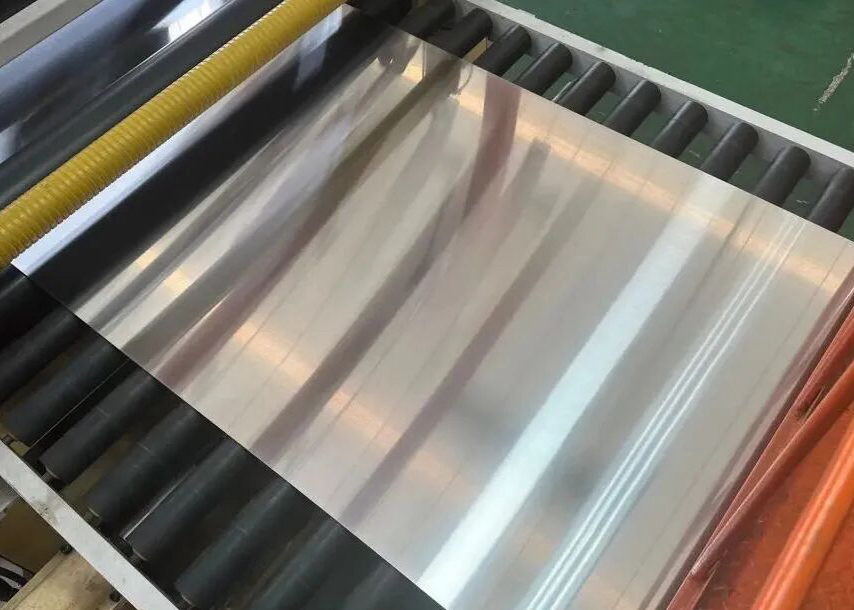
Cold-Rolled Route
Thin Sheet & Plate
0.3–3.0 mm
common procurement route
For thin stainless sheet or plate, 2D, 2B and BA are common
choices. Send us the grade, thickness, width and required finish,
and we can check the suitable coil and processing route.
Common finishes: 2D · 2B · BA
Hot-Rolled Route
Industrial Plate
3.0 mm+
common plate procurement route
For heavier plate, annealed and pickled No.1 is the usual
starting point. Let us know if the plate will be machined,
welded or used with the mill surface left as supplied.
Common finish: No.1 / annealed & pickled
Project Finish
Polished & Decorative
Specify Finish
grit / Ra / direction if critical
For No.4, hairline or mirror surfaces, tell us if appearance
is important. A target Ra, grit, polishing direction or
reference sample helps us match the required finish more closely.
Project finishes: No.4 · HL · No.8
Enquiry Support
Need a Specific Finish?
Send Your Requirement
drawing / sample / finish target
Send us the grade, thickness, plate size and required finish.
If the surface is drawing-controlled, include the target Ra,
grit, direction or sample so we can review the workable route.
Helpful details: Grade · Size · Finish · Ra · Direction · Film
Finish Definition
The finish name does not always mean one exact Ra.
No.4
Ra generally ≤ 0.6 μm
If roughness or appearance is controlled, include the required
Ra so the polishing and acceptance basis can be checked.
Hairline / HL
No universal Ra
Specify grit, brushing direction or a reference sample when
the final appearance needs to match a project requirement.
No.8
High-gloss mirror
Produced through progressively finer polishing and buffing.
A reference sample is useful for appearance-critical work.
2B / BA / No.1
Mill finish route
These are mill-finish designations. Add a separate Ra
requirement when your project specifically needs one.
Delivery Condition
Annealed / Pickled / Cold Rolled
Tell us the required condition if it is defined by your drawing or specification.
Protective Film
With Film / Without Film
Let us know which face needs film and whether a specific film is required.
Edge Condition
Mill / Slit / Sheared / Cut
Choose the edge condition to suit your welding, forming or machining route.
Surface Acceptance
Finish / Ra / Direction / Sample
Use measurable criteria or a sample when appearance or hygiene is important.
The same finish name can still look slightly different.
Polished surfaces can vary with the mill, abrasive sequence, grade,
thickness and finishing equipment. If appearance or roughness is
important, send the target Ra, grit, polishing direction or reference
sample. We can then check the requirement against the actual grade,
thickness and available finishing route before quotation.
Tell us the surface finish you need.
Grade
Thickness
2B / BA / No.1 / No.4 / HL / No.8
Ra / Grit
Protective Film
Edge
Request Surface Finish & Price
Supply Routes & Mill Sources
Stainless Steel Plate Supply Routes & Mill Sources
Stainless steel plate can be supplied from cold-rolled coil, hot-rolled coil or independently rolled heavy plate. TiAlloy reviews the mill source against the actual grade, specification, dimensions, finish, quantity and delivery requirement before confirming the supply route.
Coil-Derived
Cold-Rolled Coil
CR Coil
Leveling
Cut-to-Length
Sheet / Plate
Thin flat-product route
Commonly reviewed for 2B, BA and other cold-rolled
surfaces where coil width and finished sheet size
match the required order.
Coil-Derived
Hot-Rolled Coil
HR Coil
Anneal / Pickle
Leveling
No.1 Plate
General industrial plate route
Used for many hot-rolled stainless plate orders
where thickness, coil width and required cut length
fit the available mill route.
Plate Mill
Quarto / Heavy Plate
Slab
Plate Rolling
Heat Treatment
Project Plate
Thick / wide / project plate route
Reviewed when grade, thickness, width or piece size
moves beyond an ordinary coil-derived route.
Availability is confirmed against the actual project.
Cooperating Mill Sources
TiAlloy stainless flat-product sourcing includes established
supply channels from major Chinese and international stainless
steel producers. Mill selection is order-specific; the names
below do not mean every grade, thickness or size is available
from every mill.
China
TISCO
太钢
Hot-rolled, cold-rolled and project stainless
plate sourcing routes.
China
BAOSTEEL
宝钢
Stainless hot-rolled and cold-rolled flat-product
supply routes.
South Korea
POSCO
浦项
International stainless flat-product sourcing
for applicable project requirements.
China
TSINGSHAN
青山
Stainless coil and hot-rolled flat-product
sourcing routes for applicable grades.
China
DELONG
德龙
Hot-rolled and cold-rolled stainless coil
routes for plate conversion.
China
YONGJIN
甬金
Cold-rolled stainless coil, sheet and strip
sourcing routes.
How the mill route is selected
Grade / UNS
Product Standard
Thickness
Finished Width
Surface
Quantity
Lead Time
Mill Source
TiAlloy may quote available stock, material cut from coil, mill production or project-specific plate sourcing depending on the order. The quotation should identify the applicable supply route rather than treating these sources as equivalent.
Grade-specific sourcing routes
Need a specific stainless steel mill or supply route?
Send the grade, specification, actual plate size,
quantity and preferred mill or country of origin.
Mill availability will be confirmed with the quotation.
Request Mill Availability & Price
Cutting & Plate Processing
Stainless Steel Plate Cutting & Processing
Stainless steel plate can be supplied as full plate, cut-to-size material or drawing-based blanks. The cutting route is selected according to grade, thickness, finished geometry, tolerance and downstream fabrication requirements.
Processing Routes
Selected according to plate thickness and drawing requirement
Laser Cutting
Precision profiles and repeatable cut parts.
Profiles · Holes · Blanks
Plasma Cutting
Practical cutting route for medium and heavy plate.
Heavy Blanks · Shapes
Waterjet
Low heat-input cutting where thermal effects matter.
Profiles · Rings · Parts
Saw Cutting
Straight cuts and heavy rectangular plate blanks.
Blocks · Rectangular Blanks
Shearing / CTL
Straight cut-to-length processing for suitable gauges.
Sheet · Plate · Cut Size
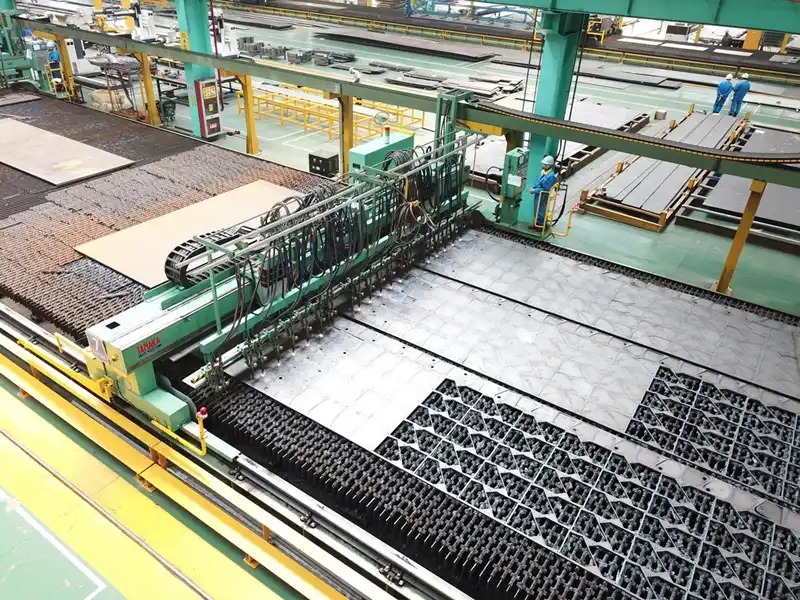
Additional plate preparation
Rings & Discs
Drawing-Based Blanks
Edge Preparation
Beveling
Drilling
Machining Allowance
Cutting tolerance should be defined before processing.
Standard cut plate, precision blanks and machining-ready parts
do not use the same dimensional acceptance. Provide the drawing
or final dimensions with the RFQ when edge condition, hole
position, profile tolerance, bevel or machining allowance is important.
Need stainless steel plate cut to drawing?
Send grade, plate thickness, finished dimensions, quantity
and drawing. The suitable cutting and processing route can
be reviewed with the quotation.
Request Cut Plate & Price
Applications & Fabrication Uses
Stainless Steel Plate Applications & Fabrication Uses
Stainless steel plate is used across process equipment, tanks, heat exchangers, hygienic equipment, marine structures and general fabrication. The end use affects the required grade, thickness, surface, fabrication route and inspection scope.

Where Plate Requirements Change
Application determines more than grade alone.
Chemical & Process Equipment
Plate for process vessels, fabricated equipment, ducting and corrosion-service components.
Review: environment · welding · inspection · documentationTanks & Vessels
Flat plate for storage tanks, fabricated shells, covers and internal components.
Review: thickness · forming · weld route · applicable codeHeat Exchangers
Plate used for channel components, covers, baffles and fabricated heat-transfer equipment.
Review: fluid service · temperature · fabrication · testingFood & Pharmaceutical Equipment
Sheet and plate for hygienic vessels, processing equipment and cleanable fabricated surfaces.
Review: surface finish · cleanliness · forming · weld finishMarine & Offshore Fabrication
Stainless plate may be selected for fabricated structures and equipment exposed to marine environments.
Review: environment · grade · welding · inspectionStructural & General Fabrication
Cut plate, blanks and formed components for industrial frames, machinery and fabricated assemblies.
Review: strength · dimensions · cutting · machining allowance
Tell us how the plate will be fabricated
Bending / Forming
·
Welding
·
Machining
·
Pressure Service
·
Hygienic Surface
·
Inspection / NDT
Application alone does not define the specification.
Final material selection depends on the actual service
environment, design code, fabrication route and project
requirements. Pressure, corrosion or temperature service
should be reviewed against the applicable grade and specification
rather than selected from the application name alone.
Buying plate for a specific fabrication project?
Send the application, grade or specification, plate dimensions,
quantity and fabrication requirements. TiAlloy can review the
appropriate supply route with the quotation.
Request Plate Availability & Price
Inspection · MTC · Traceability
Stainless Steel Plate Inspection, MTC & Traceability
Inspection and documentation are reviewed against the ordered grade, specification, dimensions and required test scope before stainless steel plate is released for shipment.
Quality Release
Scope follows the specification and purchase order.
Material & Dimensions
Grade, specification, heat / lot, thickness, width,
length, surface and material marking are reviewed
against the order.
Testing
Chemical and mechanical results follow the applicable
specification.
PMI, UT, PT or additional inspection can be arranged when specified.
MTC & Documents
EN 10204 Type 3.1 documentation can be supplied as ordered.
Type 3.2 and third-party witnessing are reviewed separately.
Document Scope
EN 10204 3.1 MTC
PMI / NDT when specified
3.2 project requirement
Release Evidence
Dimensional Record
Thickness, width and length checks can be recorded
where dimensional inspection is included in the order.
Surface & Marking
Surface condition and material identification are
reviewed before packing against the ordered condition.
Packing Match
Plate identification, MTC information and packing
documentation should correspond to the released material.
Material Traceability
Heat / Lot
Plate Marking
MTC
Packing List
Shipment
Identification should remain consistent from material release through packing and shipment documentation.
MTC
Need MTC, PMI or additional inspection?
Send grade, plate size, quantity and required certification scope.
Stainless Steel Plate RFQ
How to Specify a Stainless Steel Plate RFQ
A complete stainless steel plate enquiry lets grade, mill route, processing, testing and freight requirements be checked before quotation. Include the actual order details rather than only a grade name or nominal plate size.
Example — Quote-Ready Plate RFQ
316L / S31603
·
ASTM A240
·
12 × 1500 × 6000 mm
·
No.1
·
8 Plates
·
EN 10204 3.1
Add destination, required delivery date and any special
tolerance, inspection or preferred mill requirement to
complete the quotation basis.
Material
Grade / UNS
304L / S30403 · 316L / S31603 · 2205 / S32205
Product Form
Plate · Sheet · Coil · Strip
Standard
ASTM / ASME / EN / Project Specification
Dimensions
Thickness
Actual required thickness
Width × Length
Finished plate size in mm
Quantity
Pieces / plates or required total weight
Condition
Surface
No.1 · 2B · BA · No.4 · HL · Other
Tolerance / Edge
Standard or project-specific requirement
Processing
Full plate · Cut-to-size · Blank · Profile
Quality & Delivery
Testing / Certification
MTC 3.1 · PMI · UT · PT · 3.2 when specified
Destination
City / country or delivery port
Required Date
Target shipment or project need-by date
Drawing-based orders
For cut stainless steel plate, rings, blanks, drilled parts
or profiles, send the drawing with the RFQ and identify
finished dimensions, tolerance, edge condition,
hole requirements and machining allowance where applicable.
RFQ
Send a quote-ready stainless steel plate enquiry
Grade · Standard · Dimensions · Quantity · Surface · Testing · Destination
Container Loading & Export Shipment
Secure Container Loading for Stainless Steel Shipments
Before shipment, we check the container condition, packing stability and loading arrangement against the confirmed order. Each loading stage can be documented with photos to support quantity verification, cargo protection and shipment traceability.
01
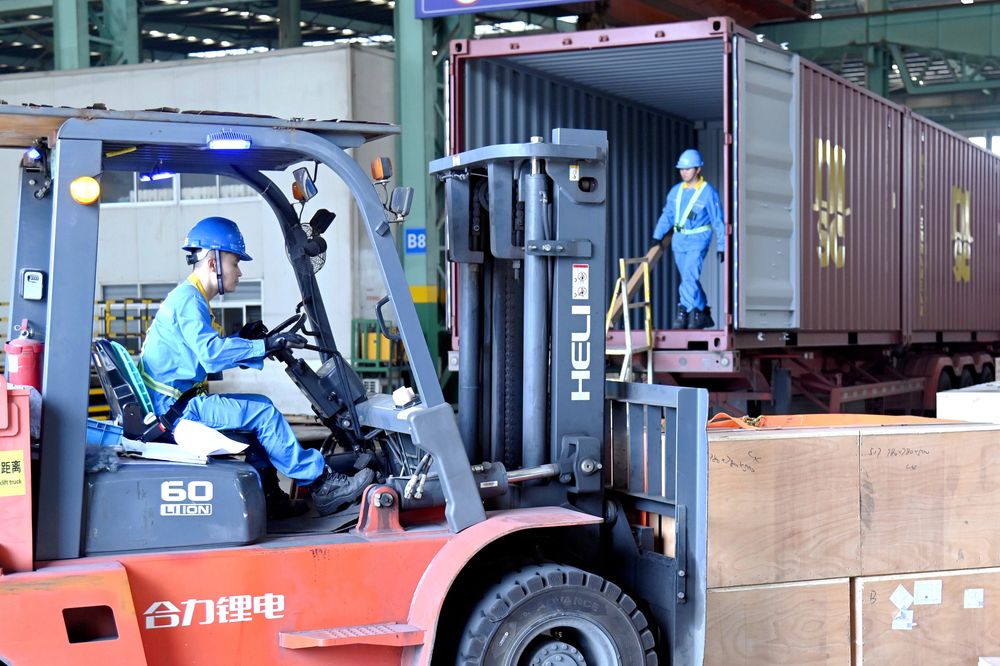
Pre-Loading Check
Container Condition Inspection
The container floor, walls, doors and visible moisture condition are checked before packed materials enter the container.
02
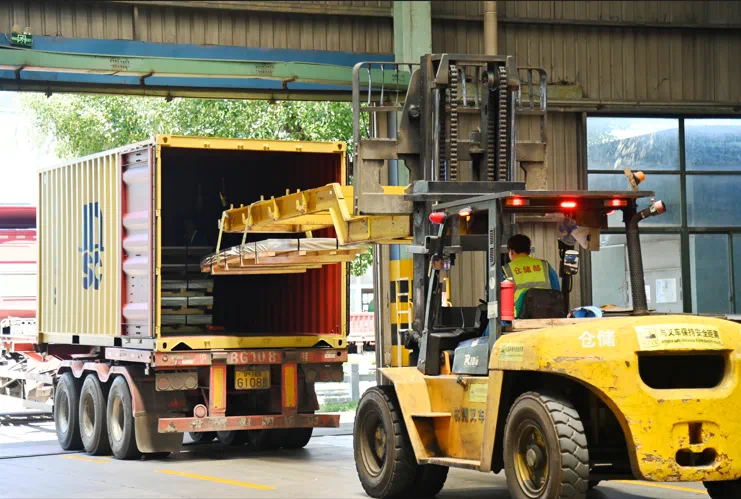
Cargo Protection
Waterproof & Moisture Protection
Export packages can include waterproof wrapping, protective barriers and moisture-control measures according to the agreed packing plan.
03
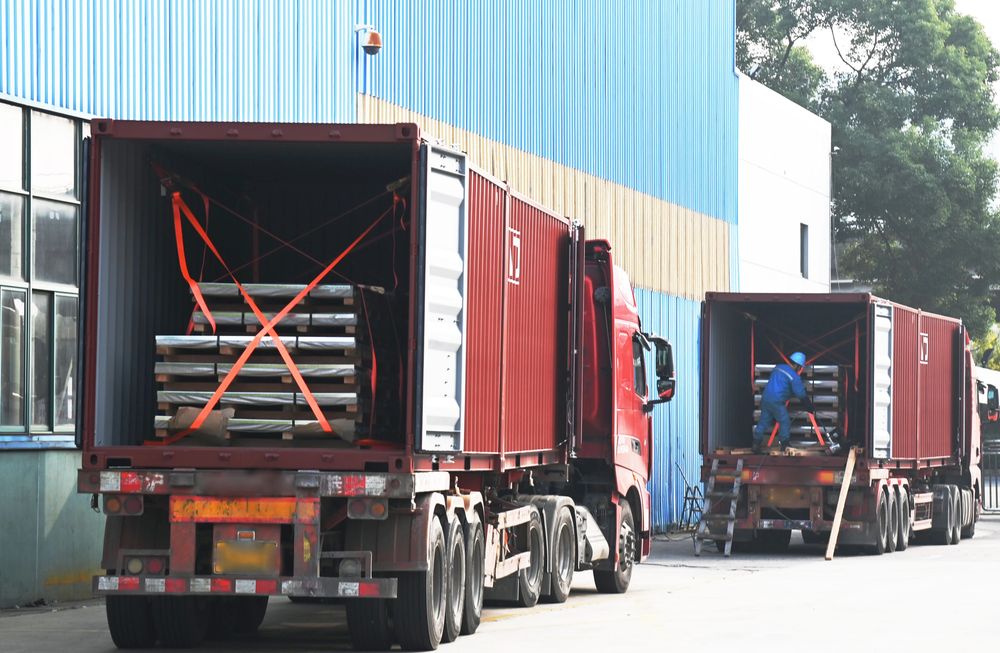
Loading Operation
Controlled Cargo Placement
Packages are positioned according to cargo weight, package dimensions and the planned unloading sequence.
04
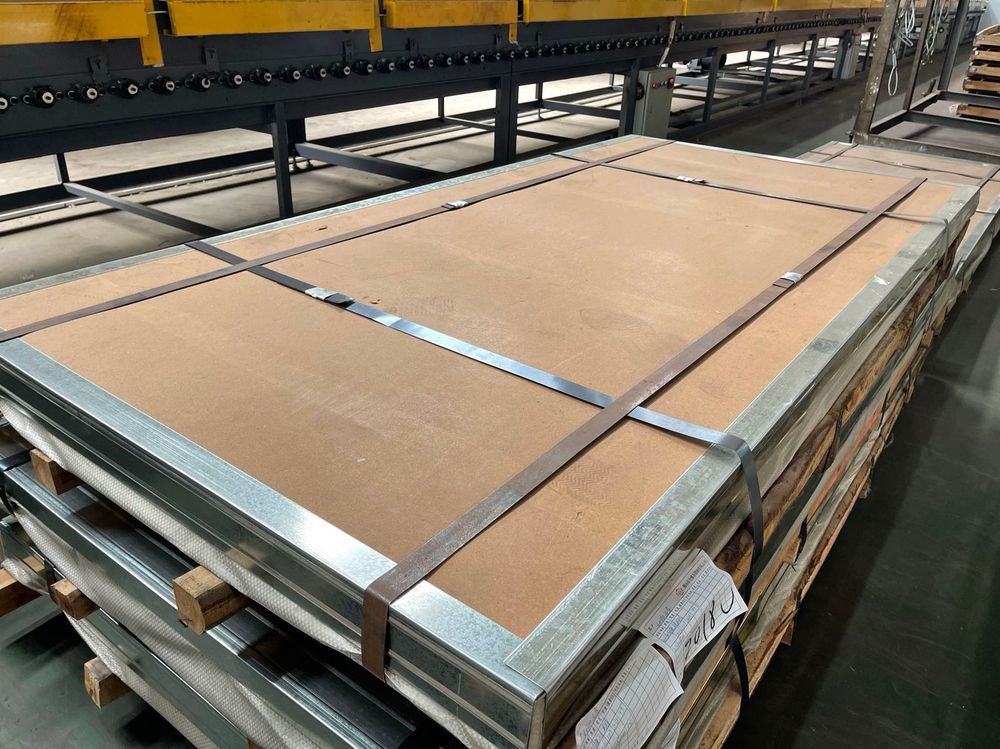
Transit Security
Blocking, Bracing & Securing
Appropriate supports, blocking and securing measures are selected to limit cargo movement during inland and ocean transportation.
05
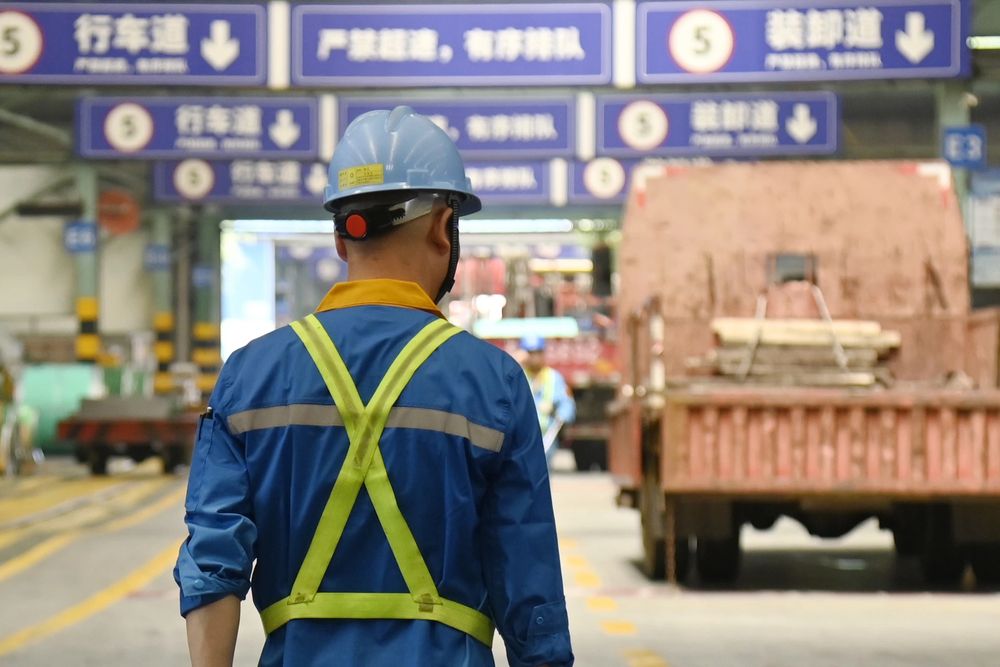
Final Verification
Package & Quantity Check
Package marks, visible condition and loaded quantities are checked against the confirmed packing and shipment information.
06

Shipment Release
Door Closing & Seal Record
Final loading photos and the container seal information can be recorded before the shipment leaves the loading site.
Loading Records for Clearer Shipment Verification
Before Loading
Container and visible package-condition check
During Loading
Cargo placement and securing records
Before Release
Final loading view and container seal record
Stainless Steel Plate & Sheet Grade Database
Stainless Steel Plate & Sheet Chemical Composition by Grade
Compare common stainless steel plate and sheet grades by principal alloying elements. Select a family on the left; the colored bars give a quick visual read while the values below each grade show the specified chemistry range.
C
Si
Mn
Ni
Cr
Mo
Cu
Ti
Nb
N
W
Al
P
S
Fe
01 · Austenitic Stainless Steel
201
S20100
C ≤0.15%
Si ≤1.00%
Mn 5.50–7.50%
Ni 3.50–5.50%
Cr 16.00–18.00%
N ≤0.25%
Fe Balance
202
S20200
C ≤0.15%
Si ≤1.00%
Mn 7.50–10.00%
Ni 4.00–6.00%
Cr 17.00–19.00%
N ≤0.25%
Fe Balance
301
S30100
C ≤0.15%
Si ≤1.00%
Mn ≤2.00%
Ni 6.00–8.00%
Cr 16.00–18.00%
Fe Balance
302
S30200
C ≤0.15%
Si ≤0.75%
Mn ≤2.00%
Ni 8.00–10.00%
Cr 17.00–19.00%
Fe Balance
303
S30300
C ≤0.15%
Si ≤1.00%
Mn ≤2.00%
P ≤0.20%
S ≥0.15%
Ni 8.00–10.00%
Cr 17.00–19.00%
Fe Balance
304
S30400
C ≤0.08%
Si ≤0.75%
Mn ≤2.00%
Ni 8.00–10.50%
Cr 18.00–20.00%
N ≤0.10%
Fe Balance
304L
S30403
C ≤0.030%
Si ≤0.75%
Mn ≤2.00%
Ni 8.00–12.00%
Cr 18.00–20.00%
N ≤0.10%
Fe Balance
304H
S30409
C 0.04–0.10%
Si ≤0.75%
Mn ≤2.00%
Ni 8.00–10.50%
Cr 18.00–20.00%
Fe Balance
304N
S30451
C ≤0.08%
Ni 8.00–10.50%
Cr 18.00–20.00%
N 0.10–0.16%
Fe Balance
304LN
S30453
C ≤0.030%
Ni 8.00–12.00%
Cr 18.00–20.00%
N 0.10–0.16%
Fe Balance
309S
S30908
C ≤0.08%
Ni 12.00–15.00%
Cr 22.00–24.00%
Fe Balance
309H
S30909
C 0.04–0.10%
Ni 12.00–15.00%
Cr 22.00–24.00%
Fe Balance
310S
S31008
C ≤0.08%
Si ≤1.50%
Ni 19.00–22.00%
Cr 24.00–26.00%
Fe Balance
310H
S31009
C 0.04–0.10%
Si ≤1.50%
Ni 19.00–22.00%
Cr 24.00–26.00%
Fe Balance
316
S31600
C ≤0.08%
Ni 10.00–14.00%
Cr 16.00–18.00%
Mo 2.00–3.00%
Fe Balance
316L
S31603
C ≤0.030%
Ni 10.00–14.00%
Cr 16.00–18.00%
Mo 2.00–3.00%
Fe Balance
316H
S31609
C 0.04–0.10%
Ni 10.00–14.00%
Cr 16.00–18.00%
Mo 2.00–3.00%
Fe Balance
316LN
S31653
C ≤0.030%
Ni 10.00–14.00%
Cr 16.00–18.00%
Mo 2.00–3.00%
N 0.10–0.16%
Fe Balance
316Ti
S31635
C ≤0.08%
Ni 10.00–14.00%
Cr 16.00–18.00%
Mo 2.00–3.00%
Ti Stabilized
Fe Balance
317L
S31703
C ≤0.030%
Ni 11.00–15.00%
Cr 18.00–20.00%
Mo 3.00–4.00%
Fe Balance
321
S32100
C ≤0.08%
Ni 9.00–12.00%
Cr 17.00–19.00%
Ti Stabilized
Fe Balance
321H
S32109
C 0.04–0.10%
Ni 9.00–12.00%
Cr 17.00–19.00%
Ti Stabilized
Fe Balance
347
S34700
C ≤0.08%
Ni 9.00–13.00%
Cr 17.00–19.00%
Nb+Ta Stabilized
Fe Balance
347H
S34709
C 0.04–0.10%
Ni 9.00–13.00%
Cr 17.00–19.00%
Nb+Ta Stabilized
Fe Balance
02 · Super Austenitic & High-Alloy Stainless Steel
253MA
S30815
C 0.05–0.10%
Si 1.40–2.00%
Ni 10.00–12.00%
Cr 20.00–22.00%
N 0.14–0.20%
Fe Balance
904L
N08904
C ≤0.020%
Ni 23.00–28.00%
Cr 19.00–23.00%
Mo 4.00–5.00%
Cu 1.00–2.00%
Fe Balance
S31254
254 SMO
C ≤0.020%
Ni 17.50–18.50%
Cr 19.50–20.50%
Mo 6.00–6.50%
Cu 0.50–1.00%
N 0.18–0.22%
Fe Balance
926
N08926
C ≤0.020%
Ni 24.00–26.00%
Cr 19.00–21.00%
Mo 6.00–7.00%
Cu 0.50–1.50%
N 0.15–0.25%
Fe Balance
AL-6XN
N08367
C ≤0.030%
Ni 23.50–25.50%
Cr 20.00–22.00%
Mo 6.00–7.00%
N 0.18–0.25%
Fe Balance
S32654
654 SMO
C ≤0.020%
Mn 2.00–4.00%
Ni 21.00–23.00%
Cr 24.00–25.00%
Mo 7.00–8.00%
N 0.45–0.55%
Fe Balance
03 · Duplex & Super Duplex Stainless Steel
2101
S32101
C ≤0.040%
Mn 4.00–6.00%
Ni 1.35–1.70%
Cr 21.00–22.00%
Mo 0.10–0.80%
N 0.20–0.25%
Fe Balance
2304
S32304
C ≤0.030%
Ni 3.00–5.50%
Cr 21.50–24.50%
Mo 0.05–0.60%
N 0.05–0.20%
Fe Balance
S31803
Duplex
C ≤0.030%
Ni 4.50–6.50%
Cr 21.00–23.00%
Mo 2.50–3.50%
N 0.08–0.20%
Fe Balance
2205
S32205
C ≤0.030%
Ni 4.50–6.50%
Cr 22.00–23.00%
Mo 3.00–3.50%
N 0.14–0.20%
Fe Balance
S32550
S32550
C ≤0.040%
Ni 4.50–6.50%
Cr 24.00–27.00%
Mo 2.90–3.90%
Cu 1.50–2.50%
N 0.10–0.25%
Fe Balance
2507
S32750
C ≤0.030%
Ni 6.00–8.00%
Cr 24.00–26.00%
Mo 3.00–5.00%
N 0.24–0.32%
Fe Balance
S32760
Super Duplex
C ≤0.030%
Ni 6.00–8.00%
Cr 24.00–26.00%
Mo 3.00–4.00%
Cu 0.50–1.00%
W 0.50–1.00%
N 0.20–0.30%
Fe Balance
04 · Ferritic Stainless Steel
405
S40500
C ≤0.08%
Cr 11.50–14.50%
Al 0.10–0.30%
Fe Balance
409L
S40903
C ≤0.030%
Cr 10.50–11.75%
Ti Stabilized
Fe Balance
430
S43000
C ≤0.12%
Si ≤1.00%
Mn ≤1.00%
Cr 16.00–18.00%
Fe Balance
430F
S43020
C ≤0.12%
Cr 16.00–18.00%
S ≥0.15%
Fe Balance
434
S43400
C ≤0.12%
Cr 16.00–18.00%
Mo 0.75–1.25%
Fe Balance
436
S43600
C ≤0.12%
Cr 16.00–18.00%
Mo 0.75–1.25%
Nb Stabilized
Fe Balance
439
S43035
C ≤0.030%
Cr 17.00–19.00%
Ti Stabilized
Fe Balance
441
S44100
C ≤0.030%
Cr 17.50–19.50%
Ti/Nb Stabilized
Fe Balance
444
S44400
C ≤0.025%
Cr 17.50–19.50%
Mo 1.75–2.50%
Ti/Nb Stabilized
Fe Balance
446
S44600
C ≤0.20%
Cr 23.00–27.00%
Fe Balance
05 · Martensitic Stainless Steel
403
S40300
C ≤0.15%
Cr 11.50–13.00%
Fe Balance
410
S41000
C ≤0.15%
Cr 11.50–13.50%
Fe Balance
410S
S41008
C ≤0.08%
Cr 11.50–13.50%
Fe Balance
414
S41400
C ≤0.15%
Ni 1.25–2.50%
Cr 11.50–13.50%
Fe Balance
416
S41600
C ≤0.15%
S ≥0.15%
Cr 12.00–14.00%
Fe Balance
420
S42000
C ≥0.15%
Cr 12.00–14.00%
Fe Balance
422
S42200
C 0.20–0.25%
Cr 11.00–12.50%
Mo 0.75–1.25%
W 0.75–1.25%
Fe Balance
431
S43100
C ≤0.20%
Ni 1.25–2.50%
Cr 15.00–17.00%
Fe Balance
440A
S44002
C 0.60–0.75%
Cr 16.00–18.00%
Mo ≤0.75%
Fe Balance
440B
S44003
C 0.75–0.95%
Cr 16.00–18.00%
Mo ≤0.75%
Fe Balance
440C
S44004
C 0.95–1.20%
Cr 16.00–18.00%
Mo ≤0.75%
Fe Balance
06 · Precipitation-Hardening & High-Strength Stainless Steel
17-4PH
S17400
C ≤0.07%
Ni 3.00–5.00%
Cr 15.00–17.50%
Cu 3.00–5.00%
Nb+Ta 0.15–0.45%
Fe Balance
15-5PH
S15500
C ≤0.07%
Ni 3.50–5.50%
Cr 14.00–15.50%
Cu 2.50–4.50%
Nb+Ta 0.15–0.45%
Fe Balance
17-7PH
S17700
C ≤0.09%
Ni 6.50–7.75%
Cr 16.00–18.00%
Al 0.75–1.50%
Fe Balance
PH15-7Mo
S15700
C ≤0.09%
Ni 6.50–7.75%
Cr 14.00–16.00%
Mo 2.00–3.00%
Al 0.75–1.50%
Fe Balance
13-8Mo
S13800
C ≤0.05%
Ni 7.50–8.50%
Cr 12.25–13.25%
Mo 2.00–2.50%
Al 0.90–1.35%
Fe Balance
XM-19
S20910
C ≤0.06%
Mn 4.00–6.00%
Ni 11.50–13.50%
Cr 20.50–23.50%
Mo 1.50–3.00%
N 0.20–0.40%
Fe Balance
S21800
S21800
C ≤0.10%
Si 3.50–4.50%
Mn 7.00–9.00%
Ni 8.00–9.00%
Cr 16.00–18.00%
N 0.08–0.18%
Fe Balance
Chemical composition is shown in weight percent. The colored bars are intended only as a visual comparison of the principal alloying elements and are not drawn as a certification-scale representation. Fe indicates balance. Exact chemical limits must be verified against the governing product specification and edition, such as ASTM A240 / A240M (plate, sheet & strip, including duplex grades), ASTM A480 / A480M (general requirements for flat-rolled products), ASTM A666 (cold-rolled sheet, strip, plate & flat bar for structural & pressure vessel applications) or the applicable project standard, before quotation, production or material certification.
Stainless Steel Plate & Coil Tools
-
stainless flat weight calculator
Quickly calculate the theoretical weight of your stainless steel plates based on dimensions, thickness, and material grade.
Access Tool -
delivery form route selector
Determine the optimal delivery format and logistics route tailored to your specific material processing requirements.
Access Tool -
stainless quote completeness comparator
Evaluate and compare vendor quotes to ensure all technical specifications, tolerances, and hidden costs are transparent.
Access Tool
Request a specification-based quotation
Send the six fields that control stainless steel plate and coil price, processing and release.
Request a QuotePreparation Checklist
Attach the standard/grade, delivery form, dimensions/quantity, finish/processing, inspection-document plan and commercial/logistics basis.
TiAlloy will identify open assumptions before confirming the quote.
Choose from the next production constraint: plate for heavy or low-repeat cut parts, cut sheet for fixed blanks, coil for a line with decoiling/straightening/feed control, and slit strip for narrow continuous processing. Compare yield only after including coil handling, flatness, burr and scrap.
01