Specialty Metals Supplier: Titanium, Stainless Steel and Nickel Alloy Mill Products

  • Quotes returned within one business day
  • Lead time quoted as a confirmed production slot
  • EN 10204 Type 3.1 certificate as standard
  • Plate, sheet, pipe, tube, bar, rod, wire and forgings

TiAlloy melts, forges, rolls, anneals and finishes three families of corrosion-resistant alloy in one plant: titanium, stainless steel and nickel alloy. Chemistry is set on our own melting lines; the melt record and order documentation follow the same production route that made the metal. Send a grade or a service condition and we’ll tell you what we would quote against. See our stainless steel foil page for related specification guidance.

Not sure which grade the duty needs? Open the titanium grade selector, the nickel alloy grade selector or the PREN calculator before you send anything.


Quote turnaround Within one business day
 
 
Lead time Quoted as a confirmed production slot, not an estimated date
 
 
Minimum order Minimum order quantity is set per grade and per form, confirmed in writing
 
 
With every shipment EN 10204 Type 3.1 inspection certificate, dimensional report and packing list
 
 
Payment 30% deposit with the order, balance before dispatch
 
 
Trade terms Priced within the Incoterms you work to
 

From Vacuum Melt to Finished Mill Product on One Site

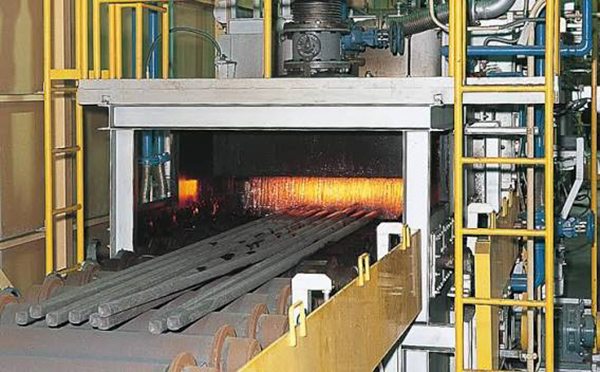
Melting, forging, rolling, heat treatment, tube making, bar finishing and plate processing run on our own lines in one plant. The site is a 30,000 m² production base, and we've been making metal for more than 20 years. That matters for one reason a buyer can check: the party that set the chemistry is the party that signs the certificate.


Melting

Vacuum induction melting, vacuum arc remelting and electroslag remelting produce the ingot. Remelting is what removes the inclusions that later show up as an ultrasonic indication.


Forging and rolling

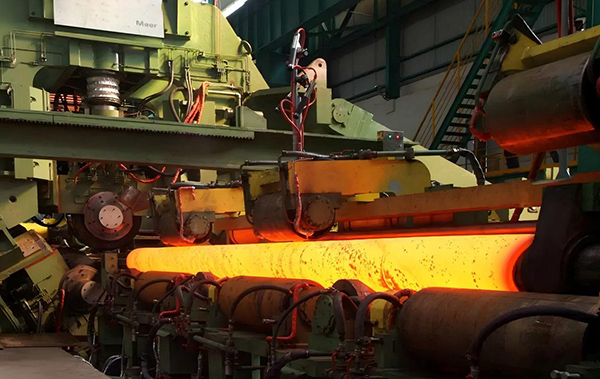
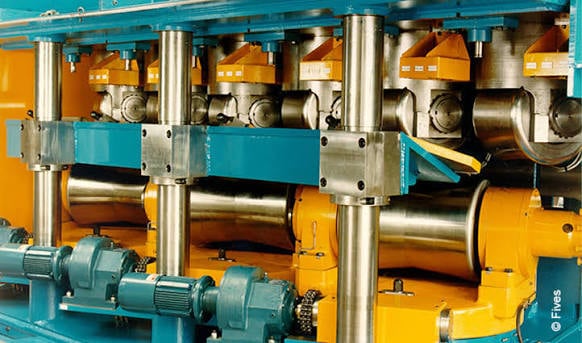
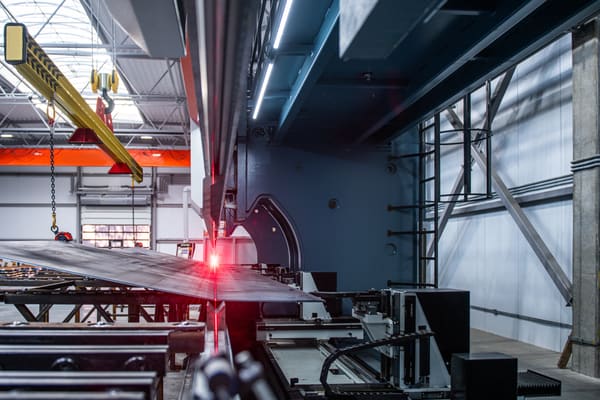
Hydraulic presses and hammers break the ingot down to billet. Hot and cold rolling mills then produce plate, sheet and strip; bar rolling mills produce round stock.


Heat treatment

Solution annealing and bright annealing furnaces set the delivered condition. The delivered condition is stated on the certificate, not assumed from the grade.


Tube making and finishing

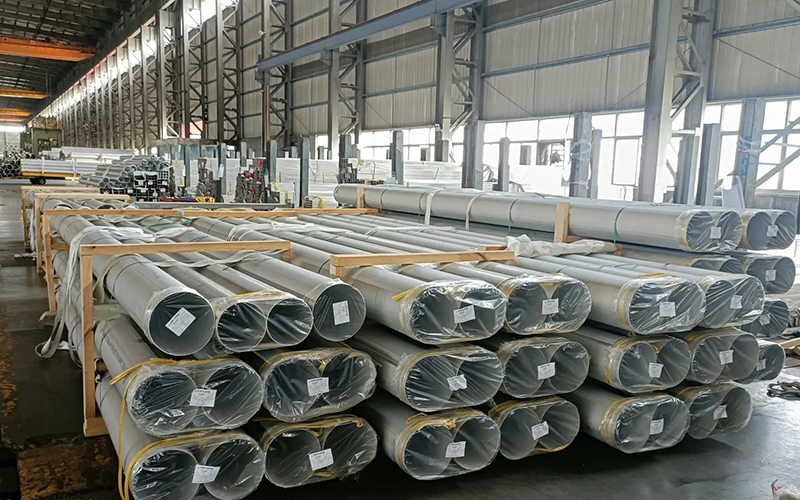
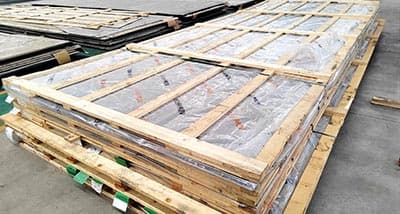
Tube rolling mills, cold pilger mills, drawing benches and straighteners produce pipe and tube. Pickling and passivation, peeling, centreless grinding, cutting, polishing and export packing close the route.

Finished Mill Product Engineering Facility
 

Product forms off these lines

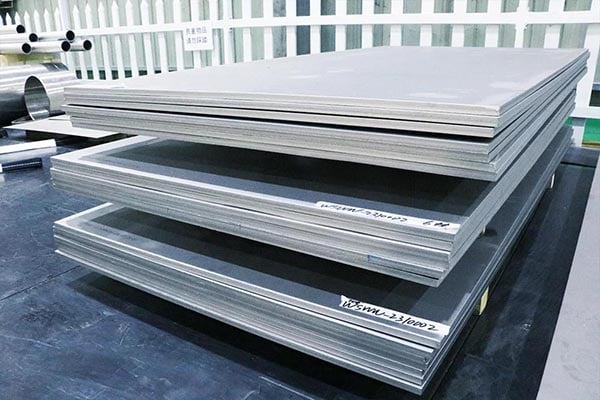
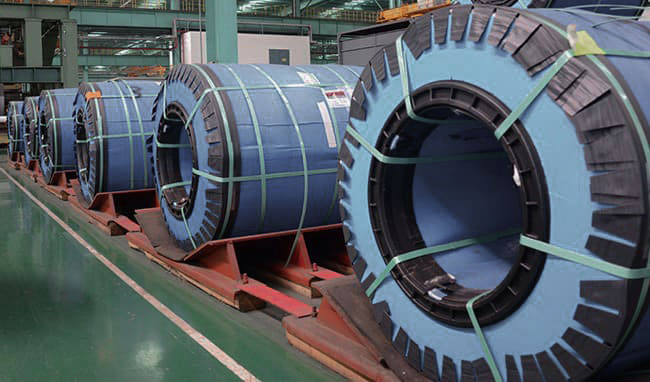
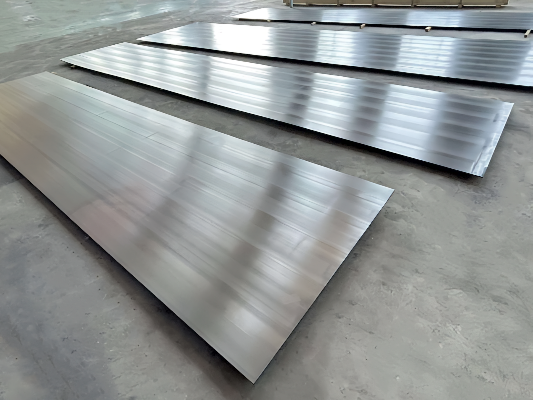
  • 01 Plate, sheet and strip in all three alloy families
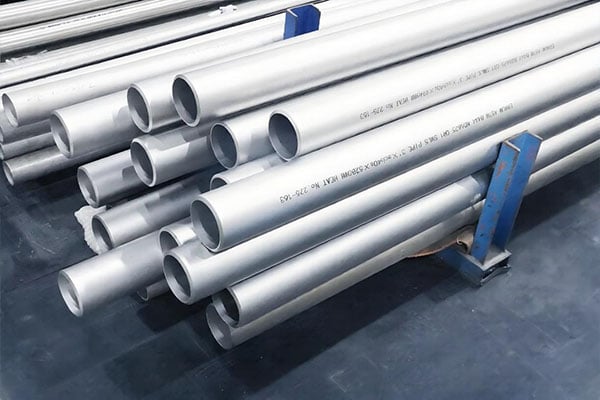
  • 02 Unwelded and welded pipe, and condenser and heat-exchanger tube
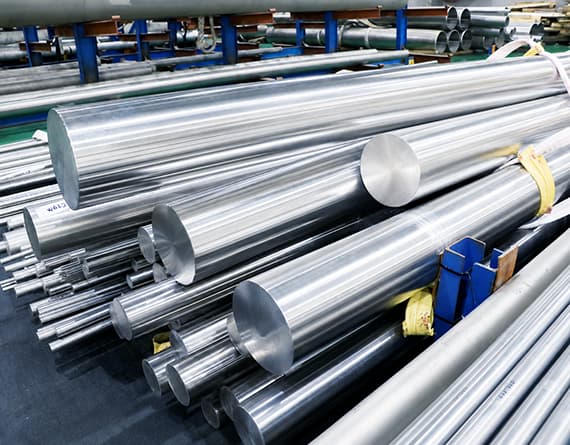
  • 03 Bar, rod and billet, peeled or centreless ground
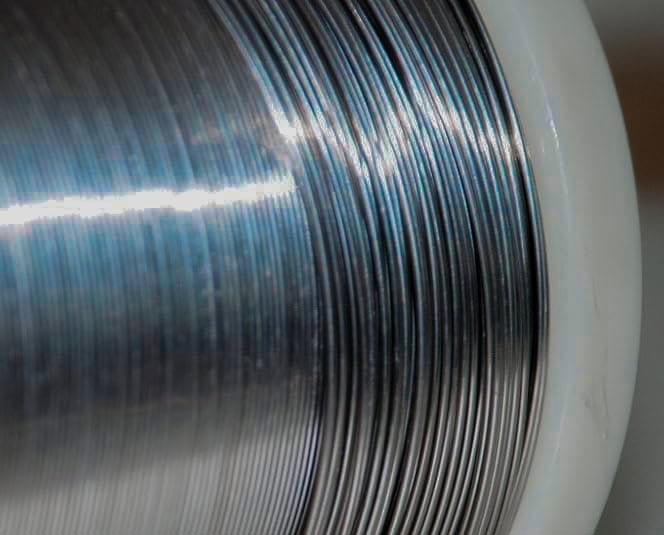
  • 04 Wire for welding filler, springs, mesh and anode connections
  • 05 Forgings and rolled rings
  • 06 Clad plate, where a corrosion-resistant layer is bonded to a structural backing

Custom sizes are a scheduling question here rather than a sourcing question. If a section is not on the list, send the drawing and the governing specification with your enquiry.


Three Corrosion-Resistant Alloy Families and One Clad-Plate Line

Specialty metal supply splits along one line before anything else: which alloy family the duty needs. Corrosion-resistant alloys, or CRAs, are the alloys chosen when carbon steel won't survive the medium, and we run three of those families plus a fourth product line that bonds them to structural backing. Corrosion resistance is specified rather than assumed here: the grade that survives seawater isn't the grade that survives hot reducing acid, and the two rarely cost the same.


Titanium and titanium alloys mill products


01 Titanium alloys

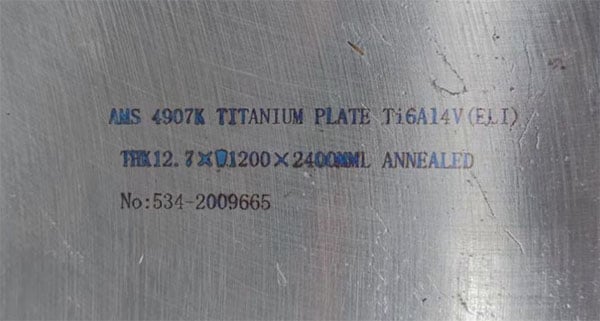
Grade 1, 2, 3, 4, 5 (Ti-6Al-4V), 7, 9, 12 and 23 (Ti-6Al-4V ELI)
Why engineers pick itIt carries a stable oxide film in seawater and wet chlorine, and its density lets a designer hold pressure at a thinner wall than a steel equivalent.
FormsPlate, sheet, tube, pipe, bar, wire, forgings


Stainless steel plate, pipe and bar


02 Stainless steel

Grades304/304L, 316L, 321, 904L, duplex 2205, super duplex 2507 — the types of stainless steel that carry chloride and acid duty
Why engineers pick itChromium builds the passive film; molybdenum and nitrogen extend it into chloride service. The duplex grades add strength on top of that.
FormsPlate, coil, sheet, pipe, tube, bar, rod, foil


Nickel alloy plate, tube and bar


03 Nickel alloys

GradesInconel 600, 625 and 718; Hastelloy C276 and C22; Monel and Incoloy grades to order
Why engineers pick itThese are the high temp alloys: they hold mechanical properties at high temperature and stay serviceable in mixed oxidising and reducing media where the stainless grades stop.
FormsPlate, tube, pipe, bar, rod, forgings


Corrosion-resistant Clad plate


04 Clad plate

ConstructionCorrosion-resistant layer bonded to a structural backing plate
Why engineers pick itIt puts the expensive alloy only where the medium touches it, and lets the backing carry the load.
Where it goesReactors, pressure vessels, columns and desalination equipment
Relative priceSet by the cladding alloy and the bonded area

The single-BOM test

Most corrosion-resistant material enquiries aren't for one grade. They're a bill of materials with a titanium tube bundle, a duplex shell and a nickel alloy nozzle on the same drawing set. Four questions decide whether one supplier can carry that whole list; call it the single-BOM test.

Test Question to put Where we stand
Common melt source Are all three alloy families melted by the same party, or bought in from three? All three run on our own melting lines
Certificate origin Who signs the certificate — the party that made the metal, or the party that resold it? Certificate issuer, supplying legal entity, scope and expiry must be verified for each order
Non-standard sections Is an odd width or wall a production decision or a sourcing hunt? A production decision, priced in the quote
Cross-material advice Will the supplier route you away from its own dearer product when the duty calls for it? We do; see the seawater note below
 

That last row is the one worth pushing on. For seawater-cooled condensers we'll often steer a buyer from a nickel alloy back to titanium, because the titanium answers chloride pitting without the alloying cost.


Specialty Metal Grades, Governing Standards and Mill Forms

Most quotation disputes are specification disputes wearing a price argument. The cross-standard routing table below sends each product form to the standard that actually governs it, which removes that failure before it costs anyone a rejection.


Product form Governing standard Scope of that standard Grades we roll
Titanium plate, sheet and strip ASTM B265 Titanium and titanium alloy strip, sheet and plate — flat-rolled product only Grade 1, 2, 3, 4, 5, 7, 12, 23
Titanium condenser and heat-exchanger tube ASTM B338 Unwelded and welded titanium tube, scoped to condenser and heat-exchanger service Grade 2, 7, 9, 12
Titanium pipe ASTM B861 (unwelded) / ASTM B862 (welded) Two separate standards — unwelded and welded titanium pipe are never interchangeable on a purchase order Grade 2, 7, 12
Titanium bar and billet ASTM B348 Titanium and titanium alloy bars and billets; wire and forgings sit outside it Grade 2, 5, 7, 23
Titanium forgings / wire ASTM B381 / ASTM B863 Forgings and wire each carry their own specification Grade 2, 5, 23
Stainless plate, sheet and strip ASTM A240 Chromium and chromium-nickel stainless plate, sheet and strip for pressure vessels and general applications 304/304L, 316L, 321, 904L, 2205, 2507
Austenitic stainless pipe ASTM A312 Austenitic stainless pipe in three manufacturing routes — unwelded, welded and heavily cold worked. Austenitic only 304/304L, 316L, 321
Duplex stainless pipe ASTM A790 Unwelded and welded ferritic/austenitic stainless pipe — this, not A312, is where duplex belongs 2205, 2507
Boiler, superheater and heat-exchanger tube ASTM A213 Unwelded ferritic and austenitic alloy steel boiler, superheater and heat-exchanger tubes; 3.2 mm inside diameter to 127 mm outside diameter, 0.4 to 12.7 mm wall TP304, TP316, TP321
Stainless bar and shapes ASTM A276 Stainless steel bars and shapes 304/304L, 316L, 321, 2205
Nickel alloy pipe and tube ASTM B444 Nickel-chromium-molybdenum-niobium and nickel-chromium-molybdenum-silicon alloy pipe and tube Inconel 625 and related grades
Clad plate Backing and cladding each to their own product standard Bond specification is confirmed with the order Titanium, stainless and nickel cladding

Surface condition and delivered state

Surface condition is a corrosion variable, not a cosmetic one. Rust appearing days after installation is iron contamination picked up in fabrication rather than the wrong grade arriving.


Form Standard condition Available on request
Hot rolled plate Annealed and pickled Shot blasted, ground
Cold rolled coil and sheet 2B Bright annealed, No.4 brushed
Pipe and tube Pickled and annealed Polished, electropolished
Bar and rod Peeled and ground Centreless ground, bright drawn
Titanium flat product Descaled and pickled Cut to size, sheared, plasma cut

Passivation is the step buyers most often leave out of the specification and then miss on delivery. Name it in the enquiry if the duty needs it.

SUPPLY NETWORK

Our Mill & Supply Network

We work with established mills and specialty metal producers across stainless steel, titanium and nickel alloys to support a wider range of grades, forms and delivery requirements.

TISCO
Baosteel
Daido Steel
Carpenter Technology
Nippon Steel
Special Metals
VDM Metals
ATI
Haynes International
Tsingshan
TISCO
Baosteel
Daido Steel
Carpenter Technology
Nippon Steel
Special Metals
VDM Metals
ATI
Haynes International
Tsingshan

What Moves Your Price, and the Lead-Time Commitment We Make

Pricing is confirmed in the quotation after the stated enquiry inputs are reviewed. A figure for a specialty metal without a grade, a form, a thickness, a quantity and a certificate level is a number with nothing behind it. What we can publish is every variable that moves it.

Driver Effect on cost How to reduce it
Grade and alloying content Molybdenum, nickel, nitrogen and palladium set the raw material floor Send the service data and let us propose the grade rather than over-specifying
Product form Each drawing or rolling pass adds yield loss and process time Order the nearest standard section your design allows
Thickness and tolerance Thinner and tighter both reduce mill yield Apply the tight band only where the drawing needs it
Quantity Alloys are melted in heats; a partial heat carries the remainder Consolidate across the bill of materials, or schedule repeats
Certificate level and test scope Type 3.2 adds an independent inspector and calendar time; witnessed tests add process steps Specify 3.2 only where the code or the client demands it
Landed cost lines Duty, ocean freight, marine insurance, customs brokerage and the US harbor maintenance and merchandise processing fees each land separately Give us the destination port and we quote them as separate lines

How your quote is produced

Send a grade or the service condition and a quote comes back within one business day, reviewed by an engineer rather than generated by a configurator. A complete enquiry states grade or service condition, product form and dimensions with tolerance where it is critical, quantity and whether it repeats, the governing specification (ASTM, ASME, AMS or a customer standard), the certificate level and any witnessed testing, surface condition and marking, and the destination port with the delivery window.

How we express lead time

Lead time is quoted as a confirmed production slot, not as an estimated date, and if the slot moves we tell you rather than waiting to be chased. Expedited scheduling is available; feasibility and any expedite premium are confirmed with your quotation.

Minimum order quantity

Minimum order quantity is set per grade and per form, and confirmed in writing with the quotation. Melt economics differ by grade: a duplex heat and a 304 coil run don't carry the same minimum, so a single flat figure would be a fiction. Trial and small quantities are quoted on request.

Payment and trade terms

We work on telegraphic transfer terms: 30% deposit with the order, balance before dispatch. We quote within the Incoterms you work to; give us the term and the destination port and the quotation is priced inside it.

Order Documentation & Traceability

Material Documents, Heat Traceability and Inspection Records

Documentation is defined against the ordered material, product form, governing specification and purchase requirements. Certificate type, inspection scope and traceability requirements are reviewed with the RFQ so the required document package can be confirmed before material release.

Certificate ownership matters

Mill, processor and independent inspection certificates remain attributable to the legal entity that issued them. They are not presented as TiAlloy certifications unless TiAlloy is the certified entity and the applicable scope has been verified.

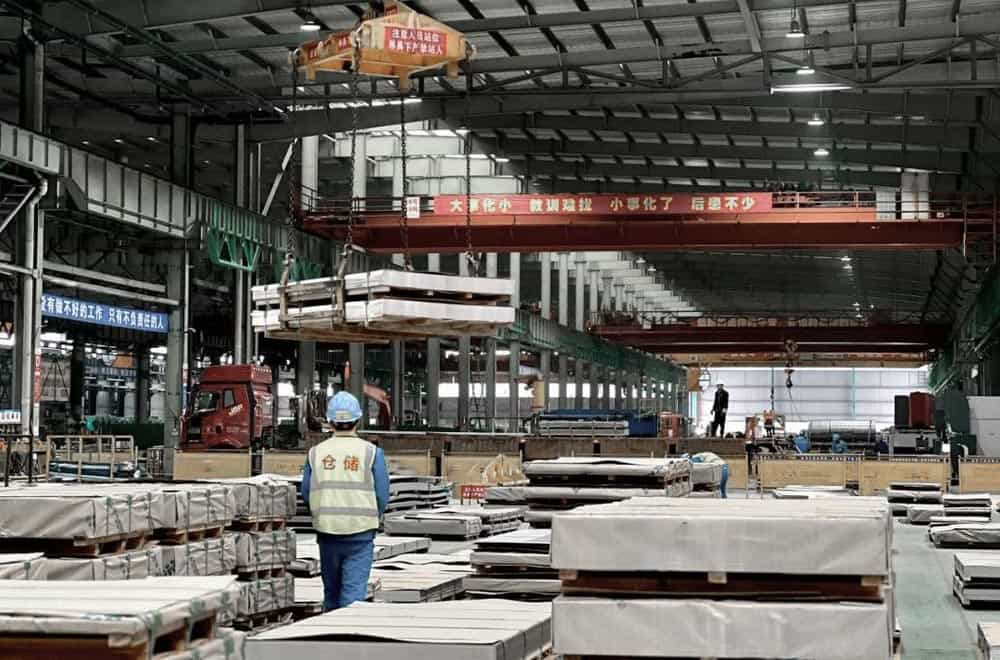
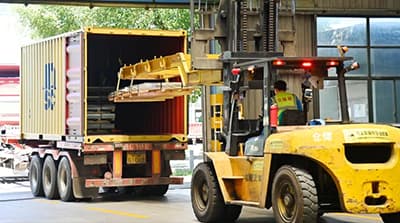
Industrial metal material handling and inspection environment
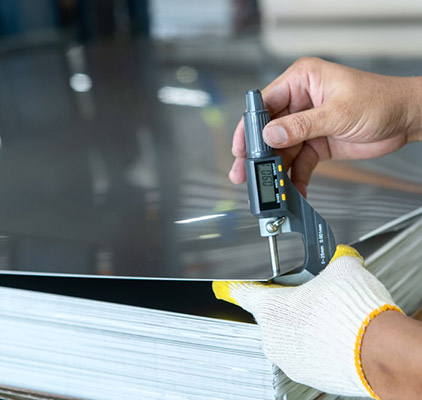
Representative industrial material handling image. Order-specific inspection and document requirements are confirmed separately.
01

Material identity

Grade, product form, heat or lot identification and physical marking are matched to the applicable order records.

02

Material test records

Chemistry, mechanical properties and applicable test results are reviewed against the governing product specification and ordered material condition.

03

Additional inspection

PMI, dimensional inspection, NDT, third-party witness points and additional certification can be arranged when specified and applicable.

Order-to-Shipment Link

Traceability should remain connected to the material.

The practical objective is simple: the ordered material identity, physical marking, inspection records and shipment documents should refer back to the same supply route. Requirements for cut pieces, remarking or special traceability should be stated before processing.

STEP 01

RFQ / PO

Grade, form, standard and document scope.

STEP 02

Heat / Lot

Material identity linked to source records.

STEP 03

Material Marking

Identification retained through agreed processing.

STEP 04

Inspection Records

Ordered testing and dimensional records assembled.

STEP 05

Shipment File

Applicable material and packing documents released.

Material Documentation

Confirm the certificate requirement before ordering.

MTC / MTR and EN 10204 Type 3.1 documentation can be supplied according to the applicable material route and purchase specification. Required certificate type should be stated with the enquiry rather than assumed to apply universally to every product.

MTC / MTR Heat identification Chemical results Mechanical results Dimensional records
When Specified

Additional inspection can be built into the order.

EN 10204 Type 3.2 requirements, PMI, ultrasonic testing, eddy-current testing, penetrant testing, customer witness points or independent third-party inspection can be reviewed when required by the applicable product, project or purchase specification.

EN 10204 3.2 PMI UT / ET / PT Third-party inspection Witness points
Certificate Ownership Boundary

Where an order uses a mill, processor, laboratory or independent inspection body, any certificate or approval remains specific to the issuing legal entity, its stated scope and its validity. Supplier-level, mill-level or programme-specific approvals are identified separately and are not treated as TiAlloy corporate certifications unless independently verified as such.

QC
Define It Before Production

Need a specific certificate or inspection package?

Send the grade, product form, standard, dimensions and required inspection documents with the RFQ so the scope can be reviewed before quotation.

Send Inspection Requirements
 

From Enquiry to Shipment in Six Steps


Metal manufacturing process flow


01

Send the specification:

a grade, or the medium, temperature and pressure if you want us to propose one.

 
02

Engineering review:

we cross-reference the governing specification, flag any form-to-standard mismatch and raise classification questions.

 
03

Written quotation:

grade, standard, certificate level, test scope, production slot and trade terms, all on the same page.

 
04

Production:

the heat is scheduled, and progress is reported against the slot rather than against a hoped-for date.

 
05

Inspection and documents:

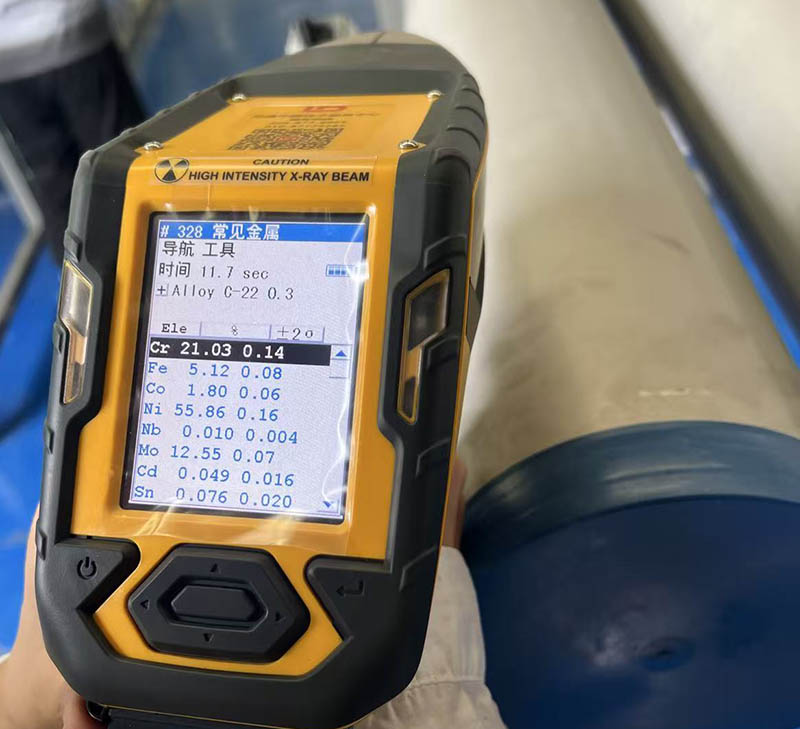
testing to the governing specification, then the certificate package assembled against the heat.

 
06

Packing and shipment:

export packing, documentation and dispatch inside the agreed trade terms.

Enquiry lines that make the first quote the right one

Line Detail to state Why it changes the quote
Grade or service data The grade, or measured chloride level, peak metal temperature and whether a crevice exists at the weld Service data lets us recommend rather than guess; a familiar grade name is the most common cause of over- and under-specification
Form and dimensions Thickness or wall and diameter, plus tolerance class where it matters Non-standard sections may need a dedicated run
Certificate level Type 3.1 or 3.2, and the nominated inspection body Type 3.2 adds an inspector and calendar time to the slot
Destination and terms Port, delivery window and the Incoterm It decides when duty, freight and brokerage are charged and to whom
 

Service Environments, Corrosion Risks and the Grades That Take Them


We group by what the metal is wetted by, because the medium and the temperature decide the grade far more reliably than the name of the industry does. An industrial sector label is the single most common route to the wrong material.


Service environment Dominant corrosion risk Grades we supply into it
Seawater and brackish water — condensers, desalination, offshore coolers Chloride pitting and crevice attack Titanium Grade 2 and Grade 12; super duplex 2507 where a steel is required
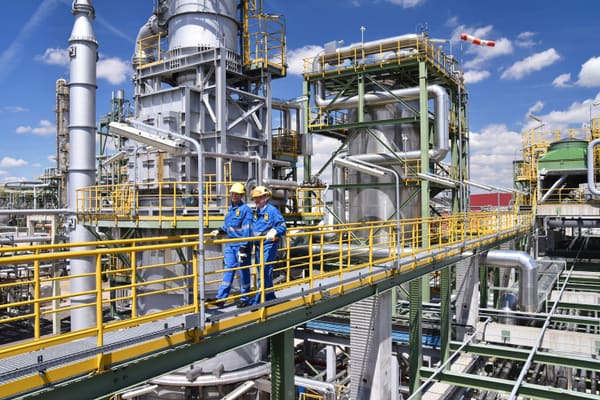
Chemical and petrochemical process Acid attack and stress corrosion cracking in a corrosive environment 316L, 904L, 2205, Hastelloy C276, titanium Grade 7
Oil and gas, including sour service Sulfide stress cracking 2205, 2507, Inconel 625 — qualified against the sour-service standard rather than assumed
Heat transfer and high temperature Thermal cycling, oxidation and sensitisation at the weld 321, 310S, Inconel 600, titanium Grade 9
Power generation and furnace hardware Sustained oxidation under load Inconel 600 and Inconel 718
Medical and implant stock Biocompatibility and fracture toughness Titanium Grade 23

Where the pitting index helps, and where it does not

For the stainless grades the pitting resistance equivalent number is the usual first screen, calculated as chromium plus 3.3 times molybdenum plus 16 times nitrogen. Values around 40 are what define the super duplex and super austenitic group.


  1. 01 Whoever publishes the reference says plainly that the index can't predict whether a grade suits a particular application; it ranks, it does not qualify.
  2. 02 The formula carries no nickel term and isn't defined for titanium at all, so it screens stainless steels and nothing else. Titanium grades have no meaningful value on this scale.
 

Where a Mill Is the Right Route


Buying from the plant that melts the metal isn't universally better. A stocking distributor or service centre occupies a different structural position, and for a large share of orders it's the correct one.


Situation Why a mill works against you Better route
You need it this week A mill produces to order, so lead times are longer than shelf stock by design Buy from a specialty metals distributor holding that grade; come to us for the scheduled replacement
Your quantity is below a heat Mill minimums are set by melt economics, and a partial heat carries its remainder Use a service centre that breaks bulk, or consolidate across your bill of materials and come back
You want inventory held for you Our inventory is working material for scheduled heats, not a warehouse against your forecast A distributor's stocking or just-in-time programme is built for exactly this
You need cut, machined or fabricated parts We supply mill product; the downstream processing that turns it into a part is a different business Pair mill-direct material with your own fabricator, or use a service centre offering value-added processing
The grade is a hard-to-find legacy specification A new heat for a one-off legacy grade is rarely economic A specialty alloys or specialty steel stockist is more likely to have it on the floor
SCOPE LIMITATION

Alloys outside our melt shop

Our melting lines run titanium, stainless steel and nickel alloy. Aluminum, copper, brass and carbon steel aren't made here, and a corrosion-resistant bill of materials frequently contains some of each, so plan a second supplier for those lines rather than discovering the gap when the order is split.

Metal melting shop interior
 
 
ASTM alloy steel boiler inspection
 
 
SPECIFICATION CLARITY

One naming trap worth clearing

ASTM A213 is titled for alloy steel boiler, superheater and heat-exchanger tubes, and it covers both ferritic and austenitic material. What we supply under it is the austenitic stainless side.


Specialty Metals Sourcing FAQ


Buyers use “specialty metal suppliers” as a catch-all for both mills and stockists, so the first thing worth settling is which one you're talking to. In this market the term covers the corrosion- and temperature-resistant alloys bought by specification rather than off a shelf. We make three families of them: titanium and titanium alloys, stainless steel including the duplex grades, and nickel alloys, plus clad plate that bonds one of those to a structural backing.

No. Stainless steel is one family inside a wider group of corrosion resistant metals that also includes the nickel alloys and titanium. What they share is that they're chosen to resist corrosion in a medium that would consume carbon steel; what separates them is which medium, at what temperature, and at what strength.

Start from the medium and the temperature, not the grade number. Seawater and wet chlorine push toward titanium; mixed oxidising and reducing chemistry pushes toward the nickel alloys; chloride-bearing service with a strength requirement is where the duplex grades earn their place. Send the measured chloride level, the peak metal temperature and whether a crevice exists at the weld, and we'll name the grade we would quote.

Melt mills set the chemistry and make the product; a service centre buys mill output, holds it and processes it. Mill supply wins on certificate origin, on non-standard sections and on full-heat economics. Service centre supply wins on availability, on quantities below a heat, on local delivery and on downstream processing, which is why a large share of metal reaches its user through one.

Yes, and that's the main reason buyers with a mixed bill of materials come to us. The three families run through the same melting, forging, rolling and finishing lines, so one order, one document package and one production slot cover the whole list.

An EN 10204 Type 3.1 inspection certificate as standard, covering heat chemistry, mechanical properties and delivered condition, together with a dimensional report and a packing list whose heat numbers match the physical marking. Type 3.2 with a third-party countersignature, positive material identification, ultrasonic testing and corrosion testing are quoted on request.

Match the heat number on the certificate against the stamp on the piece and the label on the bundle, check every alloying element against the specification range, then run positive material identification on arrival. If you want a step further, nominate a third-party inspector to witness at the plant and take the certificate as Type 3.2. Certificates are documents, and documents can be produced by anyone, which is why we would rather you verified than trusted.

Not on its own. That standard allows a manufacturer to transfer test results onto its own certificate, and allows an intermediary to pass on the original manufacturer's certificate. What tells you where the metal came from is the melt record behind the certificate; ask for it by heat number, and ask whoever is quoting whether they can produce it.

Minimum order quantity is set per grade and per form, and confirmed in writing with the quotation. Alloys are melted in heats, so the economic minimum for a super duplex run isn't the same as for a 304 coil. Trial and small quantities are quoted on request; send the target quantity with the enquiry and you'll get a specific answer rather than a range.

Quotes are returned within one business day, reviewed by an engineer. Lead time comes back as a confirmed production slot rather than an estimated date, and we notify you if the slot moves. Expedited scheduling is available; feasibility and any expedite premium are confirmed with your quotation.

Telegraphic transfer, 30% deposit with the order, balance before dispatch. We quote within the Incoterms you work to; give us the term and the destination port and the quotation is priced inside it, with duty, freight, insurance and brokerage shown as separate lines rather than bundled into a headline figure.

There can be, and the answer is item-specific rather than material-wide. Titanium alloys capable of 900 MPa or more ultimate tensile strength at 20 °C, in tube or cylindrical form above 75 mm outside diameter, appear on a Chinese dual-use control list where the "capable of" wording covers the alloy before or after heat treatment; on the US side, nickel content is one parameter among several that can bring an alloy within a Commerce Control List entry, worked item against entry rather than settled from a single percentage. We raise both at enquiry so your compliance team can settle it before the slot is booked.

Certificate media on this page is matched to the supplying legal entity, documented scope and expiry before any order-specific claim is used. Programme-specific aerospace and medical-device requirements are confirmed against the applicable order documentation before a volume commitment.