
Get in Touch with TiAlloy Company

Titanium Forging Manufacturer · TiAlloy
Titanium Forging Manufacturer
Forged Rings, Discs, Blocks, Shafts, Sleeves, Flanges & Custom Titanium Forgings.
TiAlloy manufactures titanium forgings for industrial, aerospace, chemical, marine, energy and specialized component requirements. Supply can combine forging, heat treatment, machining, inspection and project documentation around the specified grade, standard, forged geometry and final drawing.
Forged Forms
Ring
·
Disc
·
Block
·
Shaft
·
Sleeve
·
Flange
·
Custom Forging
ASTM B381-26
·
AMS Routes
·
Grade 2
·
Grade 5 / Ti-6Al-4V
·
Grade 23 / Ti-6Al-4V ELI
20+ Years Manufacturing
30,000 m² Production Base
Forging · Machining · Inspection
Export Project Supply
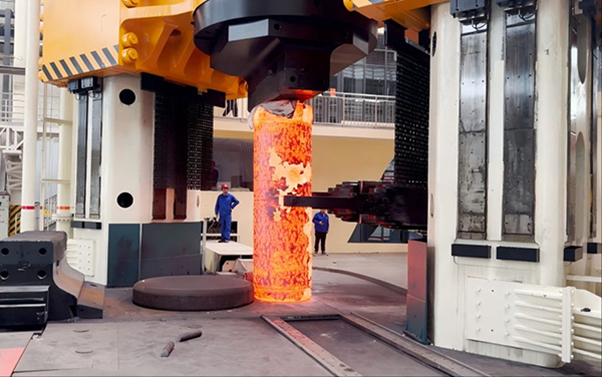 Titanium Forging Production
Forged for Load. Controlled for the Final Part.
Titanium forging routes selected around geometry, grade, condition, machining and inspection requirements.
Forging Order Path
DRAWING
→
FORGING ROUTE
→
HEAT TREATMENT
→
MACHINING
→
INSPECTION
→
MTC / RELEASE
What Titanium Forgings Does TiAlloy Manufacture?
TiAlloy manufactures titanium forged rings, discs, blocks, shafts, sleeves, flanges and custom drawing-based forgings. Supply can include ASTM B381 and applicable AMS routes, commercially pure titanium, Ti-6Al-4V and Ti-6Al-4V ELI, together with heat treatment, machining, inspection and project documentation as required by the order.
Have a Titanium Forging Drawing?
Send the forged form, grade, standard, rough size, finished drawing, quantity and inspection requirements. TiAlloy can review the manufacturing route before quotation.
Titanium Forged Product Forms
Start With the Forging Shape — Then Specify the Buying Dimensions.
A forged ring, disc, block, shaft or sleeve is not ordered with the same dimensional language. Defining the correct form first makes the RFQ clearer and allows the forged envelope, machining allowance and production route to be reviewed correctly.
Buying Principle
Specify the forging by its manufactured geometry first. The final component drawing can then define machining stock, bores, steps, radii and other finished features.
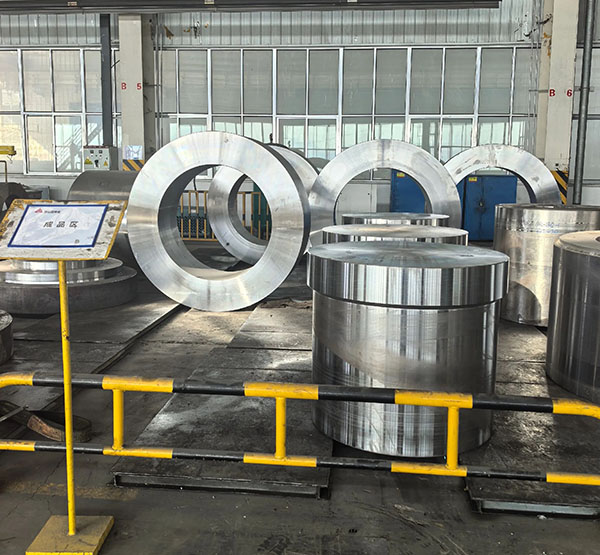
Titanium Forged Ring
OD × ID × H Outside Diameter × Inside Diameter × Height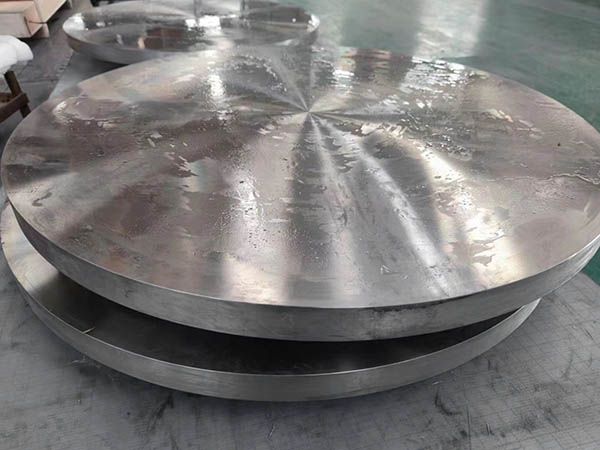
Forged Disc
Ø × T Diameter × Thickness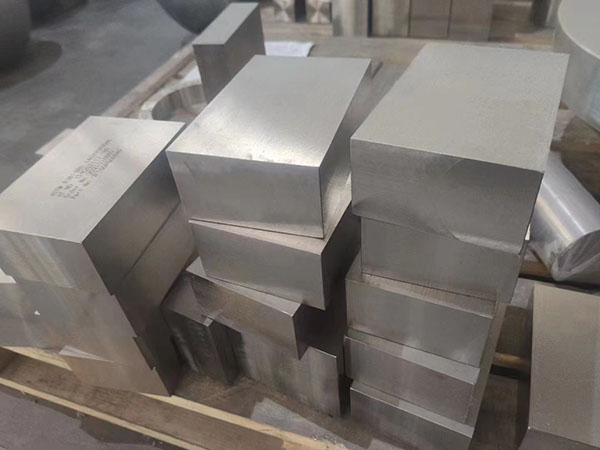
Forged Block
L × W × T Length × Width × Thickness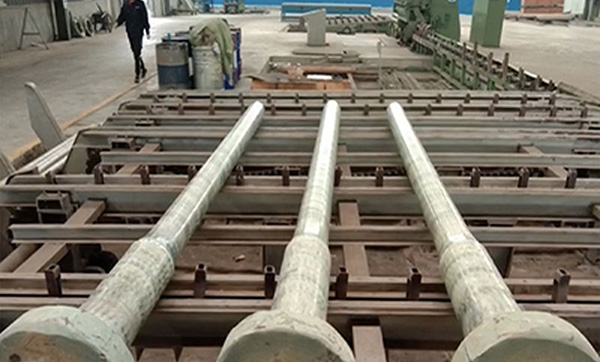
Shaft / Stepped Shaft
Ø × L Add step diameters and lengths when required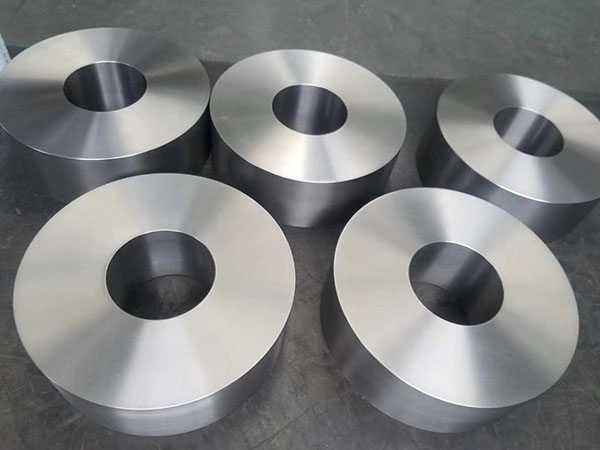
Forged Sleeve
OD × ID × L Outside Diameter × Inside Diameter × Length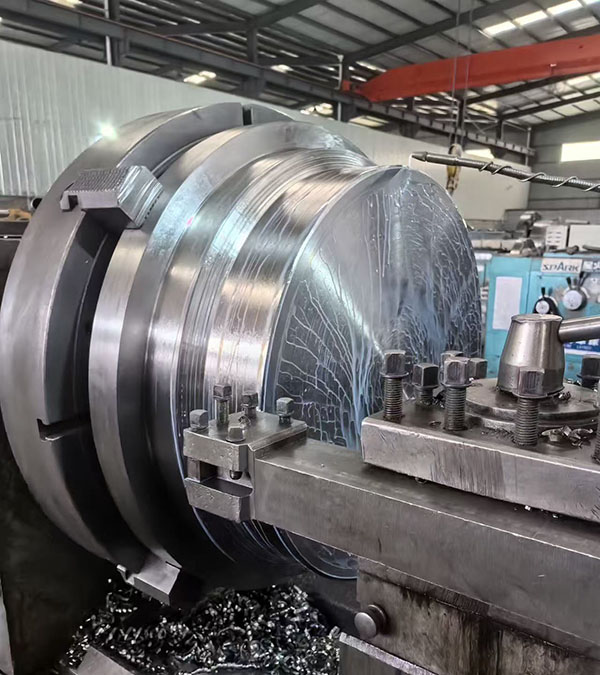
Forged Flange & Drawing-Based Preform
OD × Bore × T Or define the forged envelope from the final component drawing
Custom Preform
Final Drawing
→
Forged Envelope
→
Machining Stock
→
Rough / Finished Geometry
Buying Dimension vs Finished Drawing
The forged blank does not always equal the final machined part. For stepped shafts, flanges, hollows and custom preforms, TiAlloy reviews the final drawing together with the required forged envelope and machining allowance before the production route is confirmed.
What Forms of Titanium Forgings Are Available?
Titanium forgings can be supplied as forged or rolled rings, discs and blanks, blocks, shafts and stepped shafts, sleeves and hollows, flanges, and custom drawing-based preforms. Rings are typically specified by OD × ID × height, discs by diameter × thickness, blocks by length × width × thickness, shafts by diameter × length, and sleeves by OD × ID × length.
Know the Shape but Not the Forged Blank Size?
Send the titanium grade, forging form, finished dimensions or component drawing, quantity and required condition. TiAlloy can review the appropriate forged geometry before quotation.
Titanium Forging Grades & Specification Routes
Grade Alone Does Not Define a Titanium Forging Order.
The titanium grade identifies the alloy chemistry. The purchase specification still has to connect that grade to the forged product form, governing forging standard, delivery condition, inspection requirements and end use.
Purchase Rule
“Grade 5” is not a complete forging specification. The order should identify the forged form, governing product standard or aerospace specification, required condition, dimensions, inspection and drawing requirements.
Titanium Grade
Forged Form
→
Standard Route
→
Condition / Inspection
End-Use Direction
ASTM B381: F-2 · F-7 · F-12
Rings, discs, blocks, shafts, sleeves, flanges and drawing-based forgings according to the required order geometry.
Purchase Direction
General industrial and corrosion-service forgings where the selected grade is matched to the actual service environment.
Ti-3Al-2.5V
Grade 9
UNS R56320ASTM B381: F-9
Forged product form, geometry and condition remain part of the purchase definition even after Grade 9 is selected.
Purchase Direction
Lightweight and higher-strength titanium forging route for applications that specifically call for Ti-3Al-2.5V.
Industrial: ASTM B381 F-5 · Aerospace: AMS4928X when specified
High-strength forged rings, discs, blocks, shafts and custom geometries can be defined by the applicable industrial or aerospace route.
Purchase Direction
High-strength industrial and aerospace forging requirements where Ti-6Al-4V is specified by the governing drawing or standard.
Industrial: ASTM B381 F-23 · Aerospace ELI: AMS4930M when specified
ELI forging requirements should identify the actual product specification rather than relying on the “Grade 23” alloy designation alone.
Purchase Direction
Extra-low-interstitial titanium forging route for applications where the governing specification requires it.
Medical Forging Route
ASTM F620-26 is a surgical-implant forging specification for applicable alpha+beta titanium alloys. A base material specification such as ASTM F136 is not, by itself, a complete titanium forging product specification.
Grade & Standard References
Grade 2 Titanium
Grade 5 / Ti-6Al-4V
Grade 23 / Ti-6Al-4V ELI
Forging Standards
Titanium Materials
Which Titanium Grades Can Be Forged?
Titanium forgings can be produced in commercially pure and alloy grades including Grade 2, Grade 7, Grade 9, Grade 12, Grade 5 Ti-6Al-4V and Grade 23 Ti-6Al-4V ELI when the required forged product form and governing specification support the order. ASTM B381 covers multiple industrial titanium forging grades, while aerospace and medical applications can require separate AMS or implant-forging specifications.
Have the Grade but Not the Complete Forging Specification?
Send the grade, forged form, dimensions, finished drawing, quantity and required standard. TiAlloy can review the applicable forging route before quotation.
Titanium Forging Standards by Grade & End Use
Which Forging Standard Belongs on the Purchase Order?
The alloy grade is only one part of the order. Industrial, aerospace and surgical-implant forgings can follow different product specifications even when the underlying titanium alloy is closely related.
Specification Route
Grade
→
Forged Product Form
→
End Use
→
Product Standard
→
Condition / Inspection
Industrial Forging Route
ASTM B381-26
F-2 · F-5 · F-7 · F-9 · F-12 · F-23 + other listed gradesProduct Scope: annealed titanium and titanium-alloy forgings across the grades covered by ASTM B381, including commercially pure titanium and multiple alloy forging grades.
Buyer Action → specify the B381 revision, forging grade, forged form, dimensions, required condition and any purchaser-specified nondestructive inspection.
Ti-6Al-4V Aerospace Material Route
AMS4928X
Ti-6Al-4V · AnnealedProduct Scope: Ti-6Al-4V bars, wire, forgings, flash-welded rings, drawn shapes and stock for forging within the current specification scope.
Buyer Action → use AMS4928X when the drawing or purchase order requires this aerospace material route, and confirm product form, size scope, condition and inspection requirements.
Ti-6Al-4V ELI Aerospace Route
AMS4930M
Ti-6Al-4V ELI · AnnealedProduct Scope: Ti-6Al-4V ELI forgings, rings and other listed wrought product forms within the size and form limits of AMS4930M.
Buyer Action → specify AMS4930M when the aerospace drawing calls for the ELI route, and verify that the ordered forging form and dimensions fall within the applicable specification scope.
Surgical Implant Forging Route
ASTM F620-26
Alpha + Beta Titanium Alloy Implant ForgingsProduct Scope: alpha+beta titanium-alloy forgings intended for surgical implant applications.
Buyer Action → identify ASTM F620 when the ordered product is an implant forging, together with the required base alloy specification, component drawing, condition and applicable inspection or quality requirements.
Material Standard ≠ Forging Product Standard
ASTM F136-26 defines wrought Ti-6Al-4V ELI material for surgical implant applications, but it does not replace the applicable implant-forging specification when the ordered product itself is a surgical implant forging. The purchase order should distinguish the base alloy requirement from the finished forging product requirement.
Related Titanium Routes
Grade × Forging Compatibility
Grade 2 Titanium
Grade 5 / Ti-6Al-4V
Grade 23 / Ti-6Al-4V ELI
Titanium Materials
Which Standard Applies to Titanium Forgings?
ASTM B381 is the principal industrial product specification for titanium and titanium-alloy forgings. Ti-6Al-4V aerospace forgings can follow AMS4928X when specified, while Ti-6Al-4V ELI aerospace forgings can use AMS4930M within its product scope. Surgical implant forgings can require ASTM F620. The correct standard depends on the alloy, forged product form, dimensions, end use, drawing and purchase-order requirements.
Not Sure Which Forging Standard Belongs on the RFQ?
Send the titanium grade, forged form, dimensions, end use, drawing and customer specification. TiAlloy can review the applicable ASTM or AMS forging route before quotation.
Actual Titanium Forging Manufacturing Envelope
How Large Can TiAlloy Forge It?
TiAlloy defines forging capability by the geometry that matters to the buyer — ring OD, ID and height; disc diameter and thickness; block envelope; shaft diameter and length; individual piece weight; and the machining route required after forging.
Rolled / Forged Ring
Maximum Ring Outside Diameter
3,500 mmMax ID 2,700 mm · Max Height 1,200 mm
Ring Weight Envelope
Up to 10,500 kg
Forged Disc
Ø 4,500 × T 900 mm
· up to 10,500 kg
Forged Block
3,000 × 3,000 × 1,500 mm
· up to 10,500 kg
Forged Shaft
Ø 1,800 × L 12,000 mm
· up to 10,500 kg
Sleeve / Hollow
Max OD 1,905 mm
Wall up to 1,143 mm · ID / length by drawing
Forged Flange
Max OD 4,500 mm
Thickness and bore by drawing
Maximum Piece Weight
10,500 kg
Individual forging envelope
Machining Envelope
By Drawing
Confirmed with the forged geometry at quotation
How to Read These Maximums
Maximum values describe individual manufacturing envelopes and should not be interpreted as every maximum dimension being achievable simultaneously in one forging. Final capability depends on titanium grade, geometry, starting stock, forging route, heat-treatment condition, machining requirement, piece weight and inspection scope.
Continue the Forging Route
Forged Product Forms
Forged Blank vs Finished Part
Titanium Materials
About TiAlloy Manufacturing
How Large Can TiAlloy Forge a Titanium Component?
TiAlloy manufactures titanium forged rings with outside diameters up to 7,500 mm, discs up to 4,500 mm diameter, blocks up to 3,000 × 3,000 × 1,500 mm, and forged shafts up to 1,800 mm diameter × 12,000 mm long. Individual forging weight can reach 10,500 kg. Final manufacturability is confirmed against the grade, complete geometry, forging route, condition, machining requirement and inspection scope of the order.
Have a Large Titanium Forging Requirement?
Send the forging form, grade, rough dimensions, finished drawing, estimated piece weight, quantity and inspection requirements. TiAlloy can check the manufacturing envelope before quotation.
Forged Envelope · Machining Stock · Finished Geometry
The Finished Drawing Is Not the Forging Blank.
A titanium forging normally starts larger than the final machined component. The forged envelope has to account for the production route, surface condition, machining stock, bores, faces, radii and the geometry that remains after rough and final machining.
Buying Rule
Do not assume a finished drawing dimension is the correct as-forged dimension. The required forged envelope should be reviewed before quotation so enough stock remains for the specified machining and inspection route without creating unnecessary excess material.
As-Forged Blank
The forging carries the stock required for downstream conditioning, rough machining and final geometry.
Rough-Machined Envelope
Excess material is removed while final machining stock remains on the controlled surfaces.
Finished Part
Final OD, ID, faces, steps and other drawing dimensions are reached through the specified machining route.
Part Development
Finished Drawing
→
Forged Envelope
→
Machining Stock
→
Rough Machining
→
Final Part
What Defines the Forged Envelope?
OD / ID Stock
·
Face Stock
·
Bore Allowance
·
Steps / Preform Geometry
·
Radii
·
Draft Where Required
The required allowance is determined from the titanium grade, forged geometry, forging route, heat-treatment condition, surface condition, machining plan, required inspection and finished drawing. TiAlloy does not apply one universal machining allowance to every forging.
Near-Net Forging
Closer to the final shape can mean less material removal. A near-net forging can reduce unnecessary excess stock and subsequent machining where the part geometry and forging route support it. Near-net does not automatically mean zero machining allowance; final stock is still defined by the drawing, process route and required finished condition.
Related Forging Decisions
Forged Product Forms
Actual Forging Envelope
Titanium Materials
Send Finished Drawing
What Is the Difference Between Forged Size and Finished Size?
The forged size is the manufacturing envelope produced before final machining, while the finished size is the geometry required by the final component drawing. A titanium forged blank can include additional stock on outside diameters, bores, faces, steps and other surfaces so rough and final machining can achieve the required part. The machining allowance is not universal and should be defined from the forging route, geometry, condition, inspection plan and drawing.
Have the Finished Drawing but Not the Forged Blank Size?
Send the titanium grade, finished component drawing, quantity, required machining condition and inspection scope. TiAlloy can review the forged envelope and machining stock before quotation.
Titanium Forging Route Selection
Open Die, Ring Rolling or Shaped Die — Which Route Fits the Part?
The forging route should follow the component geometry, required forged envelope, piece size, quantity and tooling strategy. Rings, shafts, blocks and shaped preforms do not all reach their final forging geometry through the same process.
Route Selection Principle
The product shape comes first. TiAlloy selects upsetting, drawing, piercing, ring rolling or shaped-die operations around the forged geometry rather than forcing every component through one generic forging route.
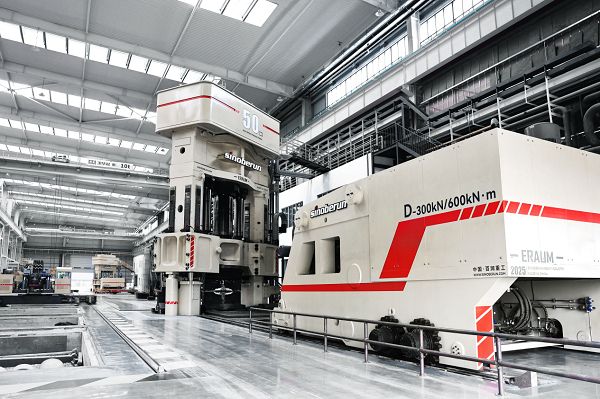
Route 01
Open-Die Forging
Blocks · Discs · Shafts · Hollows · Large Preforms
Typical Manufacturing Logic
Billet / Starting Stock
→
Breakdown
→
Upset / Draw
→
Forged Envelope
Open-die forging provides flexibility for large sections, shafts, blocks, discs, hollows and preforms where the part is progressively worked between dies without being fully enclosed in a dedicated cavity.
Route 02
Seamless Ring Rolling
Flat Rings · Tall Rings · Cylindrical Rings · Shaped Rings
Typical Ring Route
Preform
→
Upset
→
Pierce
→
Ring Roll
→
Final Ring Envelope
A seamless rolled ring begins with a forged preform. After upsetting and piercing create the hollow center, the ring mill expands the diameter and controls the section toward the required OD, ID and height.

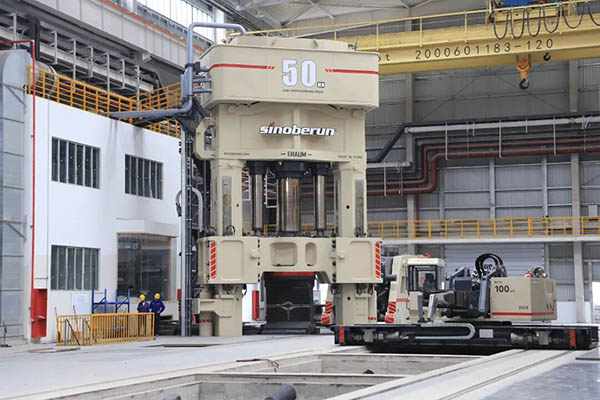
Route 03
Closed / Shaped-Die Forging
Custom Preforms · Shaped Parts · Repeated Geometry
Typical Manufacturing Logic
Starting Stock
→
Preform
→
Die / Shaped Forming
→
Controlled Forged Geometry
Shaped-die routes move the forging closer to a defined component envelope where geometry, repeat quantity and tooling strategy justify a more controlled preform than a simple open-die blank.
What Determines the Route?
Component Geometry
·
Forged Envelope
·
Piece Size / Weight
·
Quantity
·
Tooling Requirement
·
Machining Strategy
No single route is automatically superior for every titanium forging. The correct route is the one that can create the required material flow and forged geometry while supporting the specified dimensions, machining plan, quantity and inspection requirements.
Related Forging Decisions
Forged Product Forms
Actual Forging Envelope
Forged Blank vs Finished Part
Billet-to-Forging Process
Which Titanium Forging Route Should Be Used?
The titanium forging route depends on the required component geometry, forged envelope, size, quantity and tooling strategy. Open-die forging is flexible for blocks, discs, shafts, hollows and large preforms. Seamless rolled rings are produced from an upset and pierced preform that is expanded on a ring mill. Closed or shaped-die forging is used where a more controlled preform or repeated geometry is required. Final route selection should also consider machining and inspection requirements.
Not Sure Which Forging Route Fits the Drawing?
Send the titanium grade, component drawing, forged dimensions, finished geometry, quantity and inspection requirements. TiAlloy can review the open-die, ring-rolling or shaped-forging route before quotation.
Titanium Forging Manufacturing Process
From Titanium Billet to Forged Component.
Titanium forging is a thermomechanical manufacturing route, not a single press operation. Starting stock is heated, mechanically worked toward the required envelope, conditioned, heat treated and prepared for machining and inspection according to the forging route and purchase requirements.
Manufacturing Principle
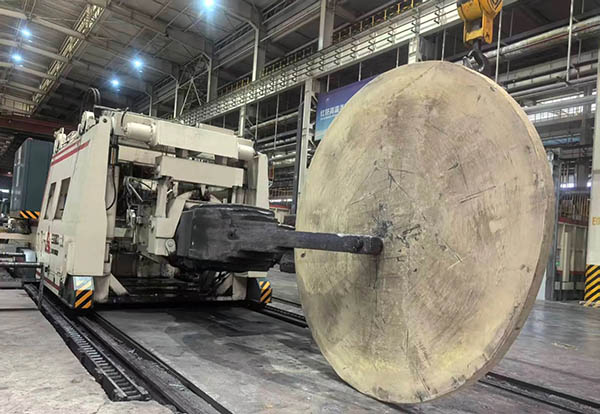
The sequence changes with the forging. An open-die shaft, seamless rolled ring and shaped preform do not pass through every operation in exactly the same way. The images below show the principal manufacturing actions, not one mandatory recipe for every titanium forging.
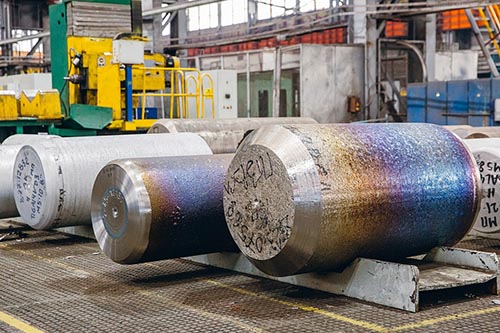
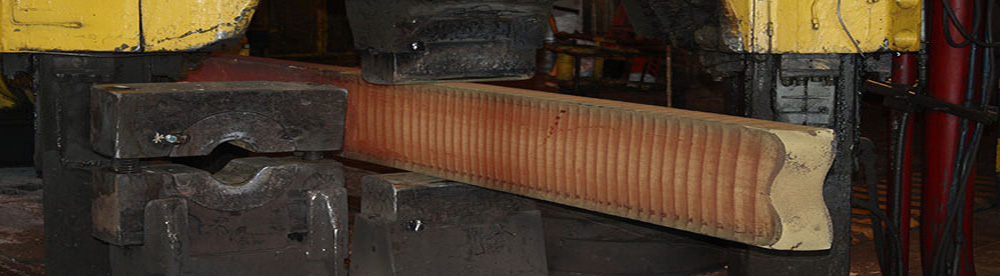
Billet Preparation & Heating
Starting stock is prepared and heated for the selected titanium forging route.
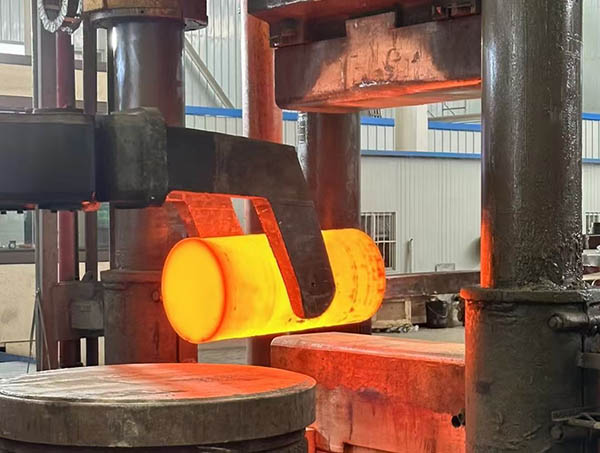
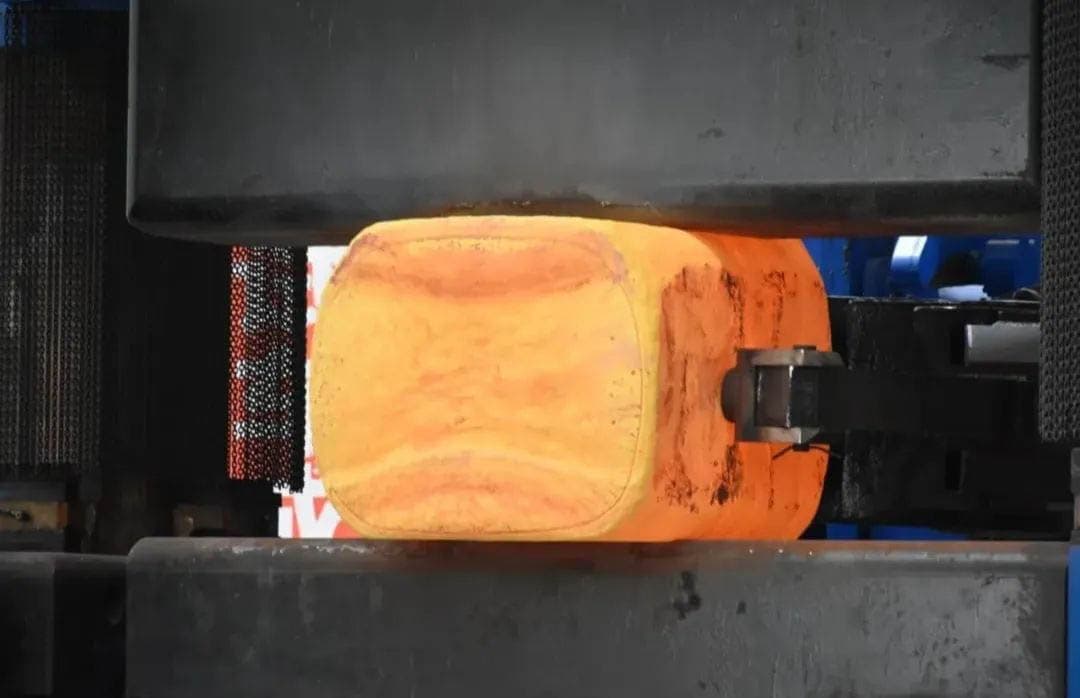
Breakdown · Upset · Draw
Controlled deformation redistributes the billet toward the section and forged envelope required by the component.
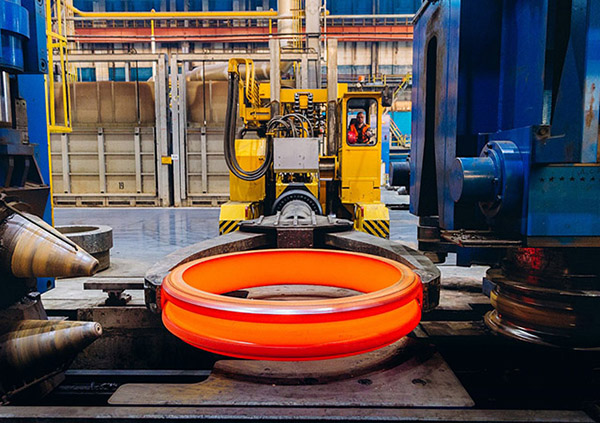
Ring Roll / Preform Development
Ring rolling or additional shaping is used when required by the selected product geometry.
Typical Process Path
Billet
→
Heat
→
Breakdown / Upset / Draw
→
Ring Roll / Shape
→
Reheat Where Required
→
Heat Treat
→
Descale / Condition
→
Rough Machine
→
Inspect
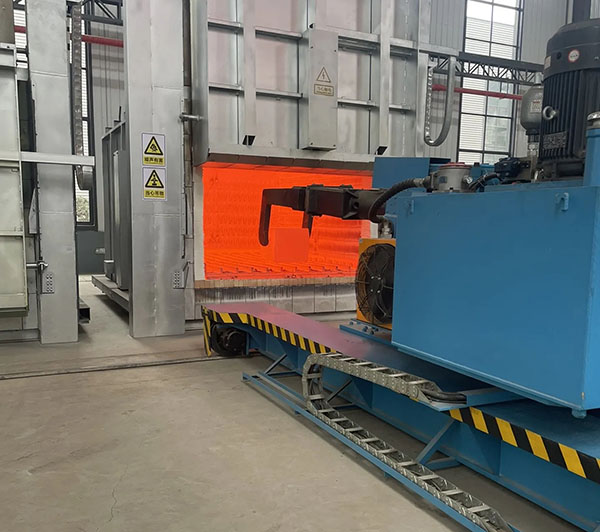
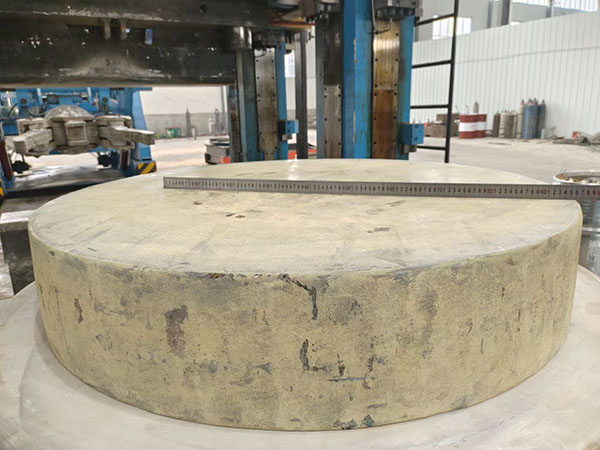
As-Forged / Conditioned Component
The part now carries the forged envelope required for subsequent heat treatment, conditioning and machining.
Heat Treatment · Descale · Rough Machine · Inspect
Post-forging operations establish the ordered condition and prepare the component for machining, inspection and final release.
One Process Diagram Does Not Fit Every Forging
Open-die, rolled-ring and shaped-forging routes can use different sequences, reheats and intermediate operations. The actual manufacturing plan is determined from the titanium grade, starting stock, forged geometry, section size, required condition, machining plan and inspection requirements. This module therefore describes the manufacturing logic without publishing a universal forging temperature or reduction schedule.
Continue the Manufacturing Route
Choose the Forging Route
Forging Equipment
Forged Blank vs Finished Part
Titanium Materials
How Are Titanium Forgings Manufactured?
Titanium forgings are manufactured from billet or other qualified starting stock that is heated and mechanically worked through operations such as breakdown, upsetting, drawing, piercing, ring rolling or shaped forming. Depending on the product route, the forging can require reheating, post-forging heat treatment, descaling or surface conditioning, rough machining and inspection before release. The exact sequence depends on the alloy, component geometry, forging route and purchase specification.
Have a Drawing That Needs a Complete Forging Process Route?
Send the titanium grade, forged form, rough dimensions, finished drawing, quantity, heat-treatment condition and inspection requirements. TiAlloy can review the manufacturing path before quotation.
Titanium Forging Factory Equipment
The Hardware Behind the Forging.
A forging capability should be visible on the factory floor. Pressing, manipulating, ring rolling, thermal processing, machining and inspection equipment each perform a different part of the route from heated stock to a controlled titanium forged component.
Factory Evidence
Equipment matters only when it connects to a real manufacturing action. This section shows what each equipment group does and which titanium forging forms it supports rather than presenting machinery as an isolated equipment list.

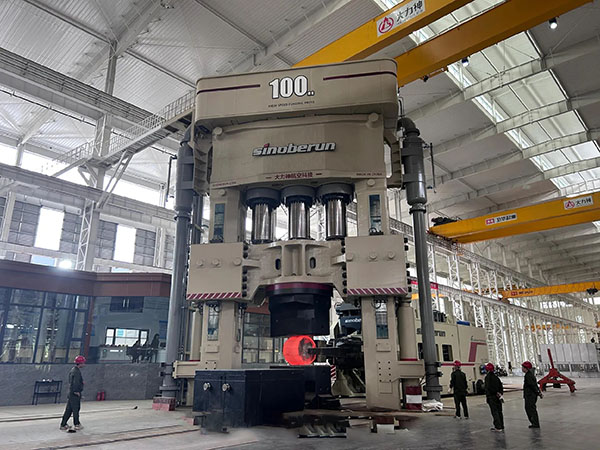
Equipment 01
Forging Press & Manipulator
Primary deformation and controlled handling of heated stock
What It Does
Breakdown · Upset · Draw · Preform Development
Product Result → forged blocks, discs, shafts, hollows, ring preforms and drawing-based open-die shapes.
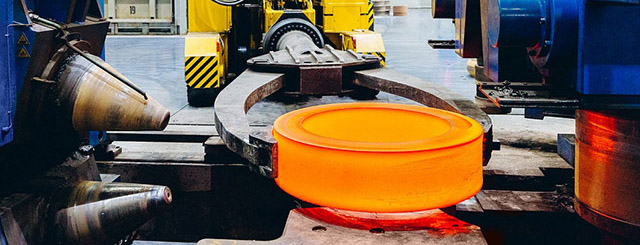
Equipment 02
Ring Rolling Mill
Radial and axial development of pierced ring preforms
What It Does
Diameter Expansion · Section Control · Ring Forming
Product Result → seamless forged rings with the required OD, ID, face height and section envelope for subsequent heat treatment and machining.

Equipment 03
Heating & Heat-Treatment Furnaces
Heating for hot working and post-forging condition control
What It Does
Forge Heating · Reheating · Post-Forging Heat Treatment
Product Result → forging stock prepared for controlled deformation and forged components processed toward the specified delivery condition before machining and inspection.
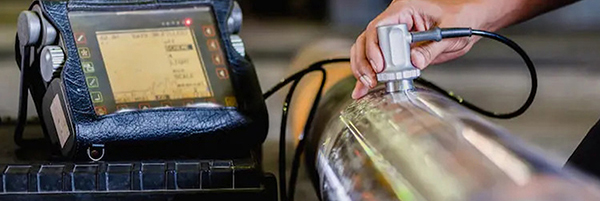
Equipment 04
Machining & Ultrasonic Inspection
Prepare inspection surfaces and verify the forged component
What It Does
Turning · Boring · Milling · Surface Preparation · UT
Product Result → rough-machined rings, discs, blocks and shafts prepared for dimensional verification and the required nondestructive inspection route.
Equipment Data
Machine model, press tonnage, furnace dimensions, equipment quantity, manipulator capacity and machining envelope should be published only from verified TiAlloy production records. Manufacturing capability is therefore defined here by the actual equipment role and forged product route rather than unsupported machinery specifications.
Factory Hardware Chain
Heating
→
Press + Manipulator
→
Ring Mill / Forging Route
→
Heat Treatment
→
Machining
→
Inspection
Manufacturing Evidence
Actual Forging Envelope
Billet-to-Forging Process
Thermomechanical Control
About TiAlloy
What Equipment Is Used to Manufacture Titanium Forgings?
Titanium forging production uses equipment matched to each manufacturing stage. Forging presses and manipulators deform and control heated stock; ring rolling mills expand pierced preforms into seamless forged rings; heating and heat-treatment furnaces support hot working and the required delivery condition; and machining and ultrasonic inspection equipment prepare and verify forged components before release. The exact equipment route depends on the product form, grade, dimensions and inspection requirements.
Need to Confirm the Equipment Route for a Large Forging?
Send the titanium grade, forged form, rough dimensions, finished drawing, piece weight, quantity and inspection requirements. TiAlloy can review the production equipment and manufacturing route before quotation.
Titanium Forging Metallurgy & Thermomechanical Control
Same Alloy. Different Forging History. Different Result.
Ti-6Al-4V chemistry alone does not define the quality of a forged component. Temperature history, deformation, reduction pattern, reheating, heat treatment and surface exposure all influence grain flow, macrostructure, microstructure and the final condition of the forging.
Metallurgical Principle
The forging remembers its process history. The final structure is developed through the combined thermal and mechanical route — not by the alloy designation alone. For critical forgings, that route has to connect deformation, thermal exposure, heat treatment and the required metallurgical evaluation.
Thermomechanical Chain
Temperature History
→
Deformation / Reduction
→
Reheat / Further Working
→
Grain Flow
→
Heat Treatment
→
Macro / Micro Evaluation

Temperature + Strain + Reduction
The deformation route develops the forged section and directs material flow toward the required component geometry.
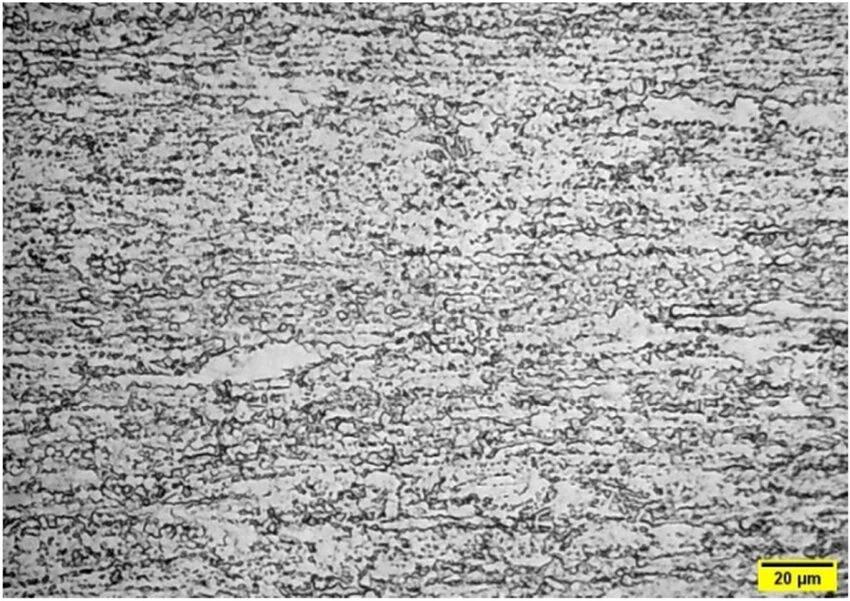
Grain Flow & Macrostructure
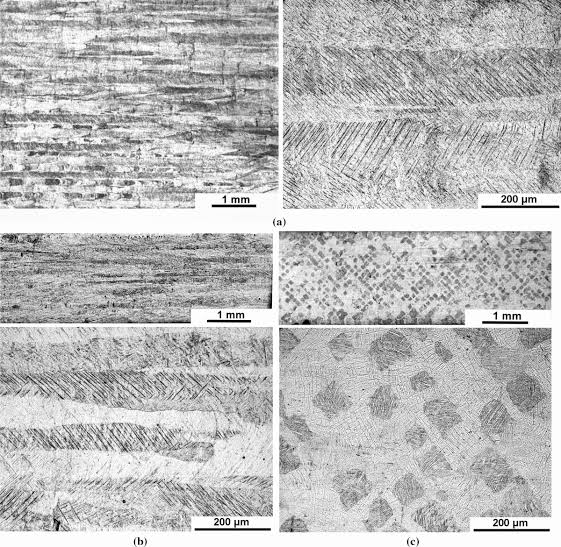
Microstructure Evaluation
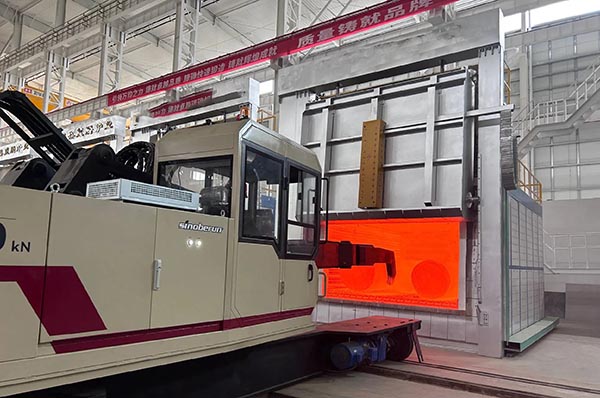
Reheating & Post-Forging Heat Treatment
Thermal history after deformation is part of achieving the required material condition and metallurgical response.
What the Process Is Controlling
Deformation & Reduction
Control how material is redistributed through the forged section and how the required preform develops before the final forged envelope is reached.
Reheating & Thermal History
Reheating and time at elevated temperature form part of the complete processing history and therefore cannot be separated from deformation and final material condition.
Grain Flow & Macrostructure
Macro examination can be used when required to evaluate the large-scale forged structure and evidence associated with the material flow developed by the forging route.
Microstructure & Heat Treatment
Metallographic evaluation and the specified heat-treatment condition provide evidence of the final microstructural state required by the applicable specification or drawing.
Alpha Case & Surface Exposure
At elevated temperature, titanium can react with the surrounding atmosphere. Oxygen pickup is concentrated near the surface and can create an oxygen-enriched, alpha-stabilized surface region commonly referred to as alpha case. Its formation depends on the thermal exposure and atmosphere, and the affected surface must be controlled and removed where required by the manufacturing route, specification or subsequent processing.
No Universal Forging Recipe
TiAlloy does not publish one universal forging temperature, reduction percentage, reheating schedule or heat-treatment cycle for every titanium grade and component. These parameters depend on the alloy, section size, forging route, target structure, specification, required properties and final component geometry. Critical process parameters are therefore controlled through the applicable manufacturing route rather than reduced to a single generic website value.
Related Technical Controls
Billet-to-Forging Process
Forging Equipment
Grade 5 / Ti-6Al-4V
Forging Inspection
What Controls Grain Flow and Microstructure in Titanium Forgings?
Grain flow and microstructure in a titanium forging are controlled by the complete thermomechanical history of the part: alloy grade, starting stock, forging temperature history, deformation and reduction pattern, reheating, forging route, section geometry and post-forging heat treatment. Macrostructure, microstructure and grain-flow evaluation can be used when required to verify the resulting condition. Surface exposure during elevated-temperature processing must also be controlled because oxygen pickup can form alpha case on titanium.
Does the Drawing Include Metallurgical Acceptance Requirements?
Send the titanium grade, forging drawing, required condition, macro / micro requirements, mechanical properties, NDT scope and customer specification. TiAlloy can review the forging and metallurgical route before quotation.
Titanium Forging Applications
From Forged Shape to the Final Component.
Titanium forged rings, discs, blocks, shafts, flanges and shaped preforms become load-bearing, rotating, pressure-containing and corrosion-resistant components across demanding industrial and high-performance applications.
Application Logic
Each application starts with the forged product form and ends with a specific component. The required grade, standard, forging route, machining condition and inspection scope are then defined by the actual service requirement.

01 · Aerospace
Aerospace Structures
Block · Ring · Structural Preform
→ Bulkheads · Frames · Structural Fittings · Airframe Components

02 · Propulsion
Aero Engine & Propulsion
Disc · Ring · Shaft · Preform
→ Compressor Discs · Engine Rings · Hubs · Rotating Components

03 · Process Industry
Chemical Processing
Flange · Ring · Block · Shaft
→ Valve Bodies · Pump Parts · Flanges · Agitator Shafts

04 · Marine
Marine & Offshore
Shaft · Hub · Ring · Flange
→ Drive Components · Pump Parts · Hubs · Seawater-System Flanges

05 · Energy
Energy & Power
Ring · Disc · Shaft · Flange
→ Rotating Parts · Pump Shafts · Pressure Flanges · Equipment Rings

06 · Medical
Medical & Surgical
Disc · Block · Shaped Preform
→ Implant Preforms · Orthopedic Components · Medical Structures
Application ≠ Supply Case
These are representative titanium-forging application families, not claims that every component shown has been supplied by TiAlloy. Actual orders are evaluated against the required titanium grade, forging standard, component drawing, manufacturing route, inspection scope and end-use requirements.
Related Titanium Routes
Forged Product Forms
Forging Standards
Grade 5 / Ti-6Al-4V
Titanium Materials
Where Are Titanium Forgings Used?
Titanium forgings are used in aerospace structures, aero engines, chemical-processing equipment, marine and offshore systems, energy equipment and medical applications. Typical forged products include rings, discs, blocks, shafts, flanges and shaped preforms that are subsequently machined into structural frames, compressor discs, engine rings, valve and pump components, marine drive parts, rotating equipment and medical component preforms.
Have a Titanium Forging for a Specific Component?
Send the final component drawing, titanium grade, forging standard, forged form, quantity and inspection requirements. TiAlloy can review the forging route and supply condition before quotation.
Titanium Forging RFQ Desk
One RFQ. All the Variables Needed to Quote the Forging.
A useful titanium forging quotation starts with more than grade and quantity. Defining the forged geometry, final part, manufacturing route, delivery condition, testing and document requirements reduces assumptions before pricing and production review.
Quote It as a Forging
You do not need to know every process answer before sending the RFQ. Provide the requirements already defined by the drawing or purchase specification. Items such as forging route, machining allowance or processing condition can be marked for TiAlloy review where they have not yet been fixed by the buyer.
Quote the Component the Way It Will Actually Be Supplied.
Ring, disc, block, shaft, flange or custom preform — define the manufacturing and inspection condition before the order reaches production.
TiAlloy · Titanium Forging RFQ
Purchase Specification Sheet
01 · Part Definition
Product Form
Ring / Disc / Block / Shaft / Flange / Custom
Grade / UNS
Grade + UNS when specified
Standard
ASTM / AMS / Drawing Specification
Forged Blank Size
OD × ID × H / Ø × T / L × W × T
Finished Size
Final component drawing / finished geometry
02 · Manufacturing
Machining Allowance
Buyer Defined / Supplier Review
Forging Route
Specified / TiAlloy Review
Heat Treatment
Required condition / specification
Supply Condition
As-Forged / Rough / Near-Net / Finished
03 · Verification
Testing / NDT
Mechanical / UT / PT / Macro / Micro / Other as required
Documentation
MTC / EN 10204 / Inspection Reports / Third Party when specified
04 · Order Definition
Quantity
Pieces / Batch Requirement
Piece Weight
Actual / Estimated kg per piece
Destination
Country / Delivery Location
Drawing
Drawing / Part No. / File Reference
Quote Readiness
The more of these variables are defined at RFQ stage, the fewer assumptions are needed in the quotation. Unknown manufacturing variables can remain subject to TiAlloy review rather than being guessed by the buyer.
Minimum Useful RFQ
Forging Form
·
Titanium Grade
·
Size / Drawing
·
Quantity
·
Required Standard
·
Destination
What Information Is Needed to Quote a Titanium Forging?
A titanium forging RFQ should identify the product form, titanium grade or UNS, applicable ASTM or AMS standard, forged blank dimensions, finished component dimensions or drawing, required machining condition, heat-treatment condition, testing and NDT requirements, quantity, estimated piece weight, documentation requirements and delivery destination. If the forging route or machining allowance has not been defined, those items can be reviewed from the drawing before quotation.
Ready to Quote the Titanium Forging?
Send the drawing and the purchasing requirements already defined. TiAlloy can review the forged geometry, specification, manufacturing condition, inspection scope and documentation before issuing the quotation.
Titanium Forging FAQ
Technical context
Published titanium-forging process material is provided for route context, not as a substitute for the buyer’s acceptance requirements.
Provide the requested grade or specification, current drawing, component form and dimensions, heat-treatment instruction if applicable, testing, quantity and documentation requirements. A complete RFQ helps establish the manufacturing and verification discussion before price and schedule are confirmed.
Use the grade and applicable product standard called out by the design authority or customer. If the requirement is incomplete, provide the service context and drawing so the technical team can identify the questions that need confirmation; the page doesn’t select a grade without that information.
TiAlloy can discuss industrial rolled rings, discs, blocks, bars and shafts, sleeves, flanges and made-to-drawing forms. Final feasibility, route and supply scope depend on the drawing, material request, quantity and acceptance requirements.
Orders can define required material certificates, inspection reports, marking, packing information and customer-specific documents. Name the exact package in the RFQ or purchase order because it is not inferred from an ISO certificate or a generic product description.
Material, starting form, forging route, tooling, heat treatment, machining allowance, verification, quantity, documentation, packing and shipping conditions all influence the result. TiAlloy reviews the actual order inputs rather than posting a fixed price or delivery promise.
TiAlloy’s user-provided capability and service information covers forging, heat treatment, processing, inspection, packaging and export coordination. Order-specific steps are established after technical and commercial requirements are confirmed, so a buyer can align drawing release, material confirmation, requested records, packing instructions and destination details before shipment planning begins.
Trending now