Get in Touch with TiAlloy Company


Chemical ProcessingSolutions with Corrosion Resistant Alloys
Titanium, Stainless Steel and Nickel Alloy Material Supplier
Corrosion resistant alloys for chemical processing need to match the media, temperature, pressure, and product form before price makes sense. TIALLOY supplies titanium, stainless steel, and nickel alloy plate, sheet, tube, pipe, and bar for corrosive service equipment, with grade comparison, standard confirmation, material documents, and export delivery handled for your project team.
Request Material Recommendation →-
3
Alloy Families
-
5+
Plate / Sheet / Tube / Pipe / Bar
-
20+ Yrs
Metal Manufacturing
-
30,000+
Sq M Production Base
-
Certificate document — verify entity, scope and expiry
2015 Certificate Evidence
-
Third-party certificate example
Material Manufacturer Evidence
Choose Chemical Processing Alloys Around Actual Service Conditions
The wrong alloy choice starts with missing service data, not with a bad grade name. Nickel Institute material guidance and field buyer discussions both point to the same pattern: media, temperature, pressure, chlorides, pH, cleaning cycle, and fabrication route change the answer for corrosion resistant metals.
Engineering note
Titanium performs well in many chloride solutions, but TIMET’s corrosion manual also warns that crevice conditions, low pH, and elevated temperature can change performance. We ask for the full service window before recommending titanium tube, stainless steel, or nickel alloy.
Media
List each acid, alkali, salt, solvent, gas, or mixed stream with concentration and contamination risk.
Temperature
Separate normal, upset, cleaning, and standby temperatures because corrosion can change sharply at the edge cases.
Geometry
Flag crevices, dead legs, weld zones, deposits, and low-flow zones before final grade comparison.
Documents
Confirm ASTM, ASME, EN, DIN, JIS, MTC type, marking, packing, and export paperwork before shipment.
“When media data is incomplete, we start from the service conditions rather than the price list: concentration, temperature, pH, chloride level, pressure and cleaning cycle first, then the lowest-risk material route.”
Corrosion-Resistant Alloy Families We Supply

Titanium And Titanium Alloys
Titanium is a strong fit for chloride water, seawater, desalination, condenser, and heat exchanger service when the detailed chemistry supports it.
- Common forms: plate, sheet, tube, bar, heat exchanger tube.
- Best inquiry data: chloride level, pH, temperature, crevice risk, and cleaning media.
- Buyer caution: reducing acids and tight crevices need review.

Stainless Steel
Stainless steel is often the cost-performance starting point, but 304, 316, duplex, super duplex, and super austenitic grades solve different problems.
- Common forms: sheet, plate, tube, pipe, bar, processed parts.
- Best inquiry data: chloride level, acid exposure, weld route, and surface finish.
- Buyer caution: stainless steel is not automatically acid-proof.

Nickel Alloys
nickel alloys such as C-276, C-22, Alloy 625, Alloy 600, and Alloy 400 support aggressive media, higher temperatures, and severe corrosion risks.
- Common forms: plate, sheet, pipe, tube, bar, rod, cut stock.
- Best inquiry data: acid type, mixed media, temperature, pressure, and target standard.
- Buyer caution: grade names still need service-condition checks.
Compare Alloy Routes Before You Send The RFQ
Use this table as a first screen, not as final engineering approval. The final recommendation should come from your exact media, concentration, temperature, pressure, product form, standard, and inspection needs.
| Route | Example grades | Source-backed numeric anchor | Useful when / Buyer watchpoint |
|---|---|---|---|
| Stainless steel | 304, 316, 2205, 2507, 254SMO | >10.5% Cr for stainless behavior; 316 example 16-18% Cr, 10-14% Ni, 2-3% Mo | Balanced cost and corrosion resistance for moderate chemical or utility service. Chlorides, acids, deposits, and crevices can push beyond 304/316. |
| Titanium | Commercially pure titanium, titanium alloy tube | Crevice risk for unalloyed titanium can appear near 200 deg F / 93 deg C in neutral brine | Chloride water, seawater, condenser, and desalination duties where chemistry supports it. Low pH, high temperature, reducing acids, and crevice geometry need review. |
| C-276 nickel alloy | UNS N10276 | Mo 15-17%, Cr 14.5-16.5%, W 3-4.5%; plate/sheet ASTM B575/B906 | Aggressive mixed acids, chlorides, reactors, heat exchangers, columns, evaporators, transfer piping. Field testing is still encouraged before industrial use in exact media. |
| Alloy 625 | UNS N06625 | Ni 58% min, Cr 20-23%, Mo 8-10%, Nb+Ta 3.15-4.15% | Chemical tubing, reaction vessels, heat exchangers, transfer piping, and valves. Confirm ASTM B443, B444/B829, B446, or other project standard before purchase. |
Product Forms For Chemical Plants And Equipment Builders
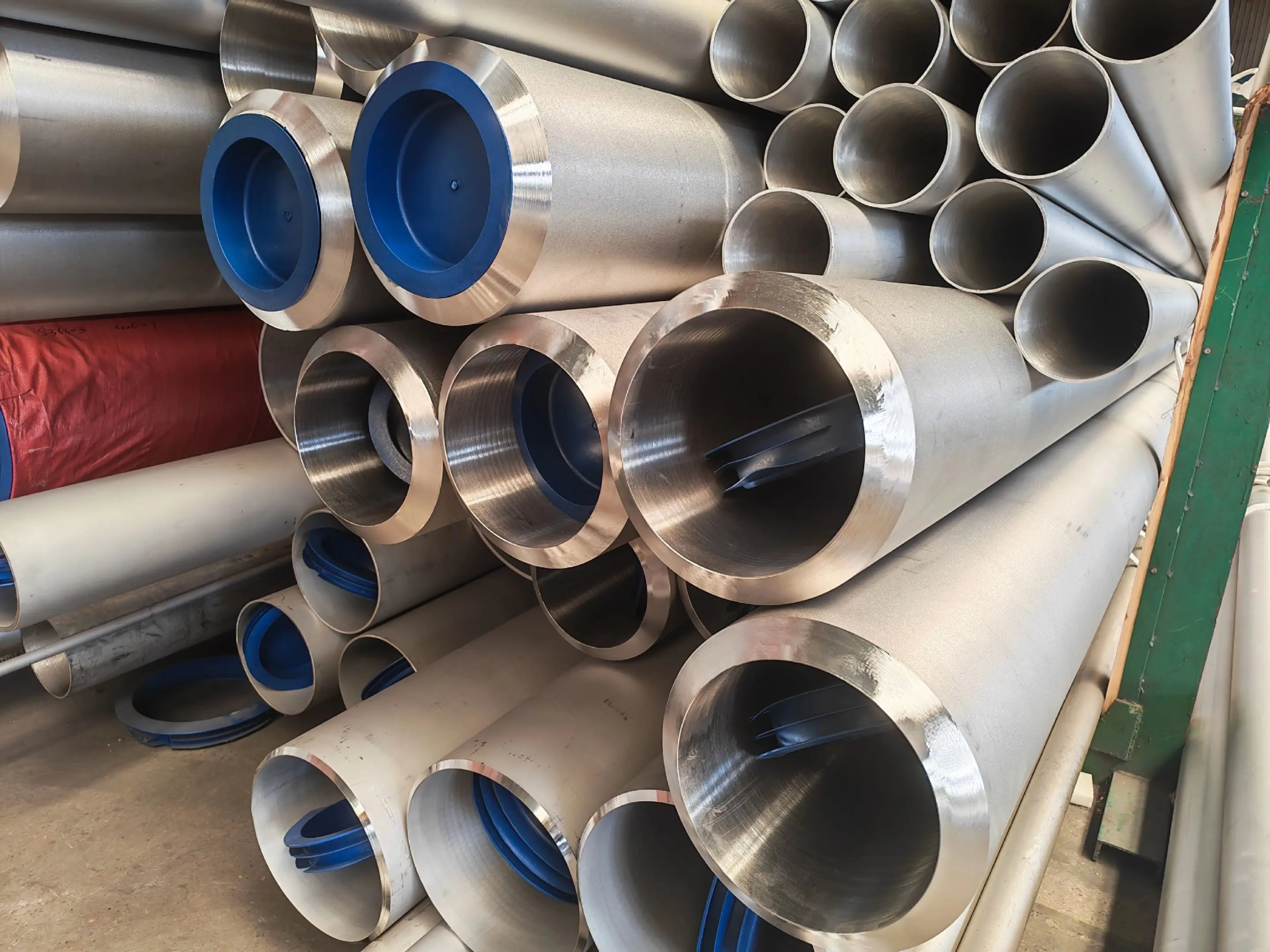
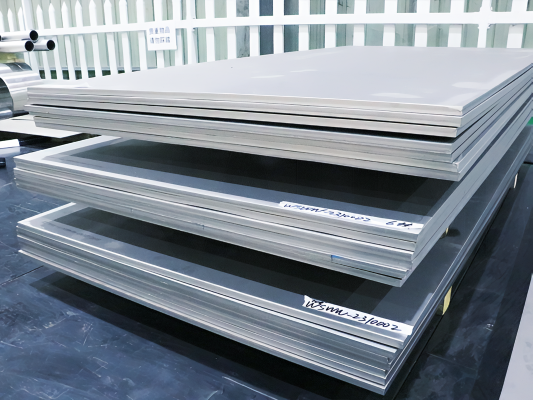
TIALLOY supplies material forms that equipment builders can route into vessels, heat exchangers, condensers, piping systems, valves, machined components, and replacement parts. Your RFQ can cover raw mill form, cut stock, or processed material that is easier for your fabrication team to receive.
-
Plate And Sheet
For vessels, baffles, linings, support parts, and fabricated corrosion-service components.
-
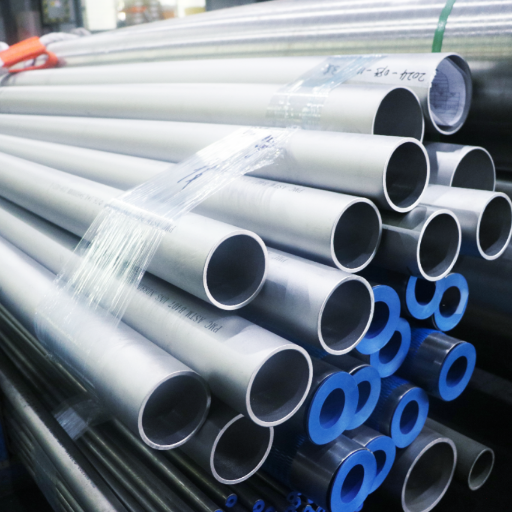
Pipe And Tube
For transfer lines, heat exchangers, condensers, evaporators, and process tubing.
-
Bar And Rod
For fasteners, shafts, valve parts, spacers, and machined alloy components.
-
Processed Stock
For cut-to-size, straightened, polished, surface-treated, packed, and marked shipments.
Production capability from supplied company data
Production equipment covers VIM, VAR, ESR, forging, hot rolling, cold rolling, solution annealing, bright annealing, tube rolling, drawing, straightening, cutting, polishing, bar peeling, centerless grinding, chamfering, CNC, surface treatment, and packaging.
Standards And Grade Data We Can Cross-Reference
A chemical processing material quote should connect the grade name to the ordered form and the governing standard. The same UNS grade can move through different ASTM, ASME, ISO, EN, or customer specifications depending on whether you need plate, tube, pipe, bar, forging stock, or welding material.
Start With UNS Or Werkstoff
UNS N10276, UNS N06625, UNS S31600, UNS S32205, and similar identifiers give both teams a clearer starting point than trade names alone.
- Confirm grade family before form.
- Check equivalent names before purchase.
- Keep trademarked names out of the PO unless required.
Then Match Product Form
Form and end use on the RFQ-Each different standard path may be related to one type of Plate, sheet, strip, tube, pipe, bar, or forging stock. Thus the RFQ should include both the form and the end use.
- Plate and sheet for vessel parts or linings.
- Tube and pipe for flow or heat transfer.
- Bar and rod for machined components.
Close The Document Loop
Only when the Certificate, heat number, chemical results, mechanical values, size checks, and packing marks conform to the PO can standards be of any help.
- State MTC type before production.
- Ask for marking and packing photos.
- Review certificates before shipment leaves.
| Example alloy | Form | External standard example | How TIALLOY uses it in RFQ review |
|---|---|---|---|
| C-276 / UNS N10276 | Plate, sheet, strip | ASTM B575 / B906, ASME SB575 / SB906 | Confirm requested thickness, finish, tolerance, and certificate type before quote. |
| C-276 / UNS N10276 | Pipe and tube | ASTM B622 / B829, B626 / B751, B619 / B775 | Separate welded tube, welded pipe, drawn tube, size range, and test requirements. |
| Alloy 625 / UNS N06625 | Rod, bar, forging stock | ASTM B446, ASTM B564, ASME SB446, ASME SB564 | Check bar diameter, forging route, heat treatment, and mechanical-property request. |
| Alloy 625 / UNS N06625 | Plate, sheet, strip | ASTM B443 / ASME SB443 | Confirm whether the material goes into vessel parts, baffles, linings, or fabricated components. |
Acids, Chlorides, And Heat Need Different Review Paths
The problem will look the same at the failure site but the root cause can be quite different, i.e. Pitting, crevice corrosion, stress corrosion cracking, uniform acid attack, the weld heat-affected-zone (HAZ), and risk of contamination will require different materials.

Chloride Media
When the temperature, deposit formation, crevice formation, and stress level rise then either the 304 or 316 stainless will be unreliable in the presence of Chlorides. Duplex, Super austenitic stainless, titanium or nickel alloy may be investigated based on the ph value and geometry of the system.
- Ask for chloride ppm or wt.%.
- List normal and cleaning temperatures.
- Mark crevices, gasket zones, and deposits.
Acid Service
Only knowing the name of the acid is not enough as the material of choice will change if the chemistry is oxidizing or reducing, if there is contamination, if the concentration changes, and as the temperature increases. For an acid resistant metal inquiry from a customer you may require nickel alloys; it would still be prudent to coupon test on any critical service.
- Give concentration and contaminants.
- State batch, continuous, or cleaning exposure.
- Include startup and shutdown conditions.
High Temperature
The mechanical properties and the corrosion rate are both impacted when the temperature is elevated. A material that may resist a specific chemistry at room temperature may lack the strength or develop scale or cracks in hotter service.
- Separate metal temperature from fluid temperature.
- State pressure and stress condition.
- Flag thermal cycling and cleaning shocks.

When The Recommendation Needs Testing Before Purchase
It’s common knowledge for most buyers of chemical-processing equipment that they can expect product contamination, reduced equipment life and commissioning delays if they do not make the correct material of construction selection. Coupon testing or material of construction reviews are a far more economical way to approach a costly failure.
Use A Review When Data Is Incomplete
Technical reviews should be employed where mixed process streams, aggressive cleaning cycles, startup conditions where media changes are possible or the process stream has crevices or welds. Reviews should address the families of materials, not just individual alloys.
- Compare titanium, stainless, and nickel alloy routes.
- Also consider whether a lined system or non-metal path is in consideration.
- Record the rejection reason for each discarded material.
Use A Coupon Test For Sensitive Service
Coupon testing is also cost effective in those applications where contamination, product purity, or expensive downtime resulting from the failure will outweigh the cost of the coupon test; where hot acids, unknown chlorides or valuable process equipment are involved. Test parameters should match the expected conditions including temperature, exposure, and flow where applicable.
- Include the exact medium or a representative sample.
- Set exposure time and inspection method before the test.
- Keep tested coupons tied to the final procurement record.
Control Failure Risk Before Comparing Unit Price
Price only matters after alloy route, traceability, and inspection are right. Guidance from public procurement of corrosion-resistant alloy components warns that lower initial costs can lead to greater costs due to downtime, safety issues, and environmental impacts if material quality or supplier reliability are lacking. Consequently, when pricing TIALLOY’s proposals, we evaluate grade, form, standard, certificate type, marking, packaging, and export needs before cost is factored into the equation.
ROI tier: Bronze. No exact savings percentage is claimed because no project cost dataset was supplied.
Risk point
What to ask before PO
TIALLOY response path
Wrong grade
Media, concentration, temperature, pressure, pH, chlorides, and cleaning cycle.
Grade options and limits are reviewed before quote.
Wrong form
Plate, sheet, drawn tube, welded tube, pipe, bar, rod, or processed stock.
Form, size, tolerance, surface, and packing are confirmed.
Weak traceability
MTC type, heat number, standard, third-party inspection need.
Document list is agreed before shipment.
Export delay
Packaging, marking, port, shipping term, and certificate timing.
Production, inspection, documents, packing, and dispatch are followed.
How To Request A Material Recommendation
STEP 1
Send service data
Share media, concentration, temperature, pressure, pH, chloride level, product form, and quantity.
STEP 2
Compare grade routes
We check titanium, stainless steel, and nickel alloy routes against standards and document needs.
STEP 3
Confirm quote scope
The quotation covers form, size, quantity, inspection documents, packing, marking, and shipment terms.
STEP 4
Follow production
Order progress, inspection, documents, export packing, and after-sales response are tracked through shipment.
Chemical Processing Applications
Reactors And Columns
Nickel alloy plate, bar, pipe, and processed stock can support reaction vessels, distillation columns, and related fabricated equipment when the chemistry warrants higher alloy content.
Heat Exchangers
Titanium, stainless steel, and nickel alloy tubes support condenser, evaporator, and heat exchanger duties where corrosion resistance and clean documentation both matter.
Transfer Piping
Pipe and tube selection should align with medium, pressure, temperature, weld route, inspection level, and MTC requirements before purchase.
In cases where there is high chlorine presence, a very high-temperature dry gas environment or where you have special lined reactors; there may be alternatives to metals. TIALLOY can support the selection of your metal alloy requirements and you will need to work with a specialist in process equipment, in areas such as non-metal, graphite, refractory and lining systems.
Quality Control And Export Documentation
More than 20 years in metal manufacturing. TIALLOY’s company data lists a production facility over 30,000 square meters, and export to Europe, Southeast Asia, the Middle East, South America, Japan, and Korea. Certificates on this page are listed only if they were inspected.
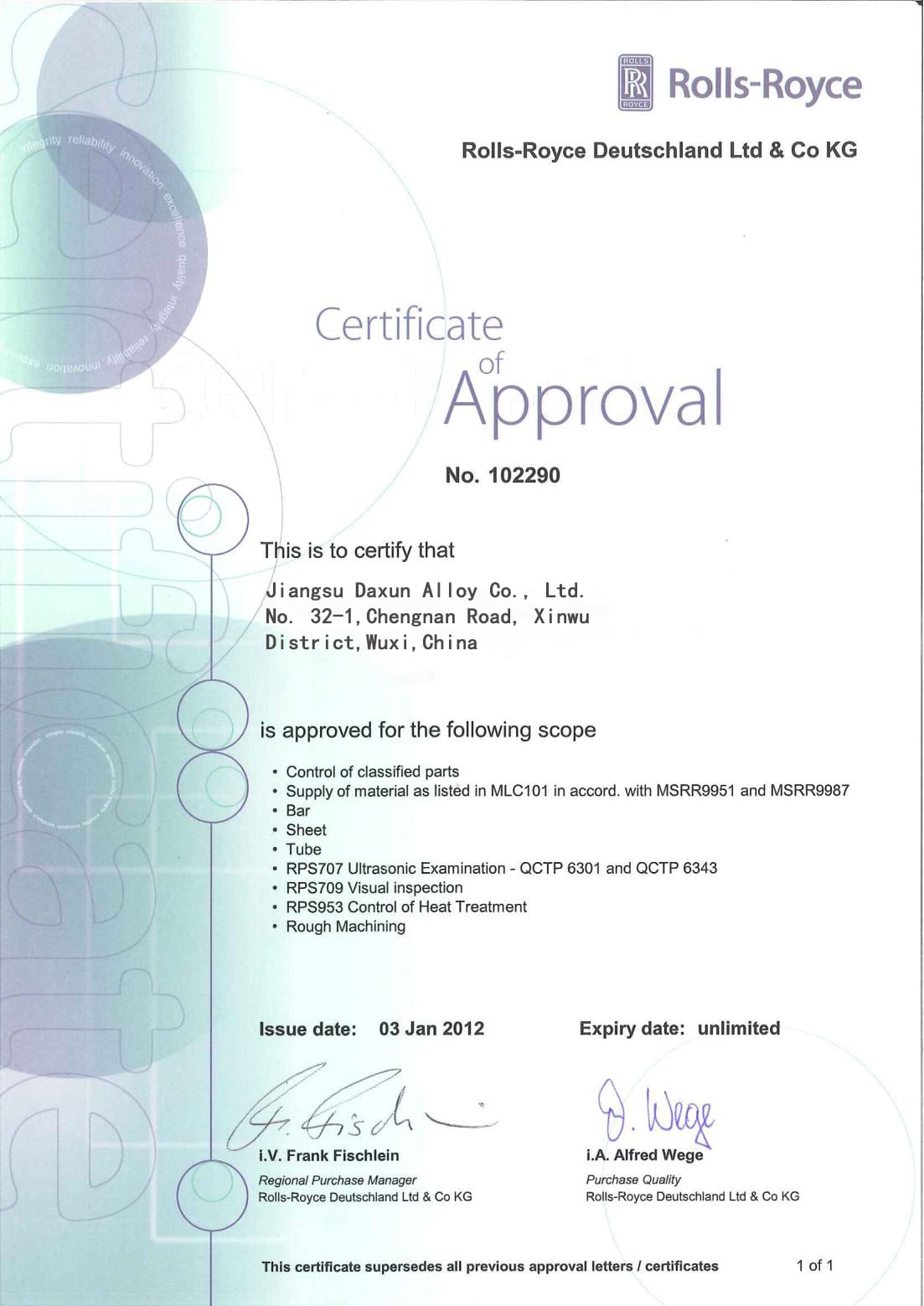
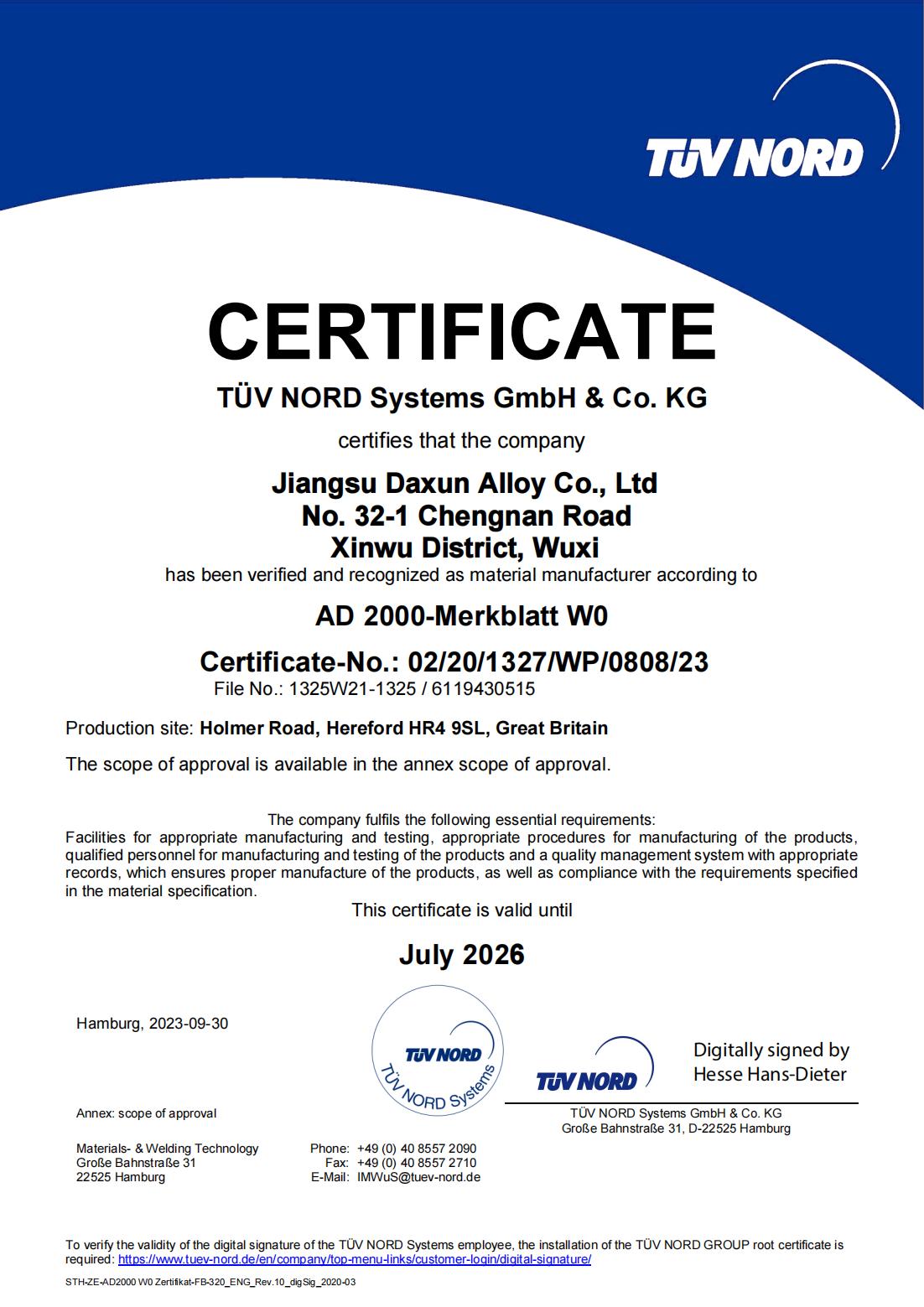
Third-party certificate examples retained for verification reference; these are not TiAlloy certificates, customer approvals, or evidence of TiAlloy certification.
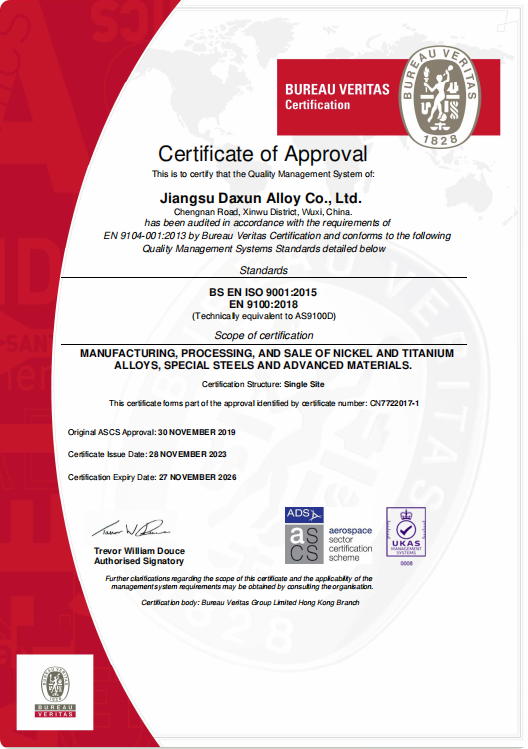
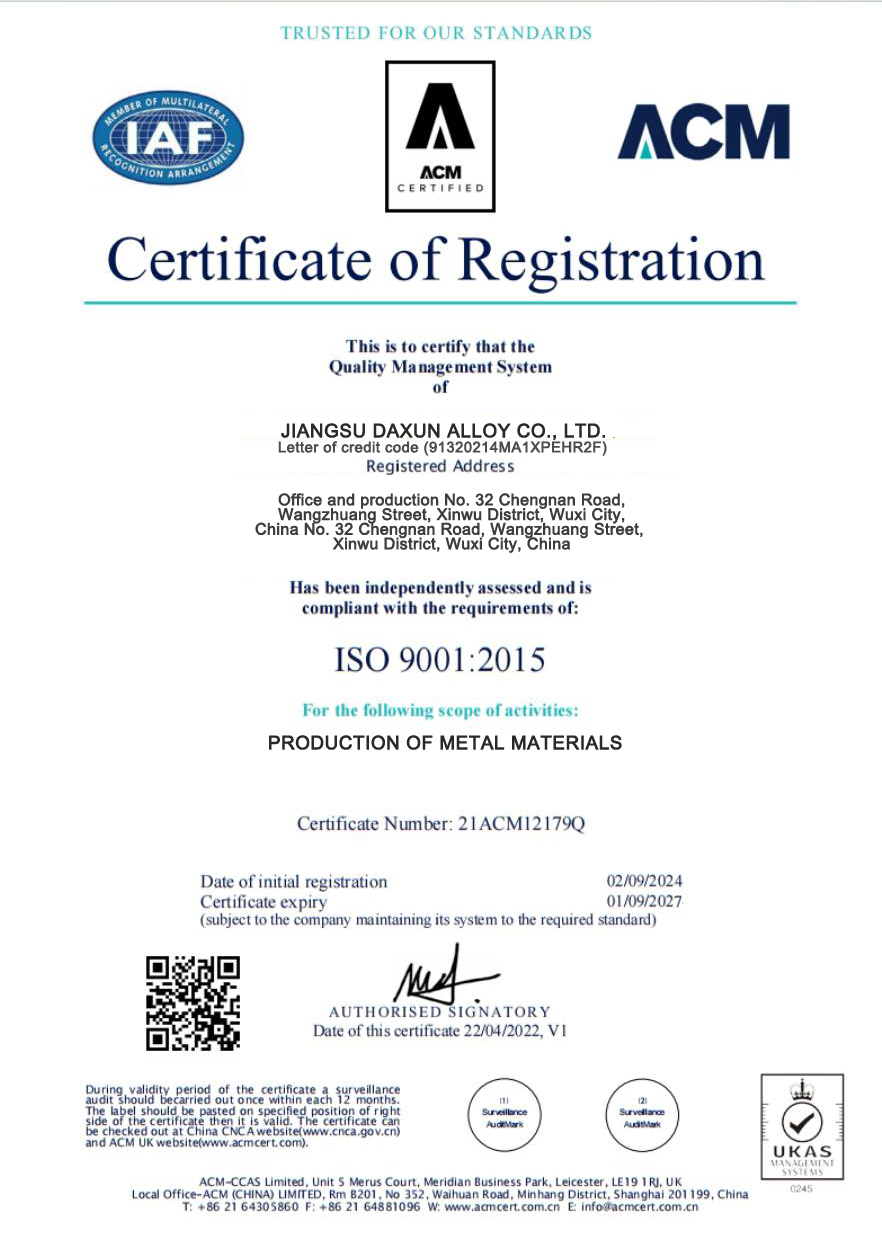
ISO 9001:2015
ACM / IAF Certificate reference withheld pending entity verification, scope covering the production of metal materials, expires on 2027-09-01.
AD 2000-Merkblatt W0
TUV NORD Certificate reference withheld pending entity verification, validity shown July 2026,renewal should be verified before publication post-July 2026.
ISO 9001
Quality management system covering nickel and titanium alloys, special steels and advanced materials.
MTC and traceability
For projects involving chemical, petrochemical, power, and pressure systems, EN 10204 Type 3.1 is a standard requirement due to it specifying the actual chemistry and mechanical test results of the heat or batch delivered. If project specifications demand it, a Type 3.2 certificate provides third-party verification.
Export Packing And After-Sales Response
chemical processing materials often traverse extensive distances prior to their installation, and thus, packing, marking, and certificate coordination have an impact on the project timeline. TIALLOY assists with the entirety of the project lifecycle, from initial material selection and competitive quotation to follow-up during manufacturing, arrangement of shipment, provision of feedback, and ongoing technical support.
PHASE 01
Before Order
Prior to the issuance of a quotation, we analyze the operating environment and circumstances, recommend appropriate material and grade choices, verify technical requirements, and identify corresponding industry standards. This allows us to furnish a quotation that aligns with the project scope and assists our customers in avoiding suppliers who omit necessary MTC, inspection, or packaging requirements.
- Material selection and grade recommendation.
- Specification, drawing, and standard confirmation.
- Technical consultation and prompt quotation.
PHASE 02
During Production
Post-award order follow-up includes production updates, quality inspections, certificate collection, surface condition verification, marking and packing procedures, and dispatch coordination, with the objective of identifying and addressing potential execution discrepancies prior to the material reaching the port.
- Production and inspection progress updates.
- Certificate and packing confirmation.
- Export shipment coordination.
PHASE 03
After Shipment
Following material delivery, we respond swiftly to all quality-related inquiries and issues concerning order-specific materials, certificates, packing, and technical queries, and we archive all project documentation for future reference, problem resolution, and repeat orders.
- Prompt quality issue response and handling.
- Order-related technical support.
- Long-term supply and service records.
Buyer Questions Before Selecting Chemical Processing Alloys
Which corrosion-resistant alloy is best for chemical processing?
No single alloy is ideal for all situations. The appropriate alloy choice hinges on factors such as operating medium, concentration, temperature, pressure, chloride concentration, pH value, crevice susceptibility, required form, and acceptable inspection standard.
Is 316 stainless steel enough for acid service?
While 316 stainless steel may suffice in a range of moderate applications, its performance may be compromised by the presence of acids, chlorides, high temperatures, or cleaning solutions, thus requiring the consideration of alternatives like duplex stainless steel, super austenitic alloys, titanium, or nickel alloy. We thoroughly evaluate the service window before recommending a suitable solution.
When should I choose titanium instead of stainless steel?
titanium corrosion resistance offers significant benefits in marine and coastal environments, as well as in desalination plants, condensers, and heat exchangers, when the operating pH, temperature, crevice form and compatibility with the operating fluid allow for its use. However, its use must still be carefully considered in reducing acid solutions or when dealing with narrow crevices.
When should I choose C-276 or Alloy 625?
For the most challenging applications involving aggressive chemicals, elevated chloride concentrations, higher operating temperatures, or severe corrosion conditions, C-276 and Alloy 625 are chosen, and the final selection must be based on precise chemistry and product standards.
Is Hastelloy C276 always the safest acid-service choice?
Hastelloy C276 is a good nickel alloy candidate for many corrosive service conditions but is not the universal answer. hydrochloric acid resistant metals and chlorine resistant metals will require evaluation versus concentration, temperature, moisture, flow and equipment configuration.
Can Hastelloy still fail or rust in acid service?
Yes, premium nickel alloys may fail if conditions such as media, temperature, acid concentration, deposits, weld condition or operating cycle exceed alloy service window. TIALLOY request application data and do not treat a grade name as a guarantee of service.
Should we test a coupon before moving from 316L to C-276 or another nickel alloy?
For highly valuable processes, or those where contamination is of concern, coupon testing and/or a material of construction review is a reasonable first step. Haynes C-276 product information page encourages prior testing in exact media prior to industrial use.
Can TIALLOY supply heat exchanger and condenser tubes?
Yes. TIALLOY products are sold in the form of titanium heat exchanger tubes, stainless steel tube and nickel alloy tube products for heat exchangers, condensers, evaporators, desalination plants and process equipment.
How should buyers compare heat exchanger materials?
Compare heat exchanger materials vs media fluid, utility fluid, chloride levels, temperature, pressure, cleanability, required tube wall thickness, and required certificates. The least expensive material is not always best when there is a high corrosion risk and/or a significant inspection risk.
What documents should I request with chemical processing alloy material?
A material test certificate (MTC), heat number traceability, chemical composition, mechanical properties, dimensional inspection, surface inspection, copies of certificates, pictures of packing and export documents are standard request items. For critical applications ask early if an EN 10204 Type 3.1 or 3.2 certification is required.