Get in Touch with TiAlloy Company

Nickel Alloy Products Hub: A Practical Selection Guide

Nickel Alloy Products Hub is a Decision Aid as opposed to a Grade Book. You can’t evaluate service by simply looking at a nickel alloy name and deciding if a plate, bar, tube, forging, weldment, or printed part would satisfy a particular service. The real evaluation takes into account damage mechanisms, mechanical duty, manufacturing route, condition of supply, governing specification and acceptance criteria.
It doesn’t replace TiAlloy’s nickel alloy product and inquiry hub, which remains the destination for product families and sourcing discussions. Here the goal is to help engineers and buyers prepare a complete and technically accurate request before they ask “What’s available?”
Quick Specs: critical info that must be included with any piece of data
| Material identity | UNS designation, named alloy, and applicable trademark only when relevant |
| Product basis | Plate, sheet, strip, bar, wire, tube, pipe, forging, casting, powder, or weld metal |
| Processing basis | Wrought, cast, additively manufactured, welded, cold-worked, solution-annealed, or age-hardened |
| Test basis | Temperature, environment, specimen direction, test method, and acceptance criterion |
| Evidence basis | Current specification, producer data, heat-linked records, inspection, and project acceptance |
How to Use This Nickel Alloy Products Hub
Use the guide in two passes. In the first pass, disregard your preferred grade of material for each family and focus on service conditions instead. In the second pass, test the remaining candidates against the route, condition, standard, and evidence required for the design because an ASTM material specification, for example, covers a defined product form. This order of consideration prevents an assumed alloy name from becoming an unexamined design assumption.
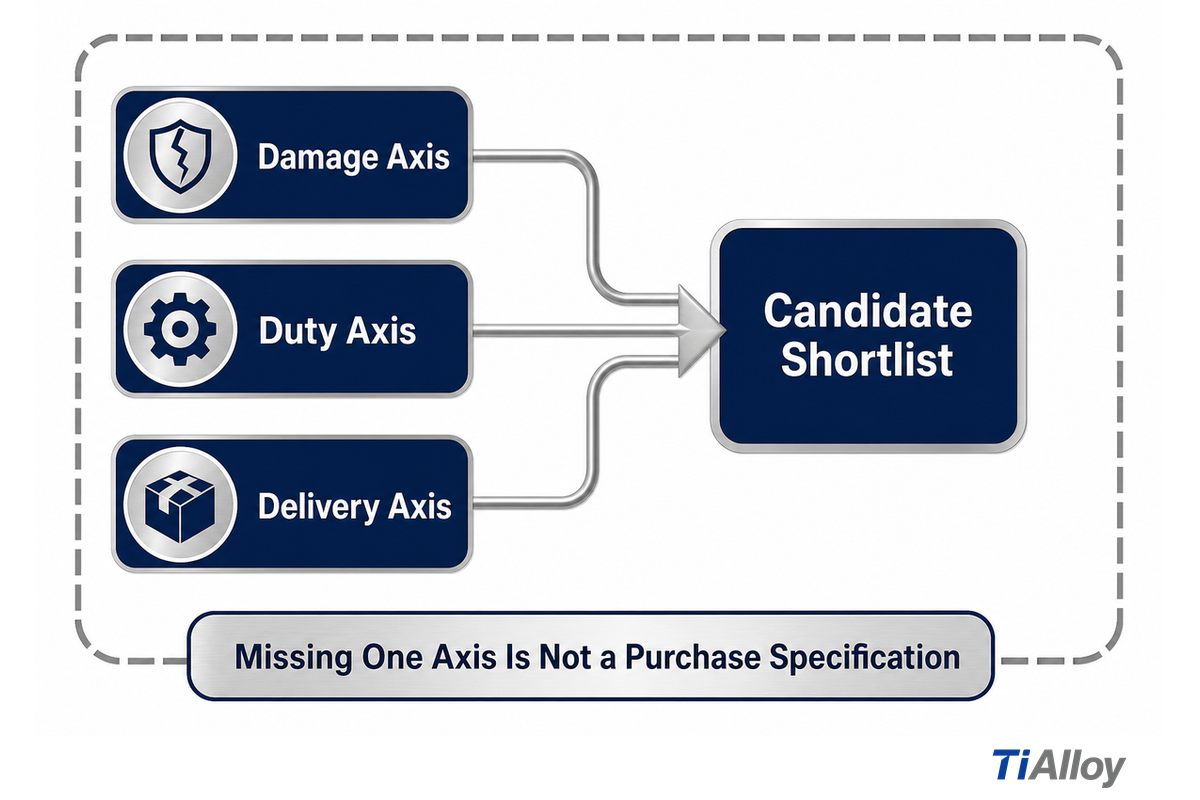
The central device is the 3-Axis Alloy Fit Map. It’s designed to work with nickel materials as opposed to carbon steel or stainless steel, but the principle of keeping data associated with its test basis is shared:
- Damage axis: general corrosion, pitting, crevice attack, stress corrosion cracking, oxidation, carburization, creep, fatigue, wear or a combination of these.
- Duty axis: Factors include temperature, pressure, and stress. Also impurities, concentration, chemistry, cycle count, dwell time and expected life.
- Delivery axis: form, route, and method of manufacture, specification, inspection and test plan, and traceability.
Missing one axis produces a shortlist, not a purchase specification or a determination of service suitability.
Is Every Nickel Alloy an Inconel, Monel, or Hastelloy?
No. “Nickel alloys” is the broad category of material. Inconel, Monel and Hastelloy are specific trademarks. UNS numbers identify a composition family. A trade name, a generic alloy number, or a product specification can refer to the same material, but it does not carry the same legal or technical meaning.
This makes a difference in drawings and purchase orders. “Inconel 625” is more colloquial, but UNS N06625 provides a designation that can be traced to a specification for a stated form. The specification then defines what it includes. The purchase order defines what’s included by adding dimension, condition, testing, marking, and documentation. It also defines what’s required to accept the project.
The practical rule is simple: use the generic designation and governing specification as the technical backbone. Use a trademark only when it’s really required and legally accurate. More details on two frequently compared trademark families can be found in our Inconel vs. Hastelloy Guide.
Main Nickel Alloy Families and the Questions They Raise
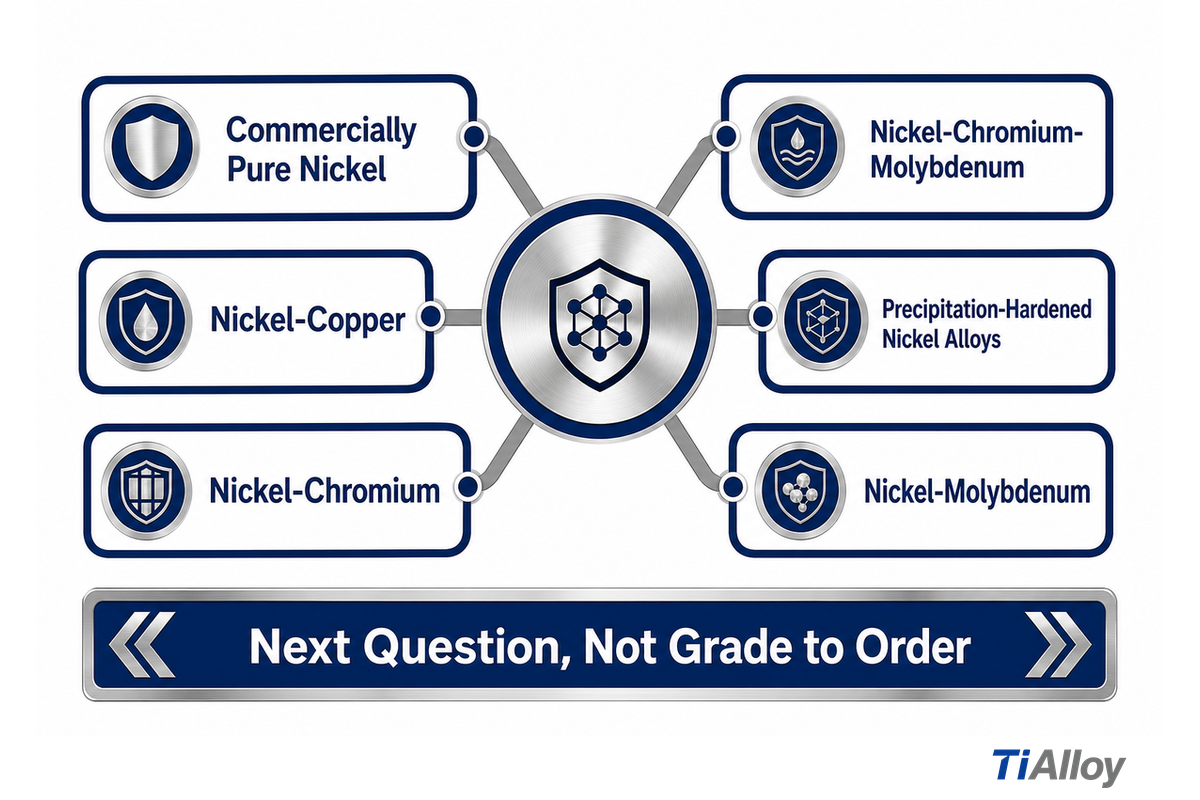
Nickel alloys are a family of materials, just like every other alloy system, and each family has its own unique balance of attributes, e.g. corrosion behavior, high-temperature strength, thermal expansion, ductility, fabrication response, cost, etc. The chart is a tool to help decipher which balance of attributes needs to be further assessed, not which grade to order.
| Nickel alloy category | Design emphasis | Next question |
|---|---|---|
| Commercially pure nickel, such as 200/201 | Nickel-rich chemistry and selected reducing or caustic environments | Which temperature and impurity limits govern? |
| Nickel–copper, such as 400/K-500 | Marine and selected reducing-service behavior | Is strength obtained by condition or precipitation hardening? |
| Nickel–chromium, such as 600/601 | Oxidation resistance and high-temperature service | Is the environment oxidizing, reducing, carburizing, or cyclic? |
| Nickel–chromium–molybdenum, such as 625 | Broad corrosion resistance with useful strength | Which form, route, condition, and temperature basis supports the claim? |
| Precipitation-hardened nickel alloys, such as 718 | High strength through controlled thermal processing | Which solution and aging condition is required? |
| Nickel–iron–chromium, such as 800H/800HT | Elevated-temperature structural and oxidation duty | What code case, grain-size, or condition rules apply? |
| Nickel–iron–chromium–molybdenum–copper, such as 825/925 | Mixed acid and selected oil-and-gas duties | Are hardness and sour-service criteria specified? |
| Nickel–chromium–molybdenum C-family, such as C-22/C-276 | Severe mixed corrosion and localized attack screening | What contaminants, aeration, and crevice geometry exist? |
| Nickel–molybdenum B-family, such as B-2/B-3 | Strongly reducing environments under bounded conditions | Could oxidizing contaminants or fabrication heat exposure change the risk? |
How Alloying Changes Corrosion, Oxidation, Strength, and Fabrication
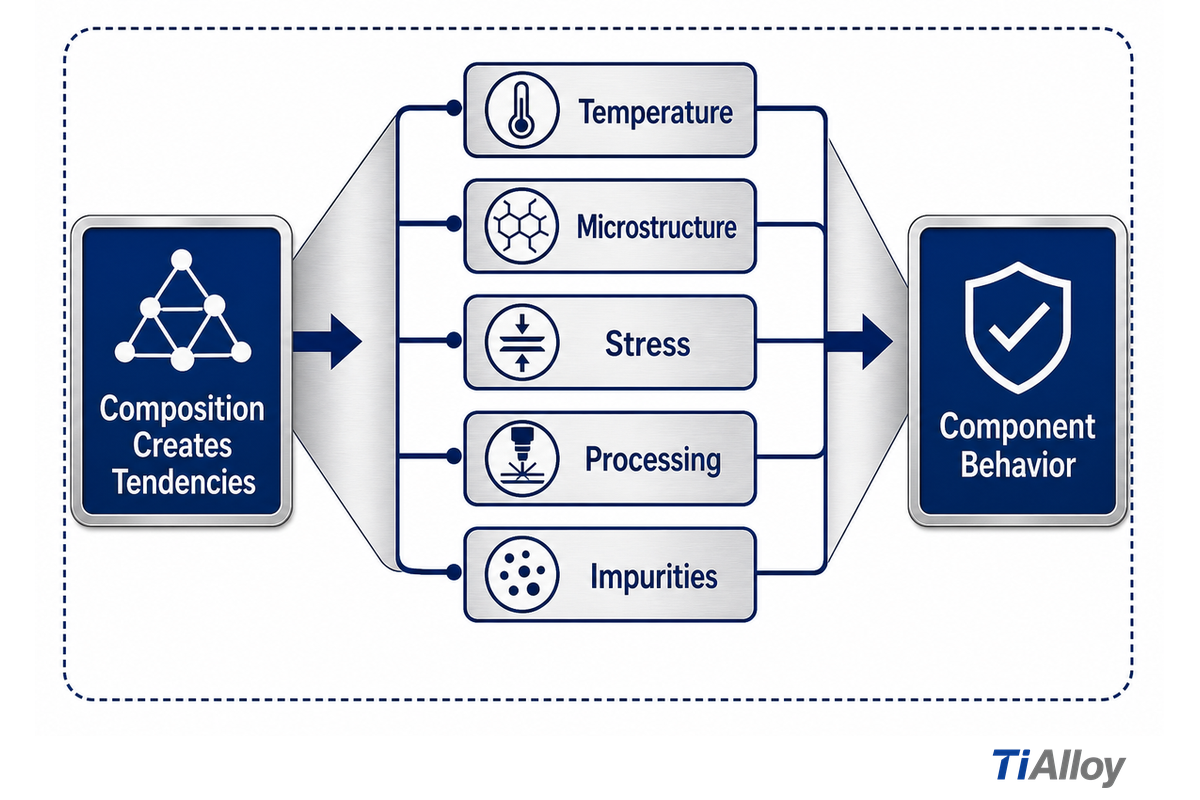
Composition creates tendencies, not guarantees. The Alloy 625 bulletin treats cobalt as a bounded composition entry for that named alloy, not as a family-wide performance promise. Chromium can support protective oxide behavior; molybdenum often contributes to resistance in selected reducing or localized-corrosion conditions; niobium, aluminum, and titanium can participate in strengthening systems. However, temperature, microstructure, stress, processing, and impurities ultimately decide whether those benefits appear in the component.
Particular examples are more instructive than generalizations. The Special Metals Alloy 625 bulletin specifies UNS N06625 and reports a service range from cryogenic temperatures to 1800°F (982°C). The same bulletin separates condition guidance at and below 1200°F (649°C) from higher-temperature service. Those temperatures apply only to Alloy 625 and that document; they don’t set limits for other nickel alloys.
Heat treatment is equally specific. Haynes’ heat-treatment guidance distinguishes the solution-annealing practice of corrosion-resistant alloys from the more varied thermal processing of high-temperature alloys. The right conclusion isn’t “anneal all nickel alloys at one temperature.” It’s “keep the thermal practice, alloy, form, route, cooling method, and intended property together.”
Start with what can damage the component. For a gas-turbine section in power generation, material choice may be governed by creep, oxidation, thermal cycling, and joint design, while an aqueous-service component may be governed by localized corrosion and fabrication exposure.
Match the Damage Mechanism Before Choosing a Grade

A chloride-bearing aerated solution, a reducing acid with oxidizing contamination, and a carburizing furnace atmosphere create different questions. Sustained creep, thermal fatigue, and erosion all cause different questions.
Write the service envelope before the alloy name
Normal and upset chemistry, concentration range, contaminants, temperature profile, pressure, applied and residual stress, flow condition, solids, cleaning cycle, weld exposure, expected life and consequence of failure should all be included. Things that aren’t known about a process should remain that way, instead of assuming they’re ‘severe service’ conditions.
As an initial step, the AMPP material selection paper defines service conditions. Only then are candidate families compared. If laboratory corrosion data drives the shortlist, compare its chemistry, temperature, aeration, exposure time, specimen condition, and reported attack mode with the intended service.
Why Product Form, Manufacturing Route, and Supplied Condition Can Change the Answer
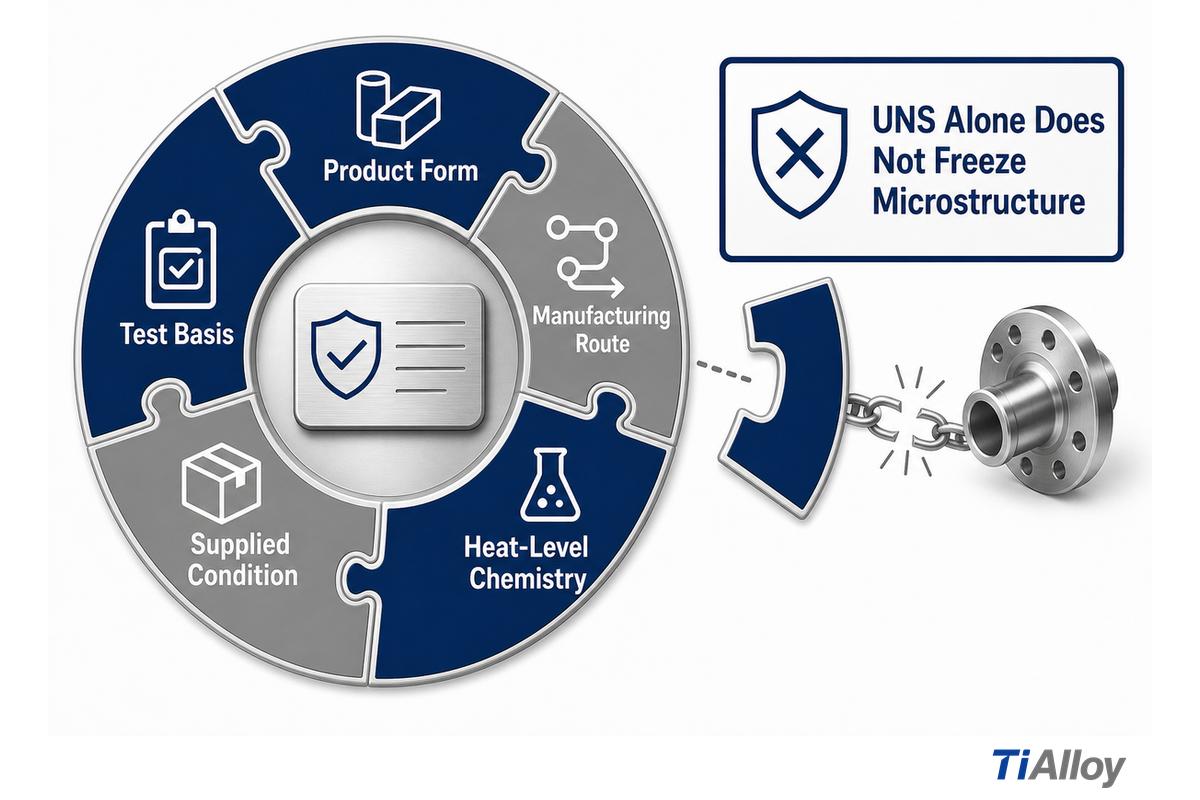
A grade number doesn’t “freeze” the microstructure. The solidification, reduction, solution annealing and/or aging, cooling, and residual stress of the base metal and weld metal can differ from that of the processed, formed, and/or cast materials. The Form, Route, Condition Lock connects every property to those variables and the heat/lot chemistry.
NIST provides a sharp example. In laser powder-bed Alloy 625, a study of a 1 h stress relief at 870°C found delta-phase formation and recommended homogenization because the starting route raised the risk of property degradation. Later, a NIST comparison of additively manufactured and wrought IN625 found that closely matched heat treatments didn’t erase route-dependent cracking behavior.
“A different heat treatment protocol will be required.”
NIST abstract, referring to the different starting AM microstructure
A NIST microstructure comparison shows different delta-phase evolution at 870°C between low-iron material and an IN625 example containing 0.0414 mass fraction iron. The lesson is to make sure that heat-level chemistry and route are included in the evidence chain when they are relevant.
A UNS number identifies a composition designation. An ASTM or ASME material specification defines a covered product and its requirements. A producer data sheet reports a material’s properties, identifies the form and condition to which the data apply, and helps the reader interpret expected behavior. The project specifications determine the evidence and the acceptance criteria for the delivered item.
How to Read UNS, ASTM/ASME, and Data Sheets Together
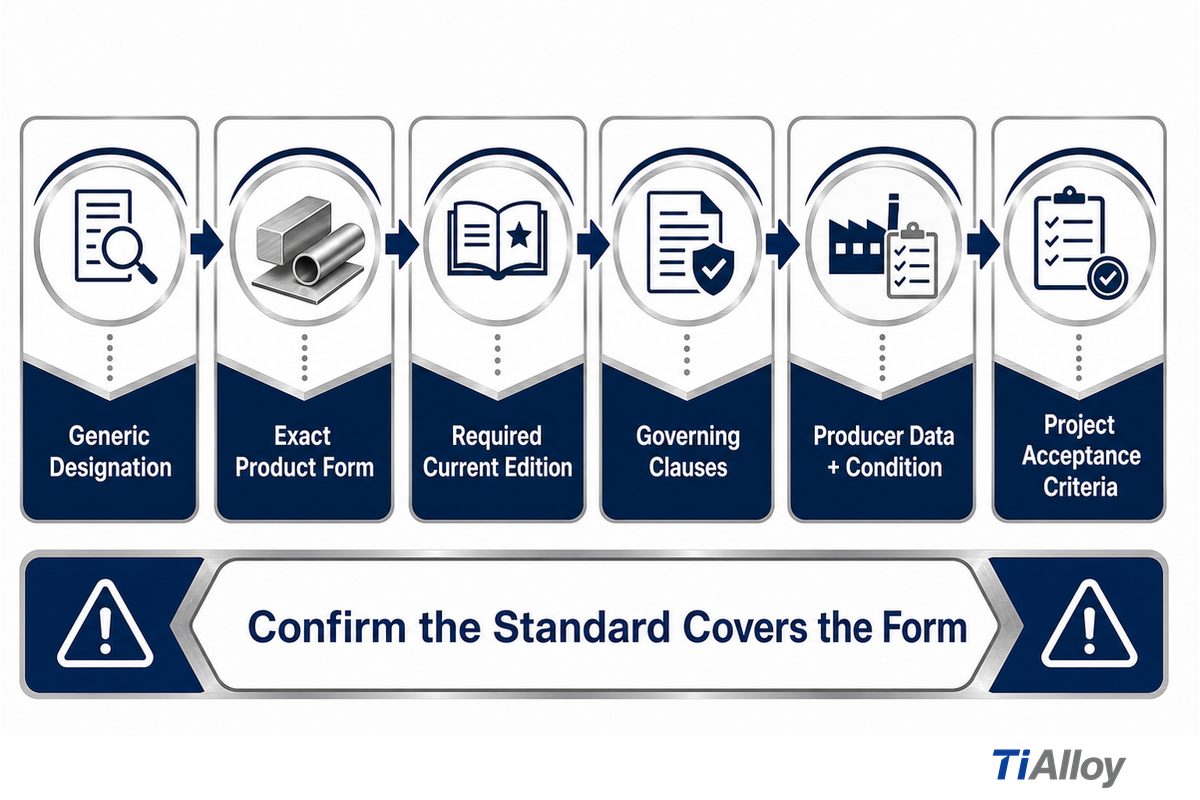
ASTM specifications provide a form-specific guardrail.
ASTM gives a useful guardrail. ASTM B166-25 is an active specification for listed nickel alloys in rod, bar, and wire forms. It is not a general specification for every form of every alloy it names. Likewise, B446 concerns rod and bar, while plate, sheet, pipe, tube, forgings, fasteners, and welding consumables can fall under different documents.
Read in this order:
- Confirm the generic designation and any permitted trade name.
- Confirm that the specification covers the exact product form.
- Check the current edition required by the contract or governing code.
- Read the clauses covering chemistry, mechanical properties, heat treatment, dimensions, tests, retests, marking, and certification.
- Use producer data to understand behavior while keeping the reported form and condition attached.
- Add acceptance criteria to cover what isn’t defined in the governing documents.
A particular standard number may appear exact; however, it may not be applicable to the form of the product. Incorrect use of standards results in either under-specification or over-specification. Standards literacy helps to identify an appropriate standard to use.
A Repeatable Nickel Alloy Selection Workflow
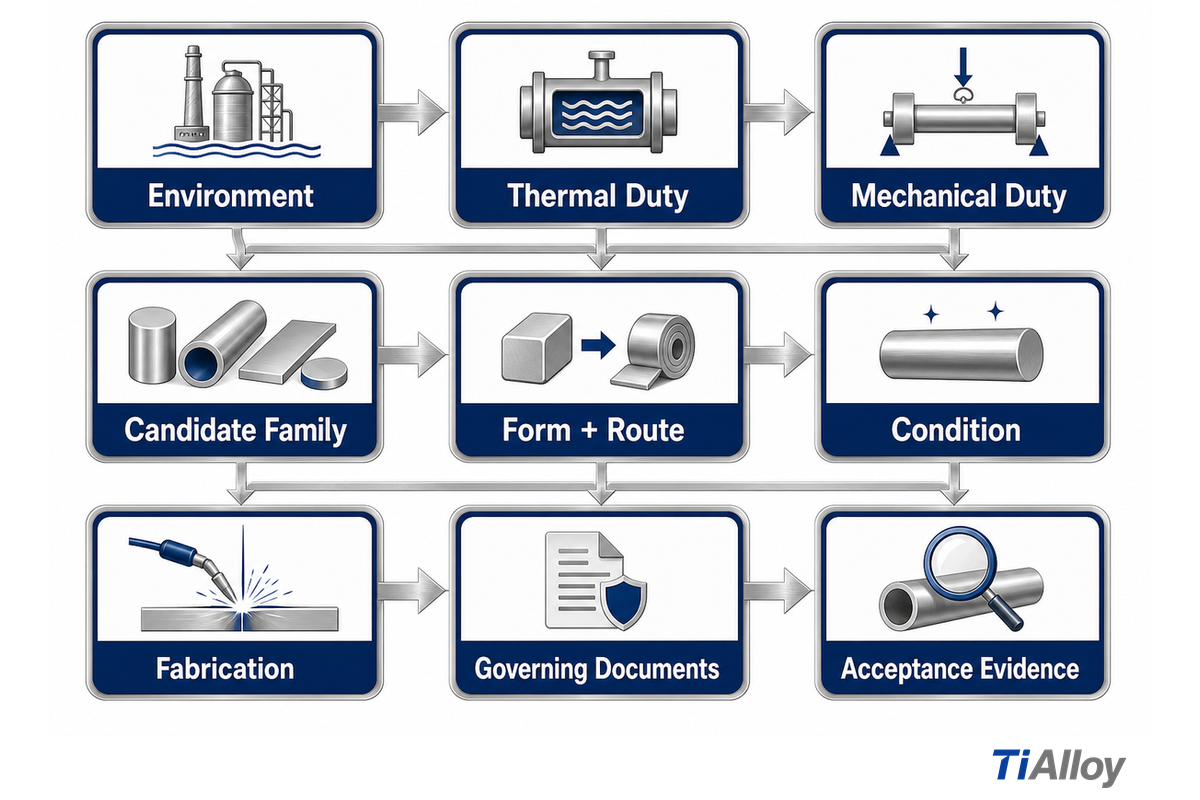
A repeatable workflow creates a trackable audit trail from service need to accepted material. It allows for productive disagreements, as team members can identify which assumption is causing the disagreement. The following nine checkpoints use the form-specific discipline illustrated by ASTM B166-25 and allow a review of a material decision without pretending that a single table can perform engineering.
| Checkpoint | Record | Stop if missing |
|---|---|---|
| 1. Environment | Chemistry, contaminants, phase, flow, solids, normal/upset ranges | “Corrosive media” is the only description |
| 2. Thermal duty | Minimum, normal, maximum, gradients, dwell and cycles | A single temperature has no time basis |
| 3. Mechanical duty | Load, stress state, fatigue, creep, wear, impact and life | Strength is requested without condition or temperature |
| 4. Candidate family | Why each family addresses the dominant mechanisms | A brand name substitutes for the reasoning |
| 5. Form and route | Wrought/cast/AM/welded route and exact product form | Evidence comes from another route without justification |
| 6. Condition | Solution, anneal, aging, cold work, hardness or grain rules | “As supplied” is undefined |
| 7. Fabrication | Machining, forming, welding, filler, cleaning and heat exposure | The joint is assumed equal to base metal |
| 8. Governing documents | Designation, current form-specific standard, code and project additions | The cited specification does not cover the form |
| 9. Acceptance evidence | Heat linkage, certificate checks, testing, inspection, marking and release authority | The item cannot be linked to the record |
Compare Candidates on the Same Test Basis
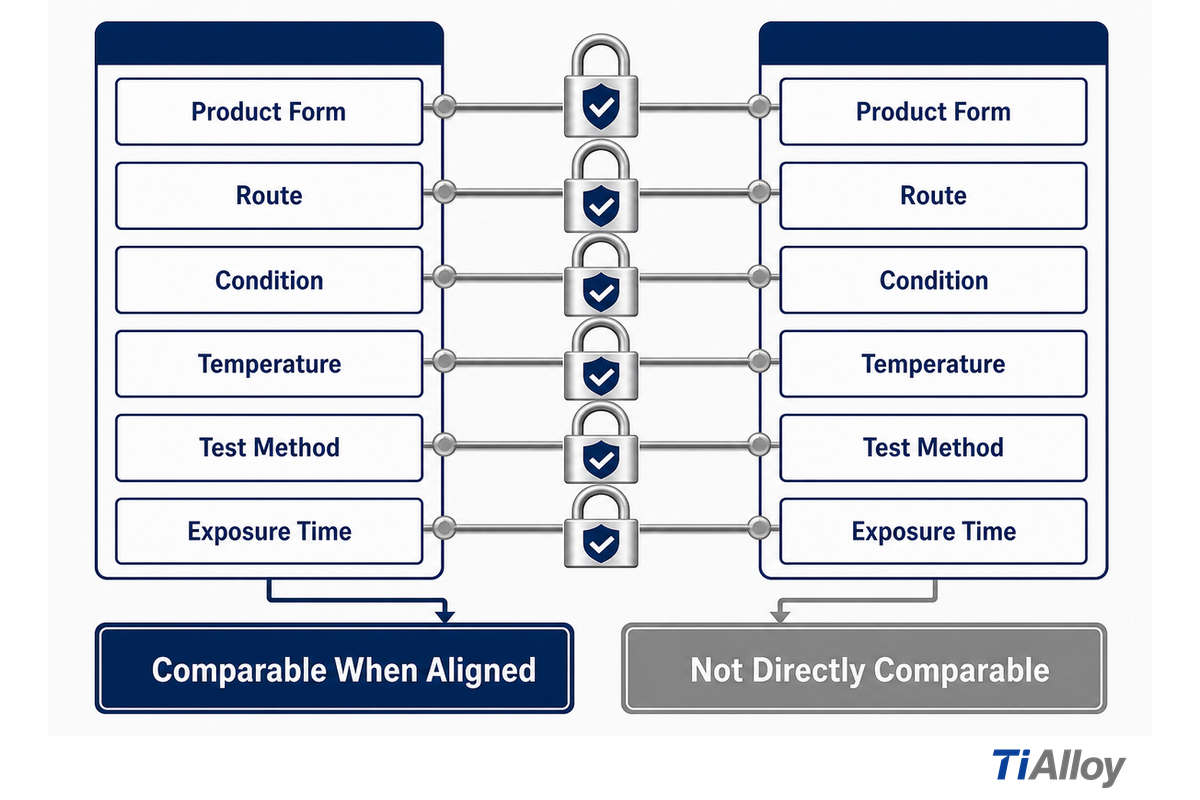
Having values side-by-side creates a risk because their test bases may not align. A room-temperature longitudinal tensile value of annealed sheet, for example, can’t be compared to an elevated-temperature transverse value of aged bar. Corrosion rates due to different chemistries, aeration states, exposure times, and specimen finishes can’t be meaningfully compared to each other.
Before comparing two values, keep the fields constant or explain how they differ. These factors include alloy heat, product form, route, condition, temperature, specimen direction, thickness or section, environment, test method, exposure time, and whether the number is typical, minimum, maximum, or guaranteed. Check the current edition required by the contract or governing code. When the bases don’t align, state “not directly comparable” instead of forcing a winner.
This rule is very important for Alloy 625. TiAlloy’s separate guide for Inconel 625 can help with grade-focused context, but project decisions will still require the same basis check described here.
Which Evidence Supports Identity, Conformance, and Acceptance?
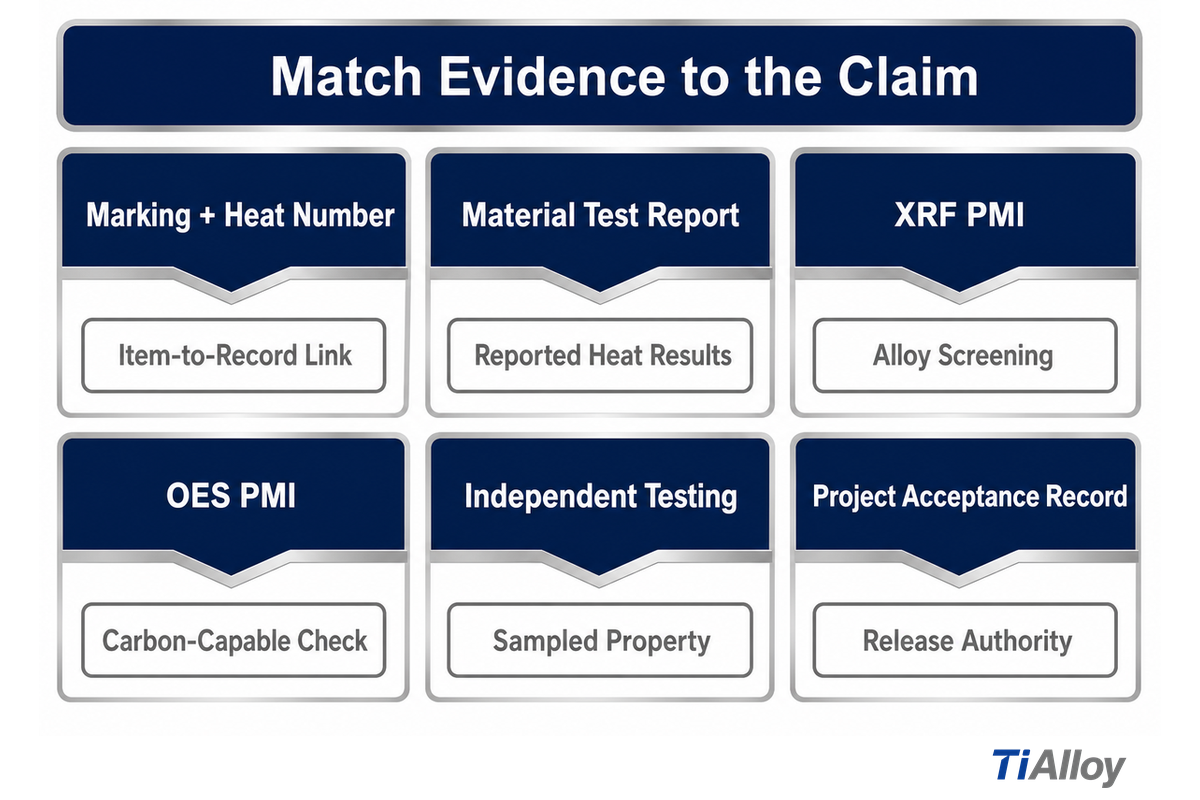
A document can be genuine but answer the wrong question; a document can contain plausible values without being associated with the delivered item. The Evidence-to-Claim Table separates five tasks: Identify the alloy, demonstrate ordered conformance, verify certificate validity, keep item-level traceability, and fulfill the project’s acceptance authority.
| Evidence | What it can support | What it does not prove alone |
|---|---|---|
| Marking and heat number | Item-to-record linkage when maintained | Record authenticity or all ordered tests |
| Material test report | Reported chemistry, tests, form and condition for the stated heat | Service suitability or linkage to an unmarked item |
| XRF PMI | Elemental alloy identification within method capability | Carbon, heat treatment, mechanical properties, or every grade distinction |
| OES PMI | Broader elemental verification, including carbon where properly applied | Mechanical properties, microstructure, or service life |
| Independent testing | The sampled property under the stated method | Unsampled areas or requirements outside the test |
| Project acceptance record | Release against the approved inspection and test plan | Fitness beyond the defined scope or changed service |
MISTRAS explains that XRF can’t detect carbon and points to OES when carbon verification is required. Detection method is a reason to limit the usefulness of the test, not a reason to dismiss PMI. The test is useful when its capability meets the claim.
For high-consequence work, certificate controls extend beyond neat paperwork. A DOE quality assurance document differentiates the requirements for procurement, supplier evaluation, the content of the certificates, and independent inspection. Your governing code or plan for the project may vary, but the general idea is the same: be sure what the record states and why it pertains to the item in question.
The Eight-Line Nickel Alloy Requirement Card
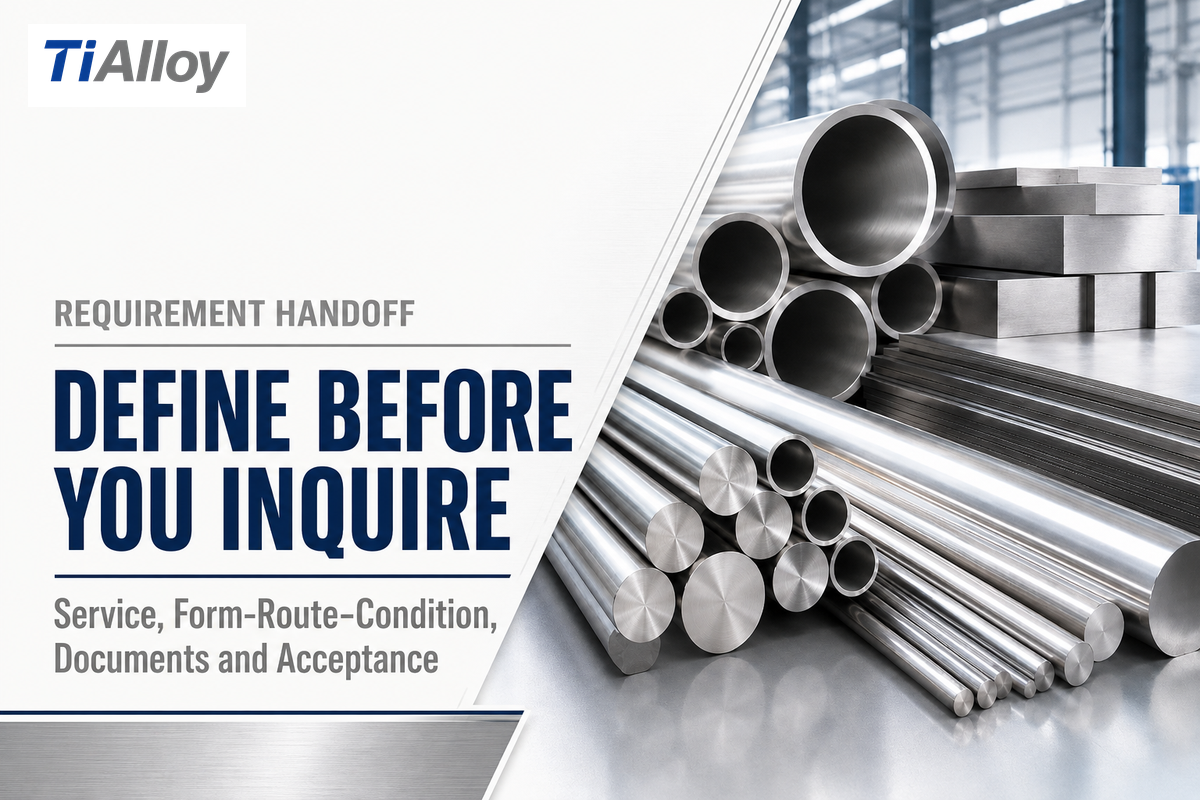
A concise requirement card makes an inquiry more helpful without turning this document into a catalog. Please complete all eight lines before passing this request to a supplier or the internal materials group. For unknown values, enter “to be confirmed” along with an owner and decision date, as opposed to making an assumption.
- Service: identify the required service, if known (i.e. Service: Concentration, contaminants, phase, flow, pressure, temperatures (normal/upset), etc.).
- Failure Modes: consider corrosion, fatigue, wear, galling, oxidation, carburization, and cracking.
- Component: function and geometry, section range, design life and the effects of failure.
- Material basis: candidate UNS designation and the reason it remains on the shortlist.
- Form-Route-Condition: the exact form of the product, wrought or cast, route of manufacture (e.g., AM, welding), heat treatment, hardness and controls on grain and chemistry.
- Fabrication: forming and machining, filler metals, heat input, cleaning, pickling, and post-fabrication operations.
- Documents: the form-specific design and/or purchase document, the code and project addenda as well as type of certification, marking and traceability.
- Acceptance: inspection, sampling, PMI method, independent tests, hold points, and release authority.
When the card is completed, TiAlloy’s nickel alloy product hub can be reviewed or the card can be sent for a technical talk. For background on the Company and manufacturing, see About TiAlloy.
Have the eight-line card ready?
Share the service envelope, form-route-condition basis, governing documents, and acceptance plan with TiAlloy.
Frequently Asked Questions
Is nickel alloy the same as Inconel?
No. Nickel alloy is the broader material category; Inconel is a trademark for a specific nickel-alloy family. A purchase requirement should connect the material to a UNS designation and a product-form specification. No trademark alone can define complete purchase requirements.
What is nickel alloy used for?
Nickel alloys are used when a project requires a specific combination of corrosion resistance, oxidation behavior, strength, and so on. They’re used in chemical processing, energy, aerospace, marine, pollution control and other similar systems. The application alone doesn’t determine the nickel alloy to be used. Other factors, including service temperature, stress, manufacturing route, product form, and acceptance criteria, control nickel-alloy selection.
How do I choose a nickel alloy grade?
Begin with the service envelope and damage mechanism, then compare candidate families. Lock each data point to product form, route, heat or lot chemistry, supplied condition, environment, temperature, and test basis. Finally, confirm the form-specific standard, inspection plan, certificate validity, and item-level traceability.
Does PMI prove that a nickel alloy meets the order?
PMI can support alloy identification within the capability of the chosen method. It doesn’t automatically prove heat treatment, tensile properties, microstructure, every specified element, or service suitability. XRF, for example, can’t detect carbon, so a grade distinction that depends on carbon needs another suitable method such as OES. PMI should be paired with heat-linked records and any tests or inspections required by the order. The acceptance review should confirm certificate validity, maintain the item-to-record link, and name release authority.
Why can the same nickel alloy show different property values?
Tensile properties can be impacted by a number of factors including product form, thickness, manufacturing route, heat-level chemistry, hot or cold work, solution annealing and/or aging, cooling, specimen direction, test temperature, and whether a value is typical or guaranteed. Additive and wrought materials can also retain different starting microstructures after similar heat treatment. References and Sources for the technical claims above are listed next. Values should only be compared after these factors have been equated.
References
- ASTM B166-25 – active specification page and product-form scope
- Special Metals, INCONEL Alloy 625 technical bulletin
- NIST – delta-phase formation in stress-relieved laser powder-bed Alloy 625
- NIST – route-dependent cracking behavior in additively manufactured IN625
- NIST – microstructure evolution for low and high-iron IN625
- Haynes International, nickel-alloy heat-treatment guidance
- MISTRAS, PMI method scope and XRF/OES limitations
- U.S. Department of Energy – Quality Assurance Program Document
WHY WE PUBLISH
About TiAlloy
TiAlloy supplies titanium, stainless steel, nickel alloy and clad plate for specification-driven industrial orders. Our technical guides are written to help buyers align product form, governing standard, test scope and release documents before a quotation is compared.
01Melt & formPlate, sheet, pipe, tube, bar, wire and forgings
02ProcessHeat treatment, finishing, inspection and export packing
03VerifyEN 10204 Type 3.1 certificate and order documents