Get in Touch with TiAlloy Company

Chemical Processing Solutions: An 8-Step Guide to Materials, Corrosion Control, and Process Reliability

Engineering guide
Updated September 2026
Chemical processing solutions are an integrated engineering evaluation of equipment, materials, controls, safety and evidence for a defined chemical service. The following describes the evaluation used to make traceable engineering decisions before a project-specific commercial review.
The term ‘chemical processing solutions’ is broad. When a process engineer uses this term, it could mean reviewing a reactor train, addressing a challenge with a heat exchanger, or evaluating material of construction for process piping. It could also mean preparing a safer operating handoff for the process equipment. A material buyer could also be interested in a new alloy or a fabricator. Again, all of these constitute related queries, but don’t necessarily address the same intent. Generally, this document explains how to identify the service, assess the associated risk and create a defensible handoff. Products, their availability and other details related to a project should be handled on the chemical processing solutions page.
What are chemical processing solutions?
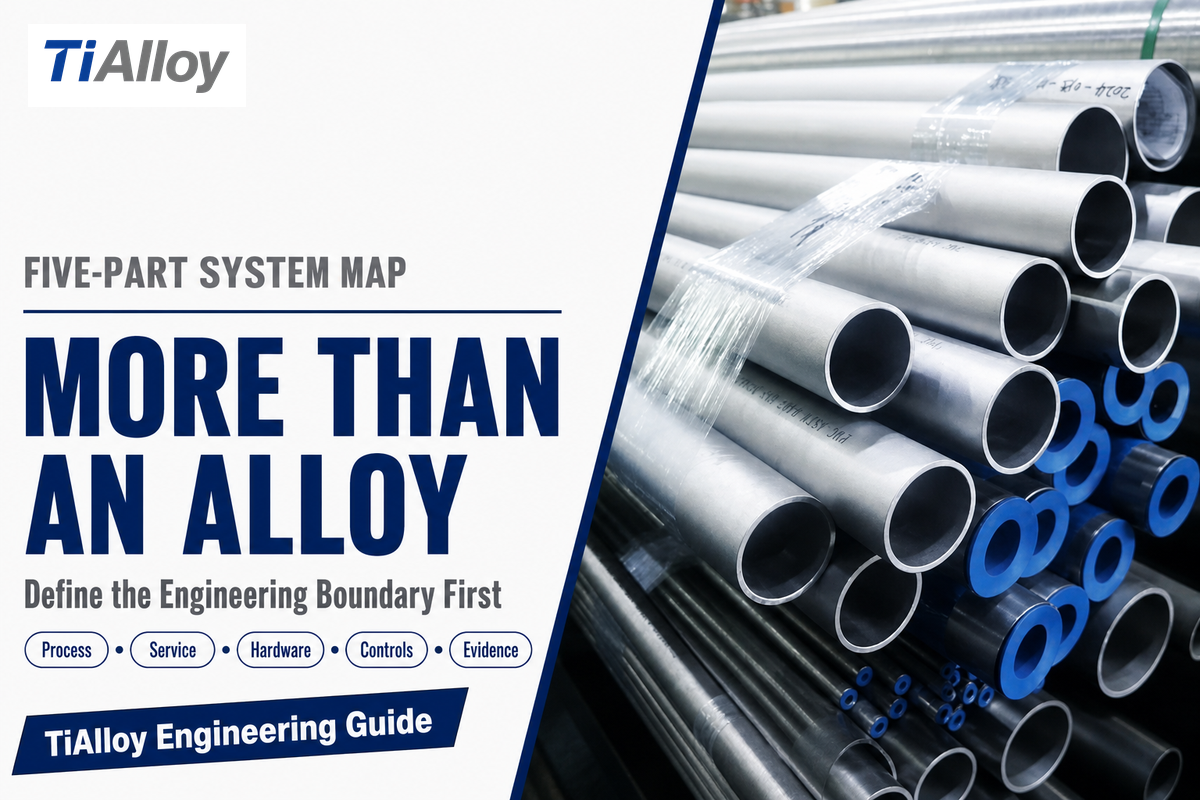
Chemical processing solutions encompass numerous closely related engineering specialties, including materials, equipment, automation and controls, and safety. They aren’t a stand-alone alloy or a catalog item. In this guide, the scope of a processing solution includes feedstock preparation, reaction, product formation, separation, heat integration, product and intermediate storage, automation, inspection and testing, and handoff to the next operator.
Clarification of the scope is the first order of business. Only after this definition has been drawn can there be a meaningful discussion of which material and equipment options should be reviewed.
Use a five-part system map:
- Process: reaction, mixing, heating, cooling, separation and recycle steps.
- Service: chemistry, concentration, phase, temperature, velocity, pressure and contaminants.
- Hardware: Hardware includes vessels, piping, pumps, valves, heat exchangers, gaskets and seals, linings, and supports.
- Controls: sensors, alarms, interlocks, sampling, cleaning and change management.
- Evidence: Drawings, Material Certificates, Inspection Reports, Operating Limits and Acceptance Criteria.
AMPP explains that materials selection is a primary corrosion-control decision and that design details such as drainage, crevice avoidance, dissimilar-metal separation, corrosion allowance and inspection affect the result. Read the AMPP materials-selection guidance for the underlying principle: no material is resistant to every corrosive situation.
What are the different types of chemical processing?
Seven common operation groups in chemical processing are synthesis and reaction, mixing and dosing, separation, purification, formulation, heat transfer and waste treatment. A given plant may use several of these operations in a series. The particular operation influences equipment design, material requirements and the plant sequence; it doesn’t determine those decisions by itself.
What are some everyday examples of chemical processes?
Processes in water treatment, pharmaceutical formulation, food preservation and battery charging all involve controlled chemical change, but their service conditions aren’t interchangeable. In industry, controlled reactors work with pumps, heat exchangers, sensors and containment in the preparation of final products.
Engineering both small and large systems involves understanding the effects of changes in concentration, contact time and temperature on the functional limits of a system. The service limits of a system should always be explicitly described. They can’t be inferred from the name of the system.
Map the process before choosing materials
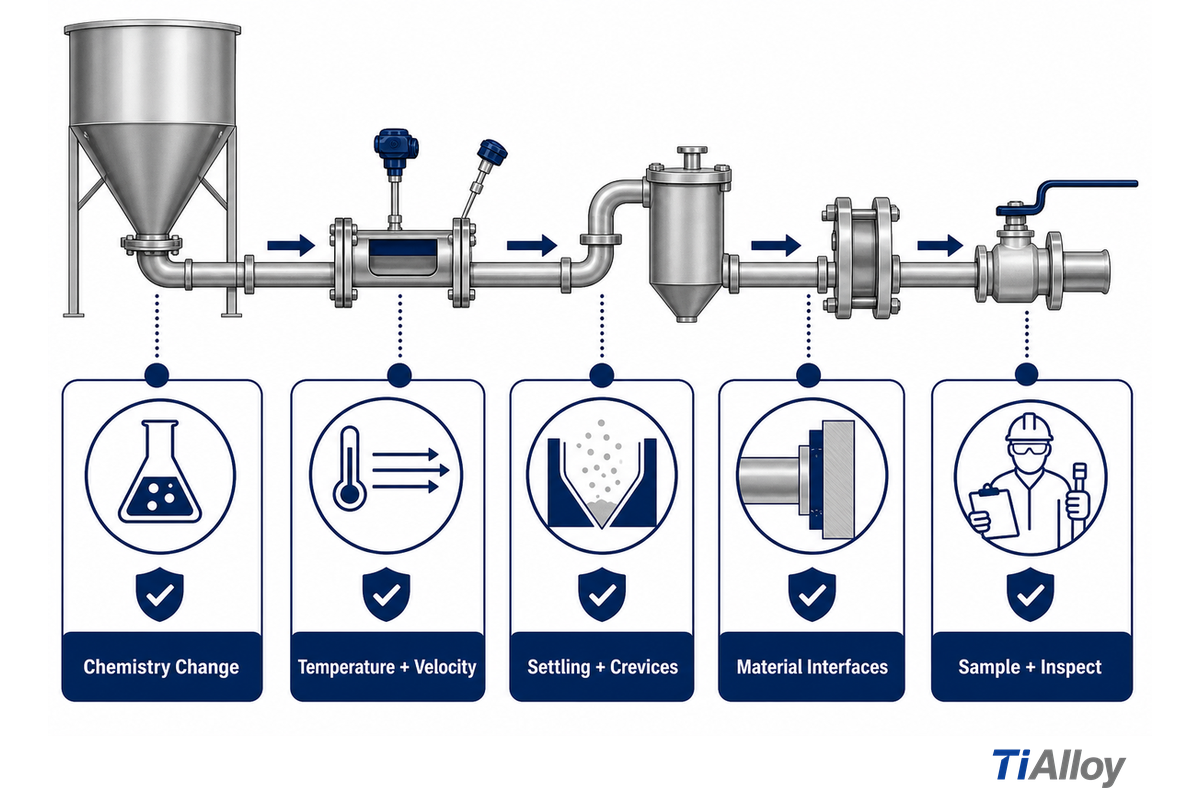
A process map shows the various locations where chemical, phase, heat and mass changes occur. The process map serves as a basis for material and energy balances, but not for unverified operating assumptions. A useful map connects process conditions to plant performance, operating costs and maintenance requirements; teams can use it to optimize production without sacrificing operational reliability. A process map focuses on the material and energy flows and transformations in a process. To construct a process map, one starts with a line that represents the flow of material from a process input to a process output, and identifies the various reactions, hold-up volumes, heat transfer surfaces, separations, and material flows. Drains, dead legs and sampling and relief locations should also be included. Process operators usually operate a process between its limits. Therefore, process limits should also be included on the process map.
The map must show whether powders and settling slurries alter the wetting pattern and must answer five questions:
- Where does the chemistry become more concentrated or more oxidizing?
- Where do temperature and velocity rise together?
- Where can sedimentation, disengagement, or crevice conditions occur?
- Where do dissimilar metals, coatings, elastomers or welds meet?
- What locations will the operator sample, inspect, clean or isolate equipment?
Record the charge sequence and time spent in each temperature band for a batch chemical reactor. For a continuous line, record operating conditions including start-up, steady state, upset and shutdown. Heat exchangers should also be mapped separately, because fouling, cleaning chemistry and differential velocity can change heat duty and corrosion exposure. Different design aspects may lead to uneven fouling and location-specific corrosion. Fouling may lead to a thermal barrier, and design geometry may lead to stagnant or high-velocity zones. Use a process flow diagram to highlight these aspects. Long lists of materials don’t show whether any option suits each process zone. AMPP’s materials-selection guidance explains why design details and the service environment must be considered together.
Can you give some examples of chemical process industries?
CPI (Chemical Process Industries) includes specialty chemicals, pharmaceuticals, fertilizers, polymers, pulp and paper, mining, metal finishing and wastewater treatment. Across the chemical processing industry, chemical process engineering starts with an explicit service map for chemical plant piping and connected equipment. While the equipment may vary, the method remains the same: identify the unit operation, describe the actual service, select compatible materials and verify the result.
Chemical production and chemical manufacturing may involve catalyst systems, petrochemical feeds, polymers and separation and purification. Chemical engineering review then connects the chemical processing operations to product quality, mixture behavior, energy consumption and downstream process constraints. Those chemical processing applications should be compared by service conditions, not by industry label.
Once the service is defined, materials can be screened, but the recommendation remains provisional until evidence is verified. Ultimately, the final determination rests on the documented service envelope and project-specific engineering review. Some owners may require equipment to meet applicable industry standards, but standards don’t replace the service envelope. However, equipment should be screened against the service envelope rather than selected by an industry label alone.
Build an 8-step chemical-service envelope
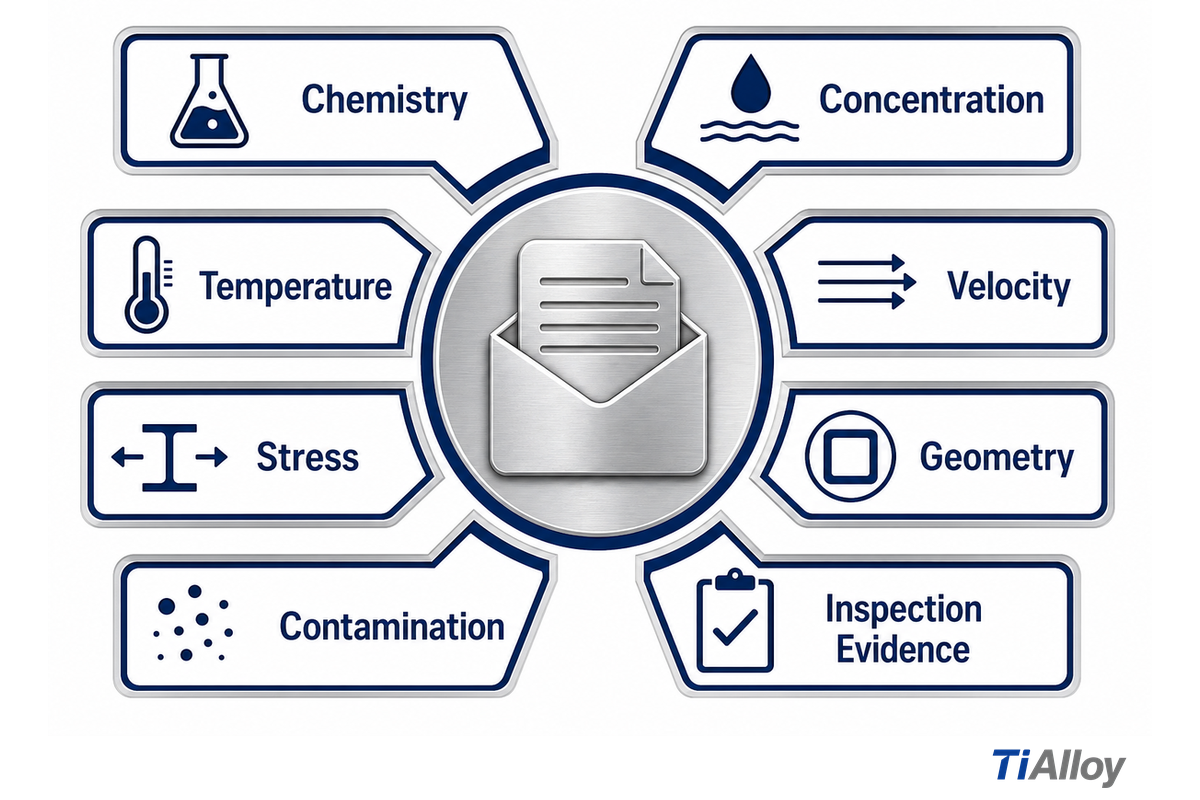
The 8-Step Service-Envelope Screen turns a fluid name into a reviewable engineering record. Each element in the format must be annotated as ‘K’ (known), ‘E’ (estimated) or ‘V’ (requiring verification). When a value is unknown, don’t speculate with an assumed ‘best guess’ or use a default value.
| Step | Record | Why it changes the decision |
|---|---|---|
| 1. Chemistry | Acid, caustic, chloride, solvent, oxidizer, slurry or mixed stream | Different mechanisms can occur in the same named process. |
| 2. Concentration | Normal, minimum, maximum and transient concentration | A dilute stream and a concentrated upset may not share a safe window. |
| 3. Temperature | Start-up, steady-state, cleaning and runaway boundaries | Reaction rate, coating life and stress change with temperature. |
| 4. Velocity | Flow range, impingement, pump speed and two-phase behavior | Erosion-corrosion and deposits are often location-specific. |
| 5. Stress | Pressure, thermal cycling, residual weld stress and vibration | Stress can turn a compatibility problem into cracking. |
| 6. Geometry | Crevices, dead legs, drains, welds, gaskets and dissimilar-metal joints | Local chemistry often matters more than the bulk tank value. |
| 7. Contamination | Chlorides, iron, solids, cleaning residues and carryover | Trace contaminants can initiate pits or foul a heat-transfer surface. |
| 8. Inspection evidence | Baseline readings, test methods, acceptance limits and re-check interval | A selection is incomplete until performance can be verified. |
Decision point: If you don’t know the concentration or have unknown chemical species, characterize the material before comparing with other materials. If there’s a difference in temperature, velocity or geometry across an interface, split the service limit. If there isn’t enough information, label the recommendation provisional. This means the recommendation should identify the evidence still required for further action. Likewise, this tells the project team that the analysis isn’t complete and prevents the recommendation from creating a false sense of security.
Format-only example, not operating guidance: a worksheet could record 25 °C start-up, 80 °C cleaning, 2 m/s line velocity, 50% concentration, a 1 mm corrosion allowance and a 12 month inspection interval. The project team must replace every sample value with measured or specified limits before using the record for selection or commissioning. The same AMPP guidance supports treating the environment, design and inspection plan as parts of one service-specific materials decision.
Match materials to corrosion mechanisms, not labels
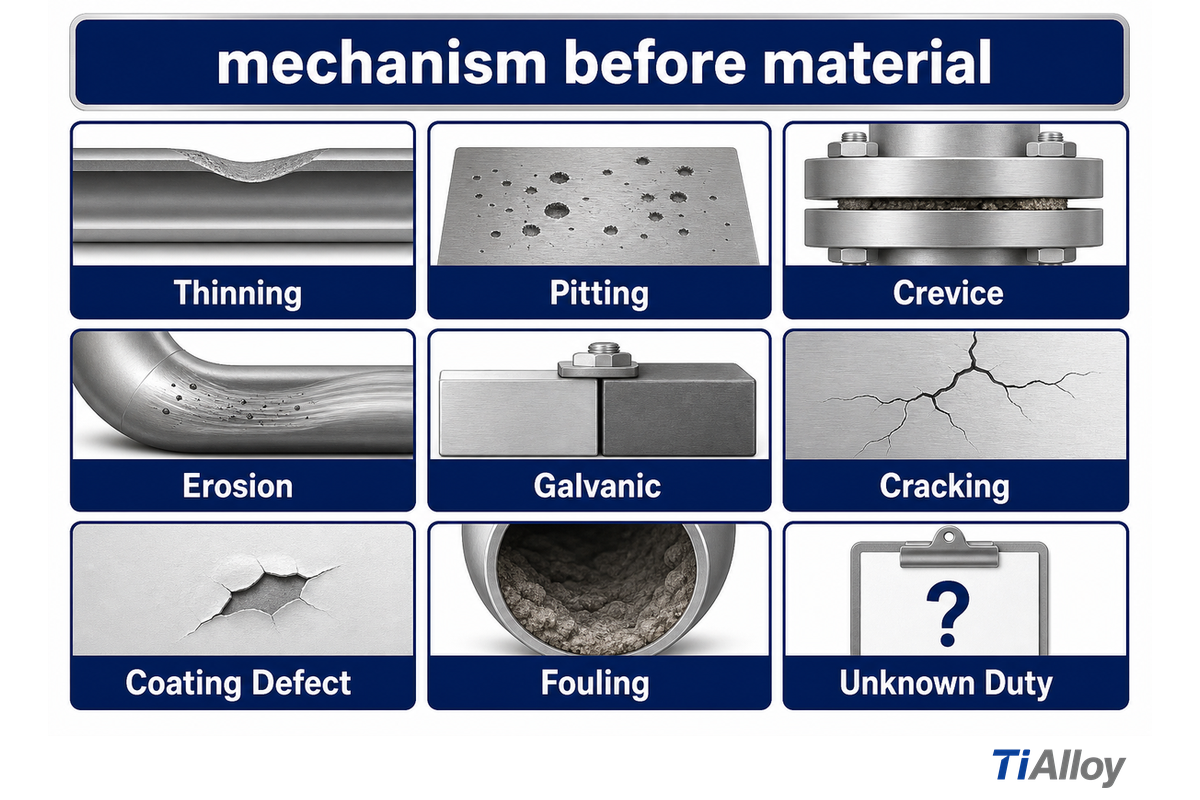
Selecting a material should first answer “which mechanism occurs here?” as opposed to “which material is strongest?” For liquid or heat-sensitive service, chemical resistance alone does not qualify specialized equipment or thermal processing equipment. There are a number of corrosion mechanisms that can often be controlled by selecting the appropriate material. For example, a lining, coating or alloy may help control crevice attack in one qualified service zone, but it isn’t a universal fix. Each mechanism needs to be evaluated independently. AMPP’s public guidance emphasizes that design, performance, compatibility, maintainability and inspectability must be evaluated before relying on a generic term such as “corrosion resistant.”
| Observed risk | Questions to ask | Evidence before selection |
|---|---|---|
| General thinning | Is the whole wetted surface exposed to the same chemistry? | Thickness baseline, chemistry range and corrosion allowance. |
| Pitting or crevice attack | Where do chlorides, deposits, gaskets or stagnant pockets collect? | Local inspection, drainability review and contaminant history. |
| Erosion-corrosion | Which elbows, nozzles, pumps or two-phase zones see the highest velocity? | Flow range, solids loading and location-specific thickness data. |
| Galvanic coupling | Are dissimilar metals electrically connected in the same electrolyte? | Joint details, isolation plan and wetted-area relationship. |
| Stress-corrosion cracking | Do stress, temperature and a specific contaminant overlap? | Weld/residual-stress review, thermal cycles and targeted NDE. |
Don’t “solve” a mechanism with a material name alone. Geometry can create a local chemistry that the bulk sample never shows. Fabrication, weld cleaning, surface preparation and dissimilar-metal joints can also change the outcome. In its offshore and marine protective-coating scope, NIST SP 1035 separates in-process inspection from in-service inspection. That distinction is useful here for coating records, but the publication isn’t a chemical-plant material-selection standard. See NIST SP 1035.
| Type | Category | Typical location | Evidence to request |
|---|---|---|---|
| General | Thinning | Tank wall | Thickness trend |
| Local | Pitting | Low point | Contaminant history |
| Local | Crevice | Gasket | Joint detail |
| Flow | Erosion | Elbow | Velocity range |
| Electrochemical | Galvanic | Mixed-metal joint | Isolation plan |
| Stress | Cracking | Weld toe | Thermal-cycle record |
| Surface | Coating defect | Vessel interior | Preparation record |
| Deposit | Fouling | Heat exchanger | Pressure-drop trend |
| Documentation | Unknown duty | Any interface | Approved service envelope |
Design corrosion monitoring, inspection and heat-transfer control
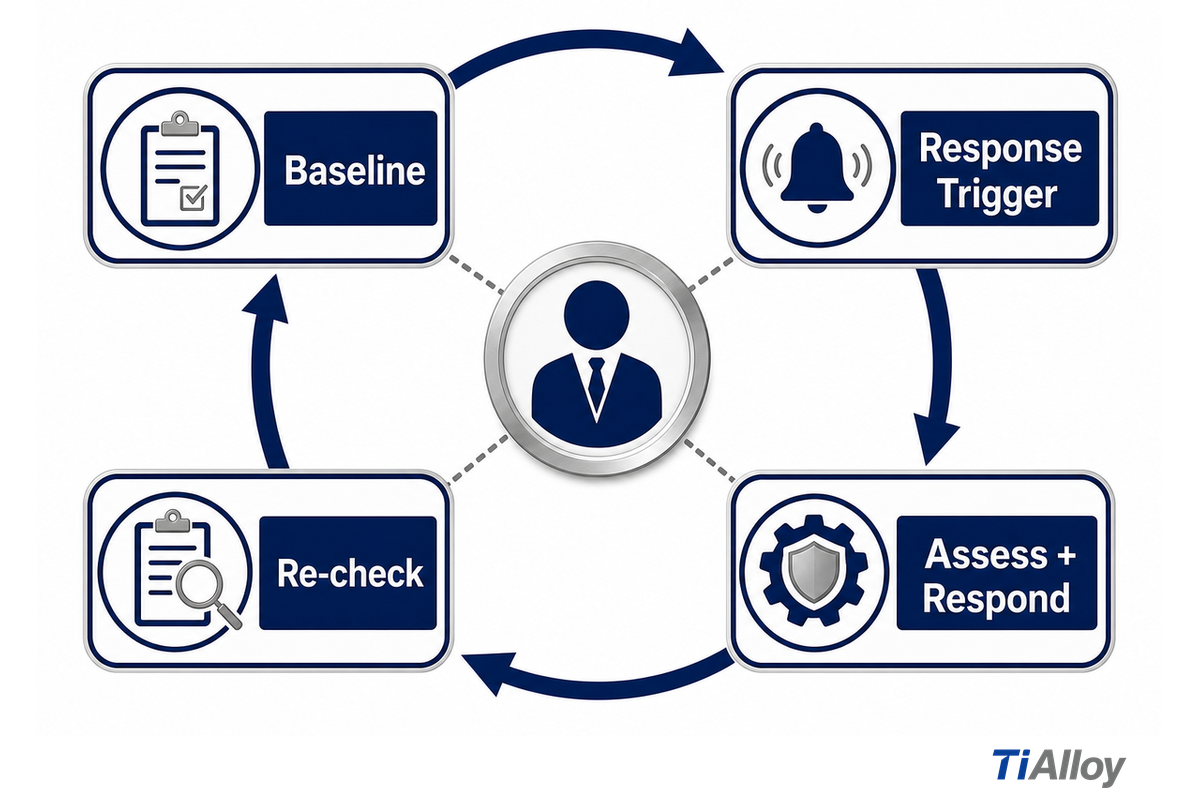
Corrosion control is a loop: The control of corrosion is a continuous cycle. Before equipment is placed in service, plans to define baseline corrosion and establish corrosion controls should be described in the equipment record. Long term corrosion control is verified by follow up samplings and testing. EPA guidance addresses corrosion control in water distribution systems and explains how to establish a corrosion control program. This document outlines the sampling, monitoring and testing necessary to ensure that treatment goals are achieved and provides a means for evaluating the effectiveness of treatment. The EPA documentation isn’t a substitute for chemical plant design.
- Baseline: The baseline for corrosion control includes coating condition, equipment thickness, heat-transfer performance and pressure drop. Sample chemistry should also be evaluated. Baseline data should include photographs.
- Identify the specific condition that necessitates a response (e.g. a trend in thickness, increasing pressure drop, leak, out of spec condition, etc.).
- Isolate safely, locate the equipment or component, assess its condition, verify the chemistry and determine the appropriate response, such as cleaning, repair, adjustment or engineering review.
- Re-check: Measure and report the condition of the equipment or component after the response.
Like other process equipment, heat exchangers have a normal operating record, best kept as a paired set: heat duty and surface condition. A review of the heat duty may reveal a process problem or equipment malfunction. Of the many potential causes of a drop in heat duty, including process change and equipment or control malfunction, chemical cleaning should be considered only after the cause and cleaning risk are evaluated. There are potential corrosion and process-safety hazards when introducing cleaning reagents.
A departure from an inspection acceptance limit normally requires a response, and an acceptance limit and response owner should be established for every measurement.
Make process safety and mechanical integrity part of the lifecycle
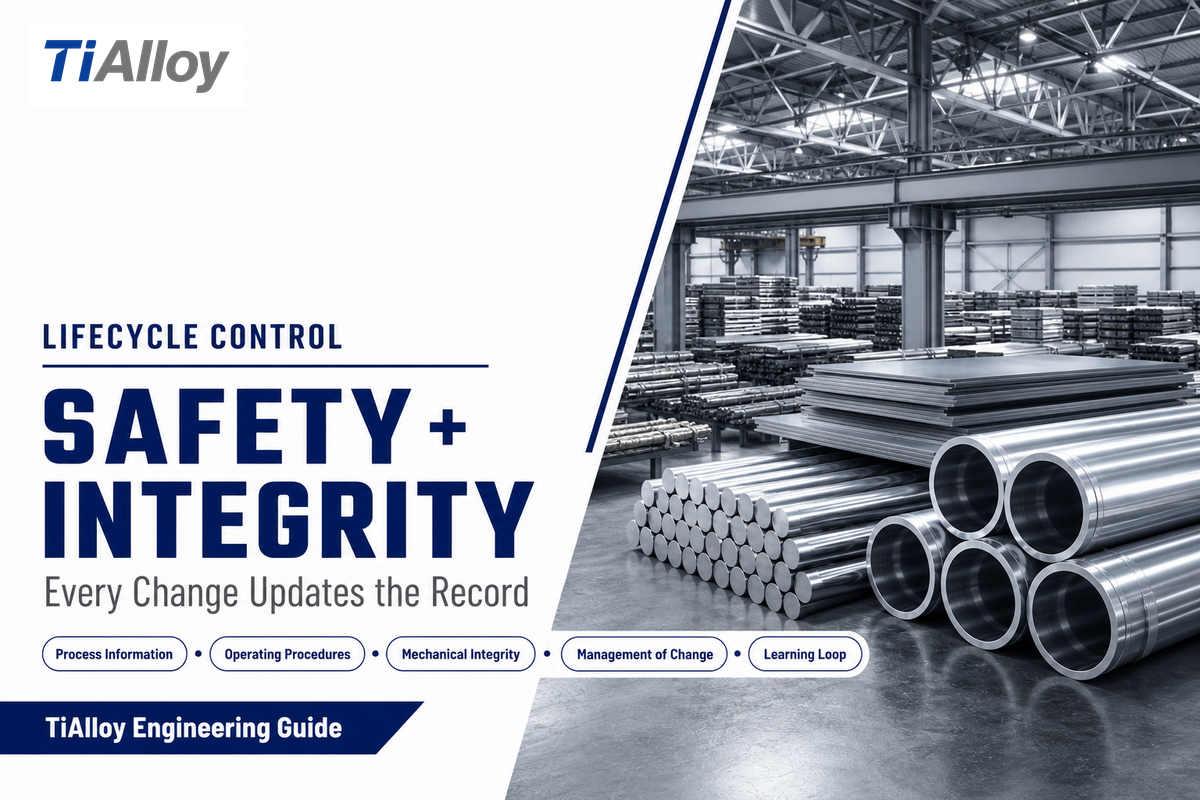
Process safety is a lifecycle control loop covering hazard analysis, procedures, training, mechanical integrity, management of change and incident learning. Applicable safety standards, regulatory compliance, environmental compliance, operator training and procedures for handling hazardous materials belong in the lifecycle record. OSHA’s Process Safety Management summary lists process safety information, process hazard analysis, operating procedures, training, pre-startup safety review, mechanical integrity, management of change, incident investigation and audits among the elements for covered processes. For example, a valve replacement can create an operator risk if management of change doesn’t update procedures, training and inspection limits. Review the OSHA PSM elements.
“Identify, evaluate, and control these hazards.”
OSHA’s Process Safety Management standard outlines fourteen elements for covered processes.
For a practical handoff, connect five records:
- Process safety information: chemistry, limits, P&IDs, relief scenarios, and material and physical assumptions.
- Operating procedures: start-up, normal operation, upset, shutdown, cleaning and emergency procedures.
- Mechanical integrity: Repair and replacement actions, and the time-based inspection program.
- Management of Change: technical basis, hazard impact, document updates, approval and training.
- Learning loop: off-specification conditions, near misses and incidents should be turned into controlled corrective or preventive actions.
Replacement of a wetted material assumes a change in the material and integrity assumptions. For example, a valve replacement or cleaning-chemical change can create an operator risk if the management-of-change record doesn’t update procedures, training and inspection limits. This handoff must capture those assumptions.
Troubleshoot chemical-process reliability without guessing
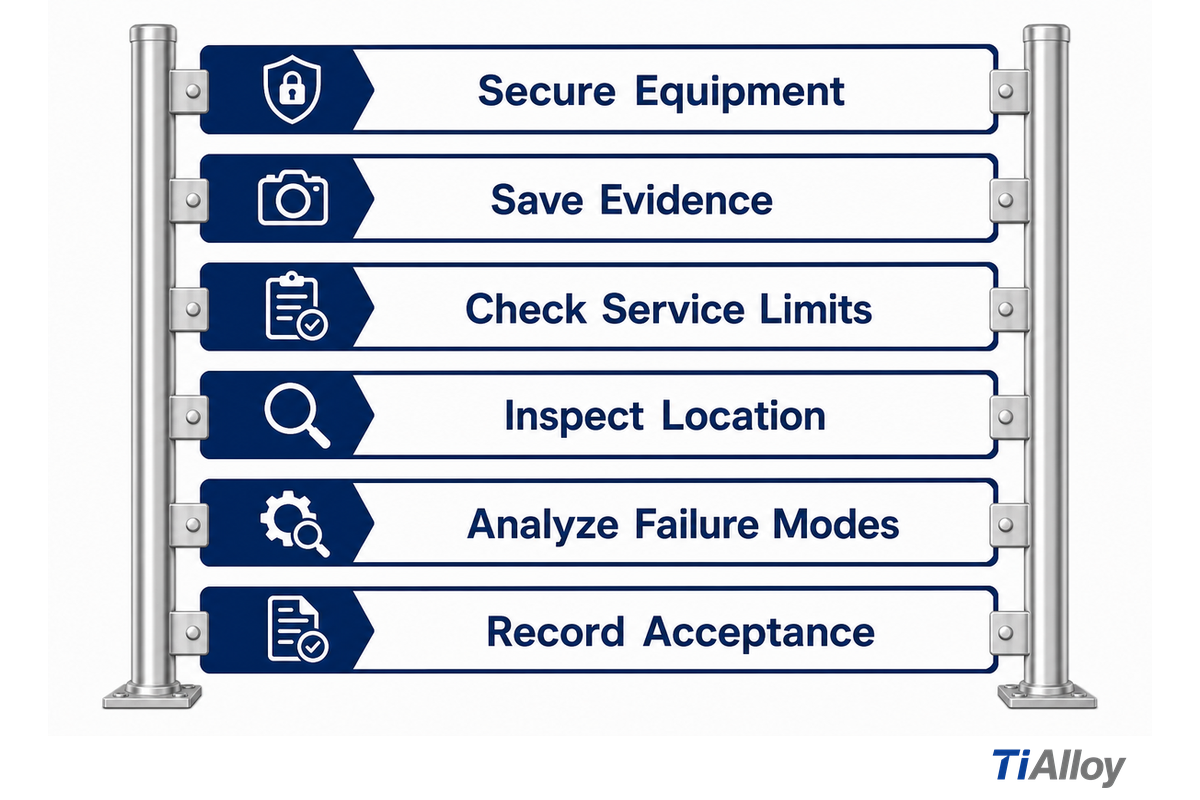
When equipment performance falls below specification, compare current conditions with the approved service envelope before changing the wetted material. Don’t automatically replace the equipment.
| Symptom | First evidence | Safe next question | Stop-work trigger |
|---|---|---|---|
| Unexpected leak or thinning | Location map, thickness history, chemistry sample | Did concentration, temperature, velocity or cleaning change? | Containment, alarm, loss of pressure boundary or unknown chemical. |
| Heat-transfer drift | Duty, pressure drop, flow and deposit sample | Is the loss fouling, flow distribution, sensor drift or chemistry? | Over-temperature, relief margin or unsafe cleaning condition. |
| Off-spec product | Batch record, sample custody, calibration and residence time | Did feed, mixing, temperature or hold-up change? | Unknown composition or an upset outside the procedure. |
| Recurring coating or gasket damage | Surface preparation, joint design, chemical exposure and installation record | Is the failure local geometry, preparation or compatibility? | Repeated failure without a verified mechanism or safe isolation. |
Use the ladder in order: 1) Secure equipment, 2) Save samples and records, 3) Evaluate service limits, 4) Inspect location and adjacent items, 5) Analyze potential failure modes, and 6) Take corrective action and record its acceptance check. The sequence described above is a guide, and plant procedures, permits and the appropriate engineering authority govern the work. OSHA’s Process Safety Management overview provides the lifecycle context for operating procedures, mechanical integrity and management of change in covered processes.
What should a technical handoff include?
A handoff is complete when the service and risks are apparent, and evidence and assumptions are documented. It should connect process conditions, material assumptions, inspection limits, safety records, acceptance criteria and the named owner of every open verification item before release.
- Process sketch with normal, upset, cleaning and shutdown conditions.
- 8-Step Service-Envelope Screen with every unknown marked for verification.
- Mechanism maps for chemistry, geometry, velocity, stress, coupling and joints.
- Inspection plans, trigger limits, test methods, photos, samples and previous inspection records.
- Safety and mechanical-integrity records, including management-of-change status.
- Acceptance criteria for commissioning, cleaning, repair and operator handoff.
This guide intentionally stops before pricing, product-form tables, availability or RFQ language. For grade-documentation examples rather than service qualification, review TiAlloy’s Inconel 600 and Inconel 625 reference pages. When the engineering envelope is ready, continue with TiAlloy’s Chemical Processing Solutions page for a scoped commercial discussion. To understand the organization behind that support, see about TiAlloy.
Ready to turn the service envelope into a project review?
Frequently asked questions
What are the seven types of chemical industries?
There is no single universal seven-category list.
A practical grouping is commodity chemicals, specialty chemicals, polymers, pharmaceuticals, fertilizers, water and wastewater treatment, and consumer or formulated products. Facilities often span more than one group. For engineering decisions, the unit operation and service envelope are more useful than the label because concentration, temperature, velocity and contamination determine material and inspection risk. A plant making one product can still contain reaction, separation, heat-transfer, storage and waste-treatment areas, each with a different service record and inspection plan.
How hard is it to be a chemical process operator?
The role combines procedure discipline, process understanding, hazard awareness, communication, operator training and a clear response to abnormal conditions during normal, upset and shutdown operation.
Difficulty depends on the chemistry, automation, shift pattern and training system. A reliable operator handoff includes clear limits, alarms, sampling steps, isolation instructions, management-of-change updates and practice for upset conditions. Facilities also differ in permit systems, staffing and maintenance support, which changes the learning curve. Job requirements vary by facility and jurisdiction, so this guide does not make a universal career claim.
What is the difference between a chemical processing plant and a chemical manufacturer?
Processing plants are facilities and operations; chemical manufacturers are organizations that make or sell chemical products and manage product ownership, business responsibility and commercial scope.
One manufacturer may own several plants, and one plant may process materials for another company. The same organization can also operate pilot, production, storage and treatment sites with different duties. The distinction matters here because equipment and service decisions belong to the process boundary, while procurement and commercial scope belong to the project review.
Does a corrosion-resistant alloy eliminate inspection?
No; inspection still verifies that the actual service remains inside the qualified envelope as chemistry, geometry, fabrication, process conditions and operating history change over time.
A resistant material can still experience local attack, erosion, galvanic effects, fouling or damage at welds and joints. Inspection checks the chemistry, geometry, fabrication and operating history that a grade label cannot capture by itself.
When should a process team request a project-specific materials review?
Request a project-specific materials review when service conditions change, failures repeat, unlike materials meet, hazardous-service handling changes, or inspection evidence is incomplete before selection or commissioning.
Bring the process sketch, 8-Step Service-Envelope Screen, operating ranges, contaminant history, drawings, inspection records and acceptance criteria. State what is known, what is assumed and what must be verified before selection or commissioning. Include start-up, normal, upset, shutdown and cleaning conditions, plus the owner for each open action. Mark any missing sample, certificate or drawing as an open item instead of filling the gap with a familiar grade assumption. That packet lets a technical reviewer compare the real duty with the intended materials and integrity controls instead of guessing from a fluid name.
Cross-checked against the linked AMPP, OSHA, NIST, EPA and AIChE sources. This educational guide isn’t a substitute for site procedures, a hazard analysis, a code review or project-specific engineering approval. Requirements vary by chemistry, jurisdiction and equipment duty.
References & Sources
WHY WE PUBLISH
About TiAlloy
TiAlloy supplies titanium, stainless steel, nickel alloy and clad plate for specification-driven industrial orders. Our technical guides are written to help buyers align product form, governing standard, test scope and release documents before a quotation is compared.
01Melt & formPlate, sheet, pipe, tube, bar, wire and forgings
02ProcessHeat treatment, finishing, inspection and export packing
03VerifyEN 10204 Type 3.1 certificate and order documents